Workshop: Sanitary‑sewer plan shows aging pipes, I&I fixes and cost‑saving trenchless repairs
May 06, 2026 | Kent, King County, Washington
This article was created by AI summarizing key points discussed. AI makes mistakes, so for full details and context, please refer to the video of the full meeting. Please report any errors so we can fix them. Report an error »
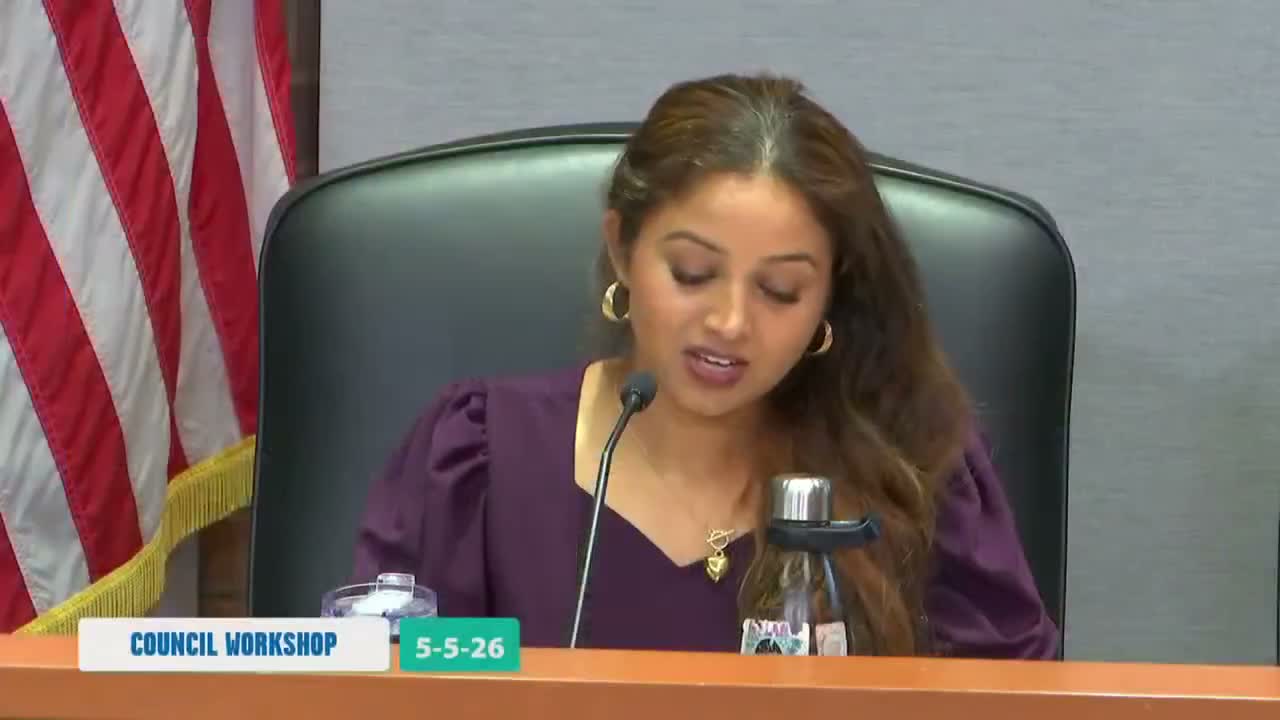
At a May 5 council workshop, Public Works staff introduced the draft 2026 Sanitary Sewer Comprehensive Plan and operations work to keep the city’s sewer system functioning. Drew Holcomb (Public Works Engineering) described the modeling approach — combining 20‑year growth projections with flow monitoring from 21 meters (11 city meters and 10 King County meters) to calibrate a hydraulic model and identify capacity projects. The plan is intended to produce a capital improvement program (CIP) split into 10‑ and 20‑year horizons and will proceed through financial analysis, SEPA review and concurrent reviews by the Washington State Department of Ecology and the King County Utility Technical Review Committee.
Operations staff demonstrated tools and techniques used to maintain an aging system: Marcus Hoff, sewer collection video inspector supervisor, described responsibility for ~222 miles of sewer main, seven lift stations, ~6,000 manholes and the department’s preventive‑maintenance program. He highlighted two trenchless repair techniques used to save money: "quick‑lock" internal mechanical seals (approximately $700 per repair) for localized defects and cured‑in‑place pipe (CIPP) relining for longer stretches. Hoff said the city has used quick‑lock on nearly 30 repairs and relined approximately seven miles of mains using CIPP.
Staff reported targeted I&I (inflow and infiltration) work in the Lindenhall basin: of 225 manholes inspected and cleaned, 39 repairs were identified and nine completed; identified needs include root treatment, watertight lids and grout repairs. The team plans smoke testing in three areas over the next three years to find illicit connections and further reduce I&I.
Drew Holcomb and other staff emphasized partnerships with King County: most of the city’s sewage flows to King County treatment plants and about two‑thirds of a typical sewer bill covers King County charges. Chad (operations/engineering) warned of significant upcoming King County Metro rate increases, projecting double‑digit increases for several years that staff said could push county charges substantially higher by 2029 and beyond; staff said they will brief council more fully on rate impacts as part of the budget process.
Council and staff discussed inspection frequencies, the permanence of quick‑lock and CIPP repairs, and the cost‑effectiveness of trenchless methods compared with open‑cut repairs that require restoration. Staff said once the financial analysis and SEPA review are complete, they will send the plan to Ecology and the King County UTRC for review and then return to council for formal adoption.
Next steps: finalize financial analysis, complete SEPA and agency reviews (each ~90 days), incorporate feedback, and present a final plan for council adoption; staff will also provide a future briefing on King County rate projections and local rate implications.
Operations staff demonstrated tools and techniques used to maintain an aging system: Marcus Hoff, sewer collection video inspector supervisor, described responsibility for ~222 miles of sewer main, seven lift stations, ~6,000 manholes and the department’s preventive‑maintenance program. He highlighted two trenchless repair techniques used to save money: "quick‑lock" internal mechanical seals (approximately $700 per repair) for localized defects and cured‑in‑place pipe (CIPP) relining for longer stretches. Hoff said the city has used quick‑lock on nearly 30 repairs and relined approximately seven miles of mains using CIPP.
Staff reported targeted I&I (inflow and infiltration) work in the Lindenhall basin: of 225 manholes inspected and cleaned, 39 repairs were identified and nine completed; identified needs include root treatment, watertight lids and grout repairs. The team plans smoke testing in three areas over the next three years to find illicit connections and further reduce I&I.
Drew Holcomb and other staff emphasized partnerships with King County: most of the city’s sewage flows to King County treatment plants and about two‑thirds of a typical sewer bill covers King County charges. Chad (operations/engineering) warned of significant upcoming King County Metro rate increases, projecting double‑digit increases for several years that staff said could push county charges substantially higher by 2029 and beyond; staff said they will brief council more fully on rate impacts as part of the budget process.
Council and staff discussed inspection frequencies, the permanence of quick‑lock and CIPP repairs, and the cost‑effectiveness of trenchless methods compared with open‑cut repairs that require restoration. Staff said once the financial analysis and SEPA review are complete, they will send the plan to Ecology and the King County UTRC for review and then return to council for formal adoption.
Next steps: finalize financial analysis, complete SEPA and agency reviews (each ~90 days), incorporate feedback, and present a final plan for council adoption; staff will also provide a future briefing on King County rate projections and local rate implications.
Don't Miss a Word: See the Full Meeting!
Go beyond summaries. Unlock every video, transcript, and key insight with a Founder Membership.
✓
Get instant access to full meeting videos
✓
Search and clip any phrase from complete transcripts
✓
Receive AI-powered summaries & custom alerts
✓
Enjoy lifetime, unrestricted access to government data
30-day money-back guarantee
