Harnett County elections board approves recruitment push, directs staff to draft part‑time poll‑worker policies and reviews printer purchases
May 06, 2026 | Harnett County, North Carolina
This article was created by AI summarizing key points discussed. AI makes mistakes, so for full details and context, please refer to the video of the full meeting. Please report any errors so we can fix them. Report an error »
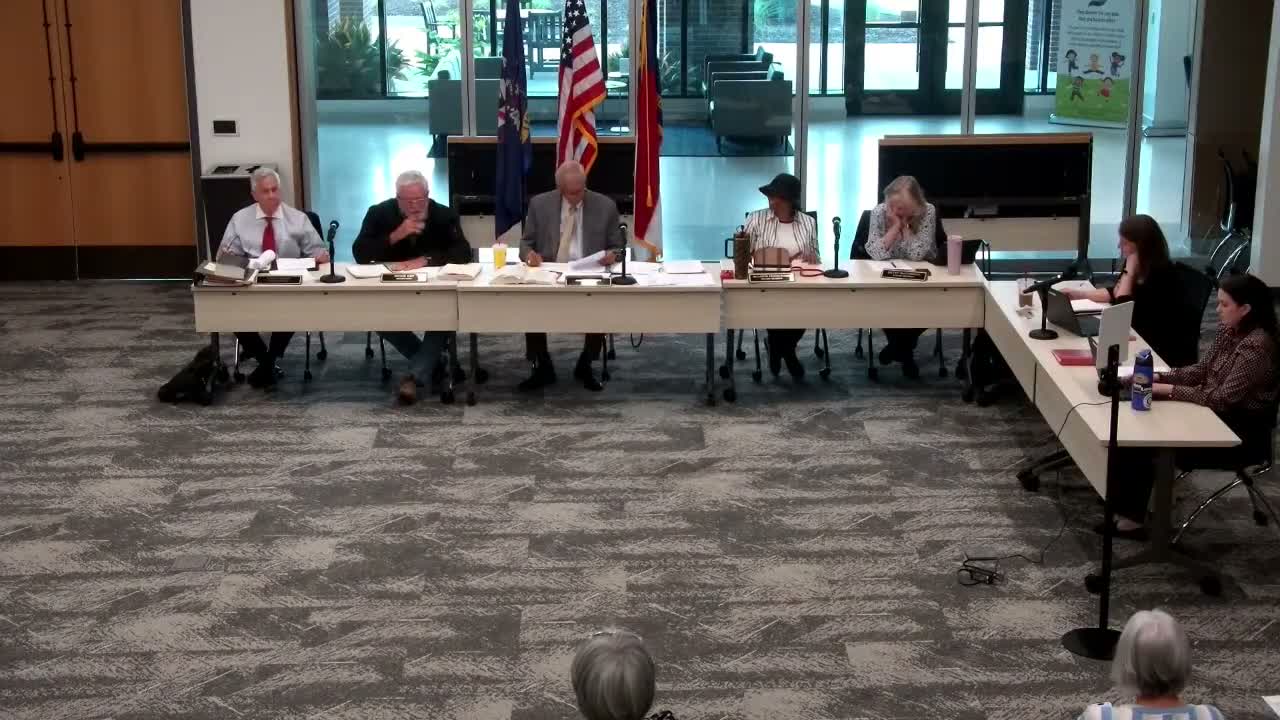
Eric Stevenson, a Spring Lake resident, told the Harnett County Board of Elections that the board should prioritize recruiting and training well‑staffed teams ahead of the general election and not look to cut election‑day staffing as a budgetary savings. “Elections are one of the most important functions of local government,” Stevenson said, urging the board to recruit now and partner with community colleges, churches and civic groups.
At the public comment period Mary Ugan, a Harnett County resident and potential poll worker, said the prospect of a 12–15 hour election day discourages many people from signing up. “A 12 to 15 hour day is really not palatable to most people,” Ugan said, and recommended shift work during early voting and internship ties with community colleges.
Betsy Shepherd, who identified herself as a new Harnett County voter with prior board experience, raised two operational concerns: curbside voting that she said frequently went unattended, and a privacy incident at a polling place where she said a poll worker tried to inspect a completed ballot. “The privacy of your vote should not … just should not happen,” Shepherd said, asking the board to strengthen training.
Board discussion after public comment focused on recruitment, staffing policy and equipment. Staff reported a recruitment target of 50 poll workers and said 15 were approved with two pending. The board reviewed a recruitment packet prepared by staff; a motion to approve that recruitment packet was made, seconded and carried by voice vote.
Members also debated whether the county could permit part‑time shifts on election day. Staff cited state statute (rendered in the transcript as “1 63 dash 42 b”) saying chief judges must be present for the full day while assistants may be split during early voting. After discussion the board directed the Office of Elections to develop formal policies and procedures for implementing partial/part‑time poll‑worker shifts and to produce a policy proposal for future action; the transcript shows this direction but does not record a roll‑call vote on the policy language.
Staffers also briefed the board on a planned purchase of additional ballot‑on‑demand printers and associated laptops: the quote discussed was for 33 additional printers and 22 laptops to expand units at more sites and provide backups. Staff said the purchase had been included in a prior budget expansion and that some equipment had already been ordered; they explained shipping and annual maintenance figures discussed in the packet and said training had been limited before the primary but will be prioritized for the general election.
On equipment integrity, staff repeatedly emphasized that the ballot‑on‑demand units are printers only and cannot mark or alter ballots; they also noted that hand counts and post‑election audits have matched election‑day totals in prior contests.
The board also discussed building renovation work affecting the elections office. Staff and a facilities representative (Mike Moore) said contractors are being sought and offered a conservative 6–8 month timeline; members asked staff to consider the November election when scheduling work.
Directives and next steps recorded in the meeting summary: the recruitment packet was approved by voice vote; staff were tasked to draft part‑time poll‑worker policies for board consideration; staff will expand hands‑on training for ballot‑on‑demand equipment; and staff will develop location‑specific curbside voting plans to present at the June meeting. The board closed the business portion of the meeting and adjourned.
The transcript contains variant spellings and shorthand in a few places (for example, the statute language appears in the record as “1 63 dash 42 b” and a public commenter is introduced as “Mary Hugon” but self‑identifies as “Mary Ugan”); this article uses speakers’ self‑identifications where present and otherwise uses functional titles.
At the public comment period Mary Ugan, a Harnett County resident and potential poll worker, said the prospect of a 12–15 hour election day discourages many people from signing up. “A 12 to 15 hour day is really not palatable to most people,” Ugan said, and recommended shift work during early voting and internship ties with community colleges.
Betsy Shepherd, who identified herself as a new Harnett County voter with prior board experience, raised two operational concerns: curbside voting that she said frequently went unattended, and a privacy incident at a polling place where she said a poll worker tried to inspect a completed ballot. “The privacy of your vote should not … just should not happen,” Shepherd said, asking the board to strengthen training.
Board discussion after public comment focused on recruitment, staffing policy and equipment. Staff reported a recruitment target of 50 poll workers and said 15 were approved with two pending. The board reviewed a recruitment packet prepared by staff; a motion to approve that recruitment packet was made, seconded and carried by voice vote.
Members also debated whether the county could permit part‑time shifts on election day. Staff cited state statute (rendered in the transcript as “1 63 dash 42 b”) saying chief judges must be present for the full day while assistants may be split during early voting. After discussion the board directed the Office of Elections to develop formal policies and procedures for implementing partial/part‑time poll‑worker shifts and to produce a policy proposal for future action; the transcript shows this direction but does not record a roll‑call vote on the policy language.
Staffers also briefed the board on a planned purchase of additional ballot‑on‑demand printers and associated laptops: the quote discussed was for 33 additional printers and 22 laptops to expand units at more sites and provide backups. Staff said the purchase had been included in a prior budget expansion and that some equipment had already been ordered; they explained shipping and annual maintenance figures discussed in the packet and said training had been limited before the primary but will be prioritized for the general election.
On equipment integrity, staff repeatedly emphasized that the ballot‑on‑demand units are printers only and cannot mark or alter ballots; they also noted that hand counts and post‑election audits have matched election‑day totals in prior contests.
The board also discussed building renovation work affecting the elections office. Staff and a facilities representative (Mike Moore) said contractors are being sought and offered a conservative 6–8 month timeline; members asked staff to consider the November election when scheduling work.
Directives and next steps recorded in the meeting summary: the recruitment packet was approved by voice vote; staff were tasked to draft part‑time poll‑worker policies for board consideration; staff will expand hands‑on training for ballot‑on‑demand equipment; and staff will develop location‑specific curbside voting plans to present at the June meeting. The board closed the business portion of the meeting and adjourned.
The transcript contains variant spellings and shorthand in a few places (for example, the statute language appears in the record as “1 63 dash 42 b” and a public commenter is introduced as “Mary Hugon” but self‑identifies as “Mary Ugan”); this article uses speakers’ self‑identifications where present and otherwise uses functional titles.
Don't Miss a Word: See the Full Meeting!
Go beyond summaries. Unlock every video, transcript, and key insight with a Founder Membership.
✓
Get instant access to full meeting videos
✓
Search and clip any phrase from complete transcripts
✓
Receive AI-powered summaries & custom alerts
✓
Enjoy lifetime, unrestricted access to government data
30-day money-back guarantee
