Johnston County planning director: chapters A and B of UDO complete; animal rules to be removed, public review set for June
May 05, 2026 | Johnston County, North Carolina
This article was created by AI summarizing key points discussed. AI makes mistakes, so for full details and context, please refer to the video of the full meeting. Please report any errors so we can fix them. Report an error »
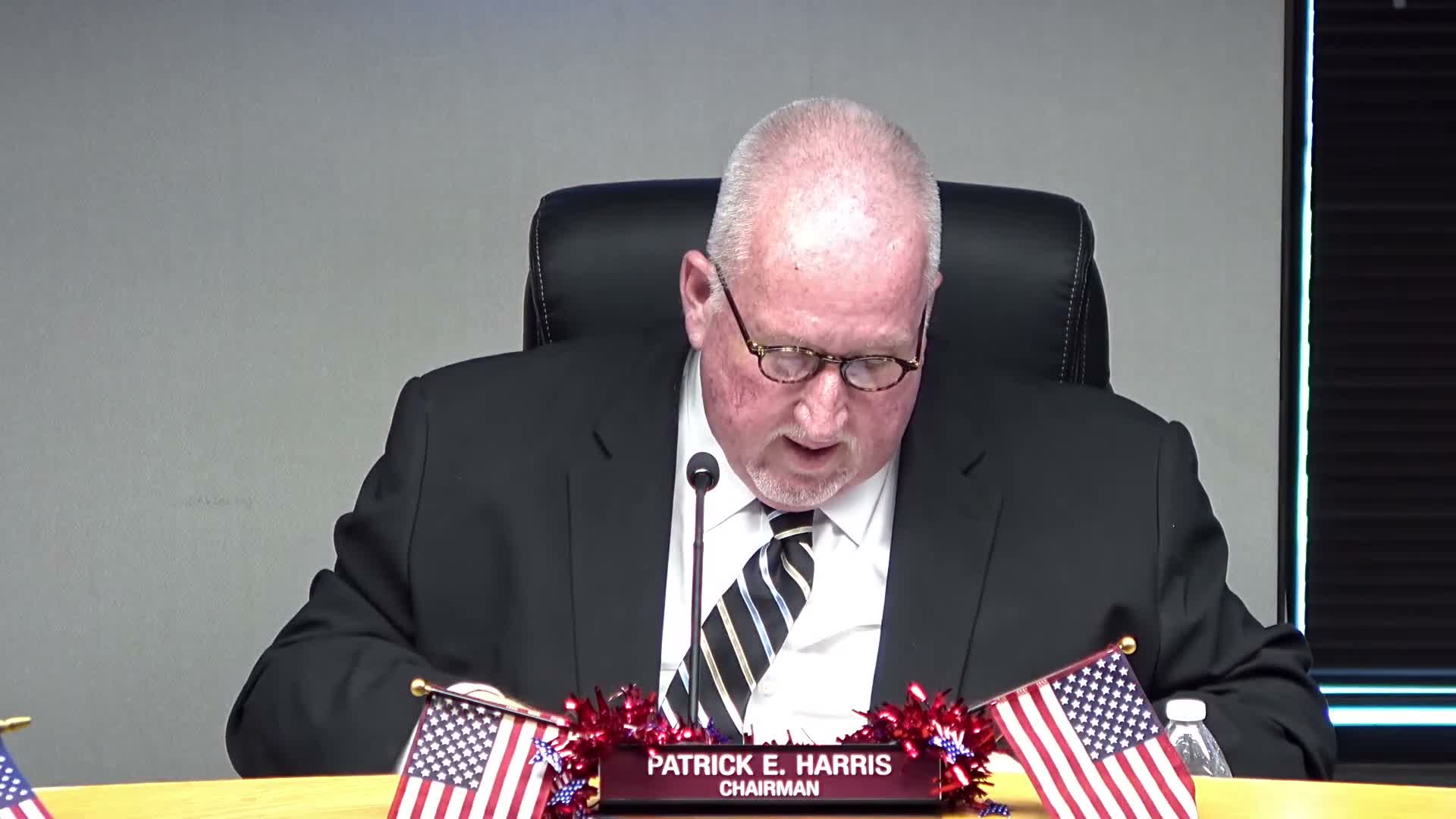
Braston Newton, the county planning director, told the Johnston County Board of Commissioners on May 4 that stakeholders have reviewed chapters A and B of the proposed Unified Development Ordinance line-by-line and those chapters will be sent to county legal before being released to the public for review.
“We have gone through line by line, both chapters A and B at this point, and those are completed,” Newton said, adding that legal review is the next step before public release. Newton said his intent is to publish revised chapters as legal clearance is received and to publish the full revised UDO in June, followed by a three-month public review and planning-board public hearing.
The draft schedule Newton proposed includes a planning-board hearing this summer, suggested board public hearing dates of Sept. 8 or Sept. 21, and a possible adoption date of Oct. 5 if the process proceeds as planned. Newton also proposed one or more informal, drop-in public sessions; a tentative date of July 16 was mentioned for such a session.
Newton confirmed the board’s earlier direction to remove the animal-regulation section from the draft. “We had previously discussed that this board wanted that portion removed,” he said, and staff will follow that directive.
He outlined several substantive topics under discussion in the stakeholder group: agricultural-compatibility buffers, a possible shift from gross to net density calculations, temporary-use standards for seasonal or one-off events, proposed changes to subdivision setbacks, and rules for accessory dwelling units (ADUs). On agricultural buffers, Newton summarized town-hall feedback saying a 75-foot fully planted buffer drew the largest dot-vote (43 votes) while a 35-foot planted buffer had 34 votes; smaller buffer options received far fewer votes.
On setbacks, Newton said the county currently uses a 20-foot street setback for the AR (agriculture-residential) district but staff briefly proposed 50 feet before revising the proposal to 30 feet street frontage, 10 feet interior side and 20 feet for corner-side lots. He also discussed a proposal of a 100-foot minimum lot width for rural subdivisions as a typical practice and reviewed minimum lot-area proposals: the AR district currently lists 30,000 square feet with public water and 40,000 square feet in overlay/watershed areas, and stakeholders are considering a uniform 30,000-square-foot standard.
On ADUs, Newton said the draft would allow accessory dwelling units that meet North Carolina single- and two-family building-code definitions, require a permanent foundation and prohibit manufactured homes, RVs or other movable structures from serving as ADUs unless fixed and reclassified as real property.
Newton stressed that certain chapters tied to state law — including stormwater, riparian buffers and floodplain/erosion-and-sedimentation — are not being altered by the stakeholder review. “Those items that are mandated to be done so by both legislative and state DEQ, we’re not tinkering with that at all,” he said.
Commissioners used the question period to clarify scope. Commissioner Rose asked whether animal-related language was intended only for major subdivisions or countywide; Newton said the initial intention was to target major subdivisions and that the board had since directed the removal of the contentious section. Commissioners also pressed Newton about whether temporary produce stands would be treated as exempt farm activity and whether manufactured double-wide homes could qualify as ADUs; Newton said bona fide farm produce stands are treated separately and that manufactured homes would have to be fixed to a permanent foundation and meet real-property standards to qualify.
Newton reiterated the staff timeline and said the county plans to publish chapters incrementally as legal review completes, with a full revised document anticipated in June and public processes to follow.
The board did not take votes on UDO adoption that night; Newton said the meeting was an update and no adoption was planned.
“We have gone through line by line, both chapters A and B at this point, and those are completed,” Newton said, adding that legal review is the next step before public release. Newton said his intent is to publish revised chapters as legal clearance is received and to publish the full revised UDO in June, followed by a three-month public review and planning-board public hearing.
The draft schedule Newton proposed includes a planning-board hearing this summer, suggested board public hearing dates of Sept. 8 or Sept. 21, and a possible adoption date of Oct. 5 if the process proceeds as planned. Newton also proposed one or more informal, drop-in public sessions; a tentative date of July 16 was mentioned for such a session.
Newton confirmed the board’s earlier direction to remove the animal-regulation section from the draft. “We had previously discussed that this board wanted that portion removed,” he said, and staff will follow that directive.
He outlined several substantive topics under discussion in the stakeholder group: agricultural-compatibility buffers, a possible shift from gross to net density calculations, temporary-use standards for seasonal or one-off events, proposed changes to subdivision setbacks, and rules for accessory dwelling units (ADUs). On agricultural buffers, Newton summarized town-hall feedback saying a 75-foot fully planted buffer drew the largest dot-vote (43 votes) while a 35-foot planted buffer had 34 votes; smaller buffer options received far fewer votes.
On setbacks, Newton said the county currently uses a 20-foot street setback for the AR (agriculture-residential) district but staff briefly proposed 50 feet before revising the proposal to 30 feet street frontage, 10 feet interior side and 20 feet for corner-side lots. He also discussed a proposal of a 100-foot minimum lot width for rural subdivisions as a typical practice and reviewed minimum lot-area proposals: the AR district currently lists 30,000 square feet with public water and 40,000 square feet in overlay/watershed areas, and stakeholders are considering a uniform 30,000-square-foot standard.
On ADUs, Newton said the draft would allow accessory dwelling units that meet North Carolina single- and two-family building-code definitions, require a permanent foundation and prohibit manufactured homes, RVs or other movable structures from serving as ADUs unless fixed and reclassified as real property.
Newton stressed that certain chapters tied to state law — including stormwater, riparian buffers and floodplain/erosion-and-sedimentation — are not being altered by the stakeholder review. “Those items that are mandated to be done so by both legislative and state DEQ, we’re not tinkering with that at all,” he said.
Commissioners used the question period to clarify scope. Commissioner Rose asked whether animal-related language was intended only for major subdivisions or countywide; Newton said the initial intention was to target major subdivisions and that the board had since directed the removal of the contentious section. Commissioners also pressed Newton about whether temporary produce stands would be treated as exempt farm activity and whether manufactured double-wide homes could qualify as ADUs; Newton said bona fide farm produce stands are treated separately and that manufactured homes would have to be fixed to a permanent foundation and meet real-property standards to qualify.
Newton reiterated the staff timeline and said the county plans to publish chapters incrementally as legal review completes, with a full revised document anticipated in June and public processes to follow.
The board did not take votes on UDO adoption that night; Newton said the meeting was an update and no adoption was planned.
Don't Miss a Word: See the Full Meeting!
Go beyond summaries. Unlock every video, transcript, and key insight with a Founder Membership.
✓
Get instant access to full meeting videos
✓
Search and clip any phrase from complete transcripts
✓
Receive AI-powered summaries & custom alerts
✓
Enjoy lifetime, unrestricted access to government data
30-day money-back guarantee
