Tustin council reviews FY 2026–27 budget scenarios, $68 million CIP and pension payoff plan
May 05, 2026 | Tustin City, Orange County, California
This article was created by AI summarizing key points discussed. AI makes mistakes, so for full details and context, please refer to the video of the full meeting. Please report any errors so we can fix them. Report an error »
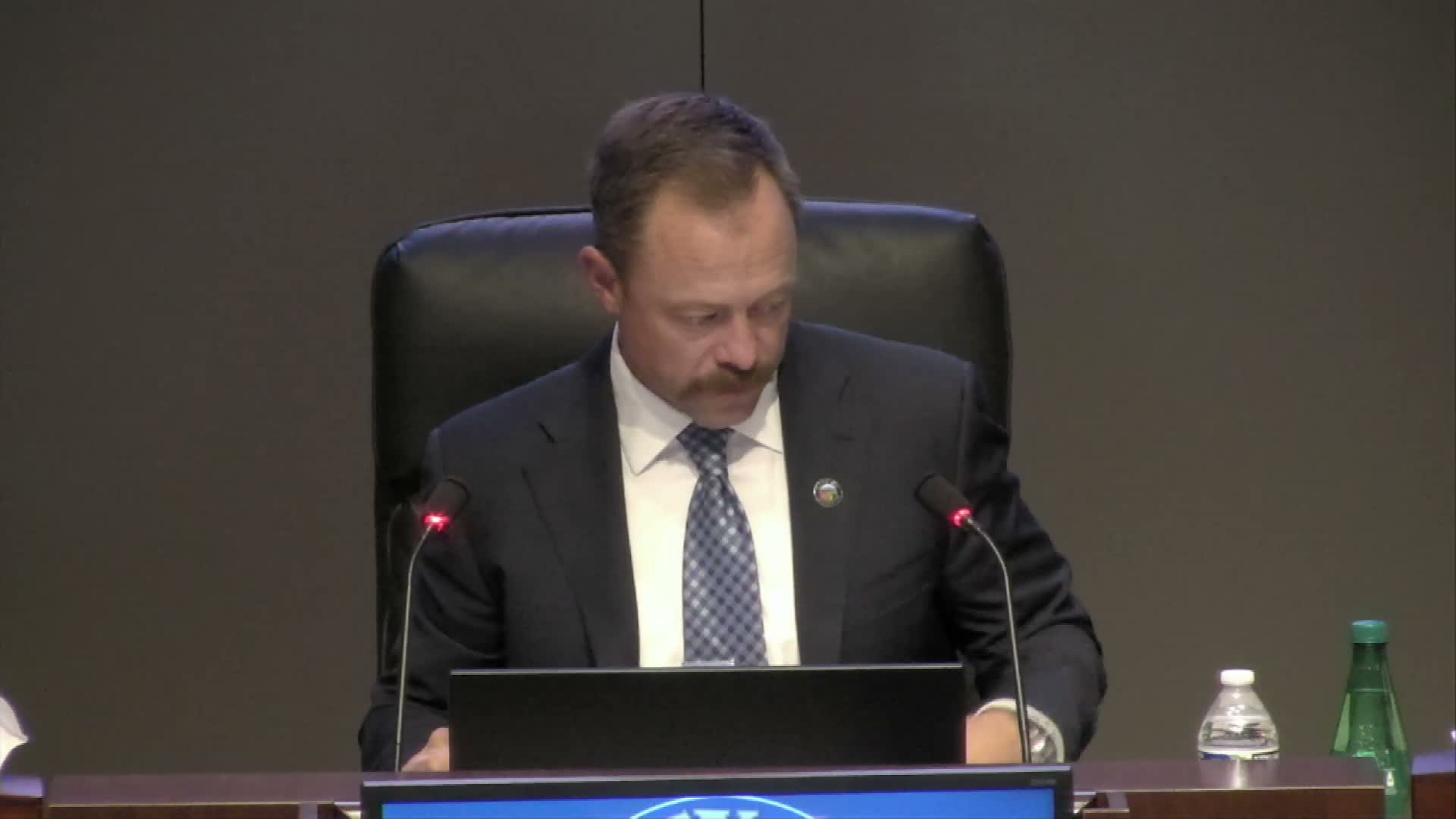
City of Tustin staff laid out the assumptions and options that will shape the FY 2026–27 budget at a city council workshop on May 5.
City Manager Aldo Schindler framed the session as the second year of a biannual budget and year two of the council’s 10‑year fiscal sustainability plan, and said staff will return with a proposed budget for adoption at the council’s June 2 meeting.
Jennifer King, the city’s finance director, told the council the recurring portion of the general fund is projected at about $105,000,000 in revenue and $106,000,000 in recurring expenditures—“and has a slight small deficit of 800,000,” she said—while nonrecurring revenue is projected at roughly $17,500,000 and nonrecurring spending at about $16,700,000. Together the scenarios balance when one‑time resources are included, staff said.
King also presented a seven‑year capital improvement program with total projects of approximately $68,000,000, of which $41,000,000 are carryovers from prior years and about $26,000,000 are new requests. Major items in the CIP include annual street maintenance, a Jamboree roadway rehabilitation, Old Town/Main Street improvements and Heidemann Park work.
Staff outlined two funding scenarios for nonrecurring items: one that would require a $14,000,000 transfer from the legacy (land‑sale) fund and another that would use more general‑fund reserves and a smaller ($11,000,000) legacy transfer. King identified a $1,000,000 new general‑plan update request as the only wholly new item in the nonrecurring list.
Councilmembers asked detailed questions about enterprise debt, revenue growth assumptions and the city’s pension‑liability plan. King said the water enterprise carries roughly $39,000,000 in outstanding debt, $3.8 million of which is an advance from the general fund, and said sales tax is expected to grow about 2–3% while property tax growth is estimated at 4–5% in the near term. On the CalPERS unfunded actuarial liability, staff reiterated the city’s projection that the UAL would be paid down within the planning horizon and explained why the council has treated some prefunding as nonrecurring because it has a scheduled end date.
Mayor (presiding) described the workshop as “a good news story,” noting the city’s strong fiscal position and reserves above policy targets. Several councilmembers urged more transparency and long‑term modeling of legacy (land‑sale) proceeds and asked staff to produce projections that show how current legacy draws would affect the city’s ability to fund major future projects.
Councilmember Gallagher urged adopting option 2 (the scenario that draws reserves down closer to the target range) while pressing staff to avoid routinely using legacy proceeds for recurring costs and to provide clearer, itemized cost estimates for large items such as a general‑plan update. Councilmember Fink and others emphasized pursuing grants and public‑private partnerships to reduce reliance on legacy funds.
The council provided general feedback but took no formal action; staff will return with a proposed budget for formal consideration and adoption at the June 2 meeting.
What’s next: staff will refine the scenarios, provide longer‑range models for legacy revenue and planned land‑sale uses, and present a formal proposed budget on June 2.
City Manager Aldo Schindler framed the session as the second year of a biannual budget and year two of the council’s 10‑year fiscal sustainability plan, and said staff will return with a proposed budget for adoption at the council’s June 2 meeting.
Jennifer King, the city’s finance director, told the council the recurring portion of the general fund is projected at about $105,000,000 in revenue and $106,000,000 in recurring expenditures—“and has a slight small deficit of 800,000,” she said—while nonrecurring revenue is projected at roughly $17,500,000 and nonrecurring spending at about $16,700,000. Together the scenarios balance when one‑time resources are included, staff said.
King also presented a seven‑year capital improvement program with total projects of approximately $68,000,000, of which $41,000,000 are carryovers from prior years and about $26,000,000 are new requests. Major items in the CIP include annual street maintenance, a Jamboree roadway rehabilitation, Old Town/Main Street improvements and Heidemann Park work.
Staff outlined two funding scenarios for nonrecurring items: one that would require a $14,000,000 transfer from the legacy (land‑sale) fund and another that would use more general‑fund reserves and a smaller ($11,000,000) legacy transfer. King identified a $1,000,000 new general‑plan update request as the only wholly new item in the nonrecurring list.
Councilmembers asked detailed questions about enterprise debt, revenue growth assumptions and the city’s pension‑liability plan. King said the water enterprise carries roughly $39,000,000 in outstanding debt, $3.8 million of which is an advance from the general fund, and said sales tax is expected to grow about 2–3% while property tax growth is estimated at 4–5% in the near term. On the CalPERS unfunded actuarial liability, staff reiterated the city’s projection that the UAL would be paid down within the planning horizon and explained why the council has treated some prefunding as nonrecurring because it has a scheduled end date.
Mayor (presiding) described the workshop as “a good news story,” noting the city’s strong fiscal position and reserves above policy targets. Several councilmembers urged more transparency and long‑term modeling of legacy (land‑sale) proceeds and asked staff to produce projections that show how current legacy draws would affect the city’s ability to fund major future projects.
Councilmember Gallagher urged adopting option 2 (the scenario that draws reserves down closer to the target range) while pressing staff to avoid routinely using legacy proceeds for recurring costs and to provide clearer, itemized cost estimates for large items such as a general‑plan update. Councilmember Fink and others emphasized pursuing grants and public‑private partnerships to reduce reliance on legacy funds.
The council provided general feedback but took no formal action; staff will return with a proposed budget for formal consideration and adoption at the June 2 meeting.
What’s next: staff will refine the scenarios, provide longer‑range models for legacy revenue and planned land‑sale uses, and present a formal proposed budget on June 2.
View the Full Meeting & All Its Details
This article offers just a summary. Unlock complete video, transcripts, and insights as a Founder Member.
✓
Watch full, unedited meeting videos
✓
Search every word spoken in unlimited transcripts
✓
AI summaries & real-time alerts (all government levels)
✓
Permanent access to expanding government content
30-day money-back guarantee
