After Helene blowdown, county outlines wildfire prevention, HMGP requests and 36‑site weather/camera plan
May 06, 2026 | Buncombe County, North Carolina
This article was created by AI summarizing key points discussed. AI makes mistakes, so for full details and context, please refer to the video of the full meeting. Please report any errors so we can fix them. Report an error »
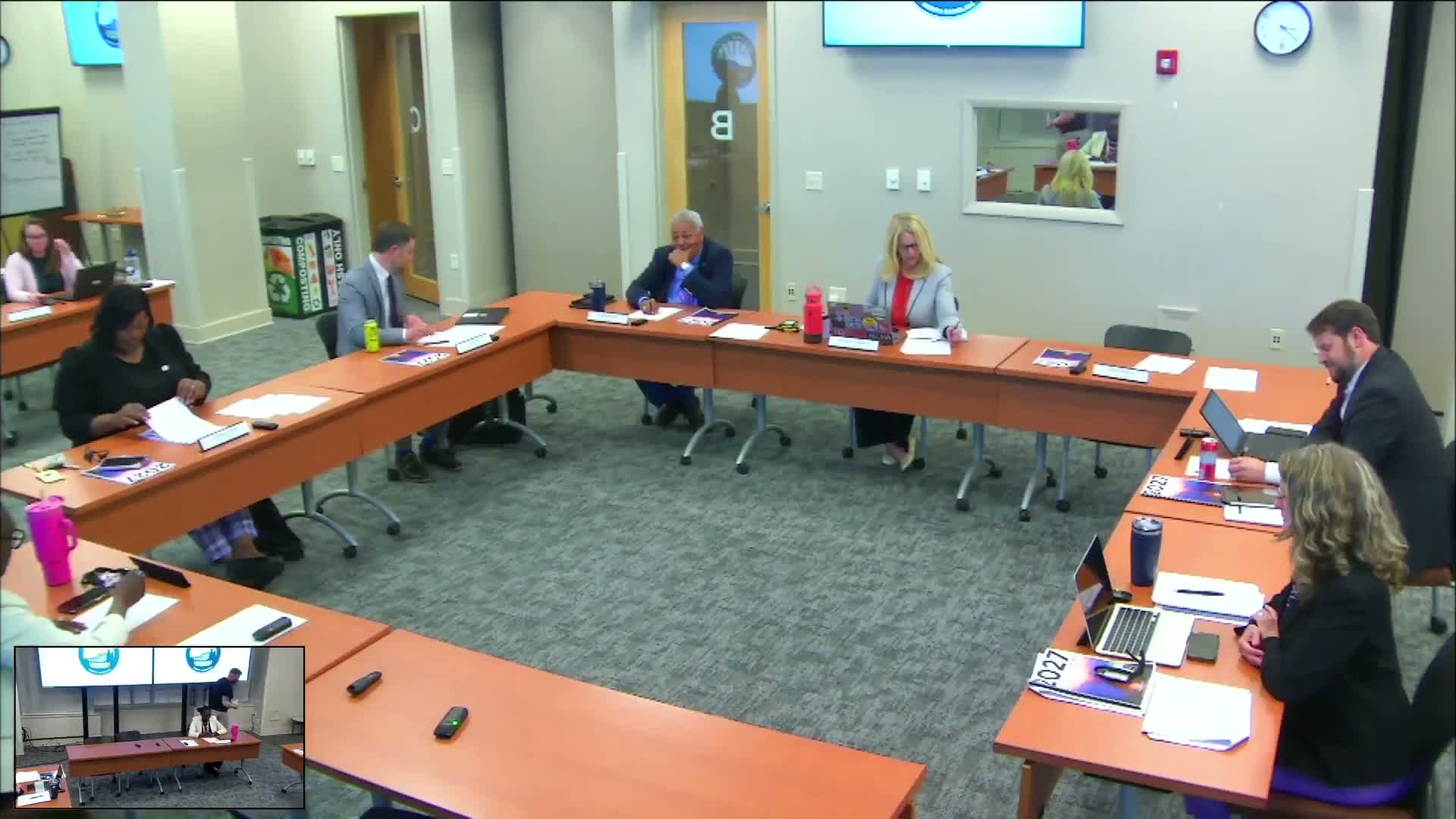
Ryan Cole presented the county’s wildfire prevention and resiliency plan rooted in operational lessons from the Helene event and ongoing mitigation work.
Cole said Helene produced extensive blowdown — “we lost 45,000, 163 acres, forest that’s been severely damaged” — that increased fuel loads and, he said, significantly limited access for firefighters. That debris, Cole said, extends time to establish fire lines: tasks that once took 30 minutes can now take several hours because crews must clear downed trees and other debris.
The county’s approach, Cole said, rests on education (defensible‑space campaigns and social media outreach), operational readiness (a regional wildland task force to deploy across north/south/east/west regions) and mitigation projects funded through Hazard Mitigation Grant Program (HMGP) applications. Cole described a hazard‑mitigation request for parcel‑level wildfire risk assessments built from GIS mapping and National Guard support for initial mapping; he said the goal is to provide parcel‑level recommendations that homeowners can access online.
Cole also outlined pilot assets and regional partnerships: a proposed network of roughly 36 weather stations (18 ridge sites and 18 valley sites) to capture microclimates and humidity differences, and a camera system pilot (coordinated with Henderson and McDowell counties under a Dogwood grant) that uses AI to detect smoke and provide coordinates to dispatchers.
On homeowner actions, Cole urged defensible‑space work and offered specific guidance: clear combustible material 5–30 feet from structures, remove excess vegetation 30–100 feet out, and prefer low‑risk plantings; “the most important thing is create defensible space, remove dead vegetation, and have an evacuation plan,” he said. Cole listed high‑risk plants (pine straw, Virginia creeper, laurels, rhododendrons, holly) and low‑risk examples (trimmed live grass, flowering dogwood).
Cole described community wildfire protection plans under HMGP already completed for two districts and said the county is working to publish those plans and to prioritize mitigation where the Forest Service has capacity (the Forest Service is seeking to place mitigation crews in the region). He said the county’s mapping flagged more than 14,000 homes in high‑risk wildland‑urban interface after Helene and that HMGP funding would help target where mitigation can start.
Cole asked residents to register for county alerts and said the county can use geofenced text alerts for evacuation: “BC ready to 67283,” he said as the sign‑up text code for BC Alerts. Commissioners and chiefs asked about public outreach and the fall fire season outlook; staff described shared resources at state and federal levels (aircraft and mutual‑aid) and the multi‑county nature of planning.
The briefing closed with a staff pledge to pursue HMGP and other funding opportunities, continue community engagement and coordinate interagency mitigation so the county can convert mapping into field work where risk is highest.
Cole said Helene produced extensive blowdown — “we lost 45,000, 163 acres, forest that’s been severely damaged” — that increased fuel loads and, he said, significantly limited access for firefighters. That debris, Cole said, extends time to establish fire lines: tasks that once took 30 minutes can now take several hours because crews must clear downed trees and other debris.
The county’s approach, Cole said, rests on education (defensible‑space campaigns and social media outreach), operational readiness (a regional wildland task force to deploy across north/south/east/west regions) and mitigation projects funded through Hazard Mitigation Grant Program (HMGP) applications. Cole described a hazard‑mitigation request for parcel‑level wildfire risk assessments built from GIS mapping and National Guard support for initial mapping; he said the goal is to provide parcel‑level recommendations that homeowners can access online.
Cole also outlined pilot assets and regional partnerships: a proposed network of roughly 36 weather stations (18 ridge sites and 18 valley sites) to capture microclimates and humidity differences, and a camera system pilot (coordinated with Henderson and McDowell counties under a Dogwood grant) that uses AI to detect smoke and provide coordinates to dispatchers.
On homeowner actions, Cole urged defensible‑space work and offered specific guidance: clear combustible material 5–30 feet from structures, remove excess vegetation 30–100 feet out, and prefer low‑risk plantings; “the most important thing is create defensible space, remove dead vegetation, and have an evacuation plan,” he said. Cole listed high‑risk plants (pine straw, Virginia creeper, laurels, rhododendrons, holly) and low‑risk examples (trimmed live grass, flowering dogwood).
Cole described community wildfire protection plans under HMGP already completed for two districts and said the county is working to publish those plans and to prioritize mitigation where the Forest Service has capacity (the Forest Service is seeking to place mitigation crews in the region). He said the county’s mapping flagged more than 14,000 homes in high‑risk wildland‑urban interface after Helene and that HMGP funding would help target where mitigation can start.
Cole asked residents to register for county alerts and said the county can use geofenced text alerts for evacuation: “BC ready to 67283,” he said as the sign‑up text code for BC Alerts. Commissioners and chiefs asked about public outreach and the fall fire season outlook; staff described shared resources at state and federal levels (aircraft and mutual‑aid) and the multi‑county nature of planning.
The briefing closed with a staff pledge to pursue HMGP and other funding opportunities, continue community engagement and coordinate interagency mitigation so the county can convert mapping into field work where risk is highest.
Don't Miss a Word: See the Full Meeting!
Go beyond summaries. Unlock every video, transcript, and key insight with a Founder Membership.
✓
Get instant access to full meeting videos
✓
Search and clip any phrase from complete transcripts
✓
Receive AI-powered summaries & custom alerts
✓
Enjoy lifetime, unrestricted access to government data
30-day money-back guarantee
