Staff urges repeal of medical-enterprise overlay and business-park plan; attorney urges CEQA review
May 06, 2026 | Inglewood, Los Angeles County, California
This article was created by AI summarizing key points discussed. AI makes mistakes, so for full details and context, please refer to the video of the full meeting. Please report any errors so we can fix them. Report an error »
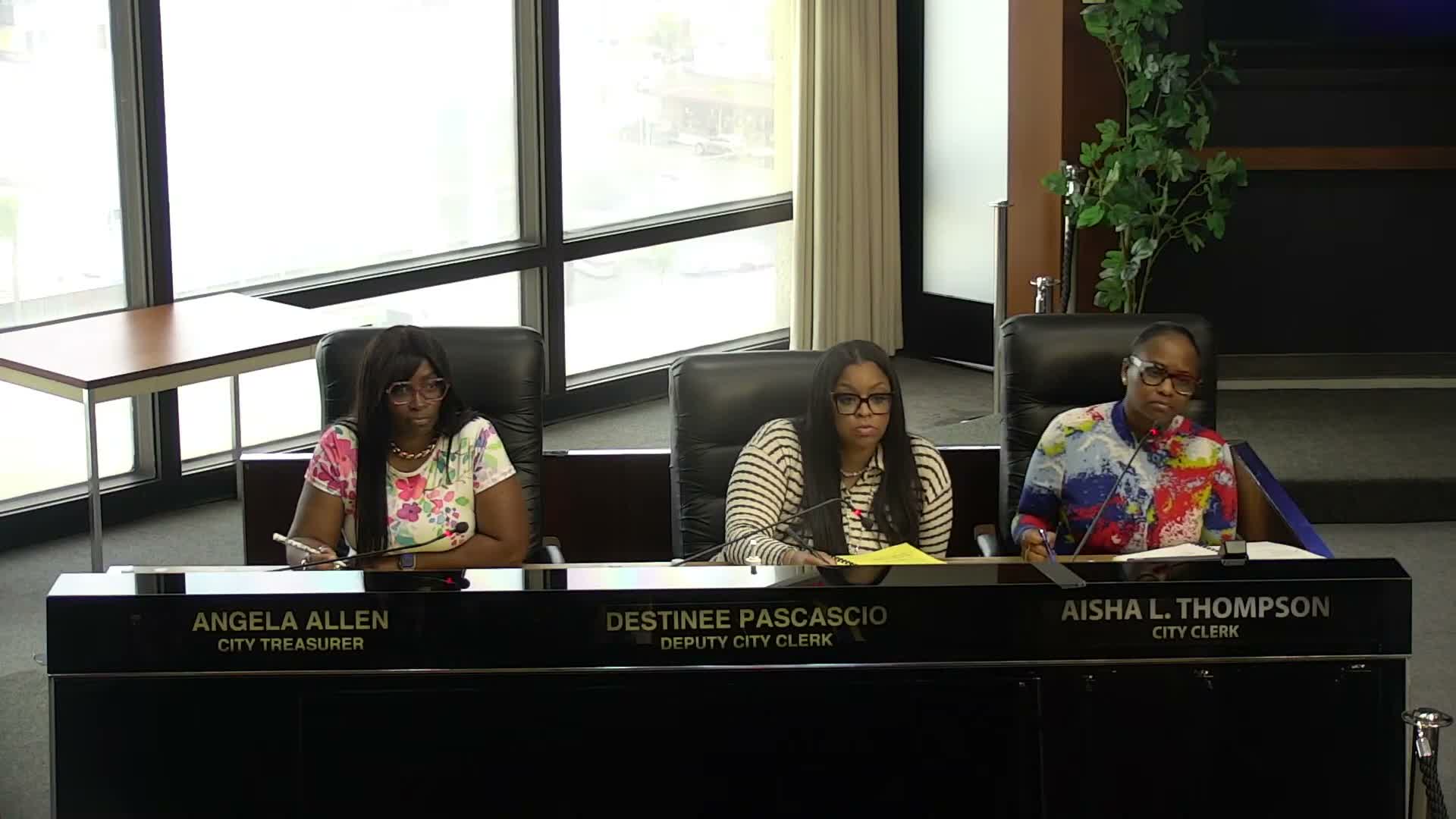
City planning staff told the Inglewood City Council on May 5 that repealing a decades-old Medical Enterprise Overlay Zone and an industrial specific plan would streamline development and better align properties near the sports and entertainment district with current market demand.
"Repealing the overlay would streamline the process, reducing barriers and saving property owners both time and money," said Arturo Salazar, the city planning manager, summarizing staff's recommendation. Salazar told the council the Medical Enterprise Overlay covers roughly 100 acres along Prairie Avenue and imposes special-use-permit requirements for certain nonresidential work that often increase time and cost for reinvestment.
Staff presented three linked changes: repeal of the Medical Enterprise Overlay Zone, repeal of the Inglewood International Business Park specific plan (the southern area roughly bounded by 102nd Street, Yukon Avenue and 104th Street), and amendments expanding major-event parking regulations to include certain religious institutions and commercial businesses within 1,500 feet of major sports or entertainment facilities.
The staff report said the overlay's discretionary review thresholds (projects above a construction-cost or square-foot threshold) have discouraged adaptive reuse and that removing the overlay would preserve underlying RM and C-2 zoning while allowing a broader range of uses. Staff also said repealing the specific plan would make it easier to convert underutilized, noise-impacted industrial properties to uses compatible with nearby retail, hospitality and entertainment destinations.
At the close of staff remarks, attorney Jamie Hall of Channel Law Group spoke during public comment and urged caution. "The city is attempting to move forward under a common-sense exemption to CEQA, claiming there's no possibility of a significant environmental effect," Hall said. "California law is clear. This exemption is reserved only for obviously exempt projects. The burden is on the city to prove this certainty. As our letter explains, the city has failed that burden." Hall warned of likely impacts to noise, air quality, climate and public services and urged the council not to adopt the ordinance without environmental review.
Council members did not adopt the proposed ordinance at the meeting. After public comment closed, the council moved on to consent items and other routine business. Staff previously told the council the planning commission recommended adoption on March 4, 2026; the record shows the matter will return for further council consideration and procedural steps in accordance with notice requirements.
What happens next: the council heard the staff presentation and received public comment opposing immediate action without CEQA review. The transcript does not record a final vote or ordinance adoption on the amendments on May 5; the council may schedule further hearings or actions in subsequent meetings.
"Repealing the overlay would streamline the process, reducing barriers and saving property owners both time and money," said Arturo Salazar, the city planning manager, summarizing staff's recommendation. Salazar told the council the Medical Enterprise Overlay covers roughly 100 acres along Prairie Avenue and imposes special-use-permit requirements for certain nonresidential work that often increase time and cost for reinvestment.
Staff presented three linked changes: repeal of the Medical Enterprise Overlay Zone, repeal of the Inglewood International Business Park specific plan (the southern area roughly bounded by 102nd Street, Yukon Avenue and 104th Street), and amendments expanding major-event parking regulations to include certain religious institutions and commercial businesses within 1,500 feet of major sports or entertainment facilities.
The staff report said the overlay's discretionary review thresholds (projects above a construction-cost or square-foot threshold) have discouraged adaptive reuse and that removing the overlay would preserve underlying RM and C-2 zoning while allowing a broader range of uses. Staff also said repealing the specific plan would make it easier to convert underutilized, noise-impacted industrial properties to uses compatible with nearby retail, hospitality and entertainment destinations.
At the close of staff remarks, attorney Jamie Hall of Channel Law Group spoke during public comment and urged caution. "The city is attempting to move forward under a common-sense exemption to CEQA, claiming there's no possibility of a significant environmental effect," Hall said. "California law is clear. This exemption is reserved only for obviously exempt projects. The burden is on the city to prove this certainty. As our letter explains, the city has failed that burden." Hall warned of likely impacts to noise, air quality, climate and public services and urged the council not to adopt the ordinance without environmental review.
Council members did not adopt the proposed ordinance at the meeting. After public comment closed, the council moved on to consent items and other routine business. Staff previously told the council the planning commission recommended adoption on March 4, 2026; the record shows the matter will return for further council consideration and procedural steps in accordance with notice requirements.
What happens next: the council heard the staff presentation and received public comment opposing immediate action without CEQA review. The transcript does not record a final vote or ordinance adoption on the amendments on May 5; the council may schedule further hearings or actions in subsequent meetings.
View the Full Meeting & All Its Details
This article offers just a summary. Unlock complete video, transcripts, and insights as a Founder Member.
✓
Watch full, unedited meeting videos
✓
Search every word spoken in unlimited transcripts
✓
AI summaries & real-time alerts (all government levels)
✓
Permanent access to expanding government content
30-day money-back guarantee
