Community College of Philadelphia touts growth, warns of flat state funding and flags $2.1M SEPTA‑pass cost
May 06, 2026 | Philadelphia City, Pennsylvania
This article was created by AI summarizing key points discussed. AI makes mistakes, so for full details and context, please refer to the video of the full meeting. Please report any errors so we can fix them. Report an error »
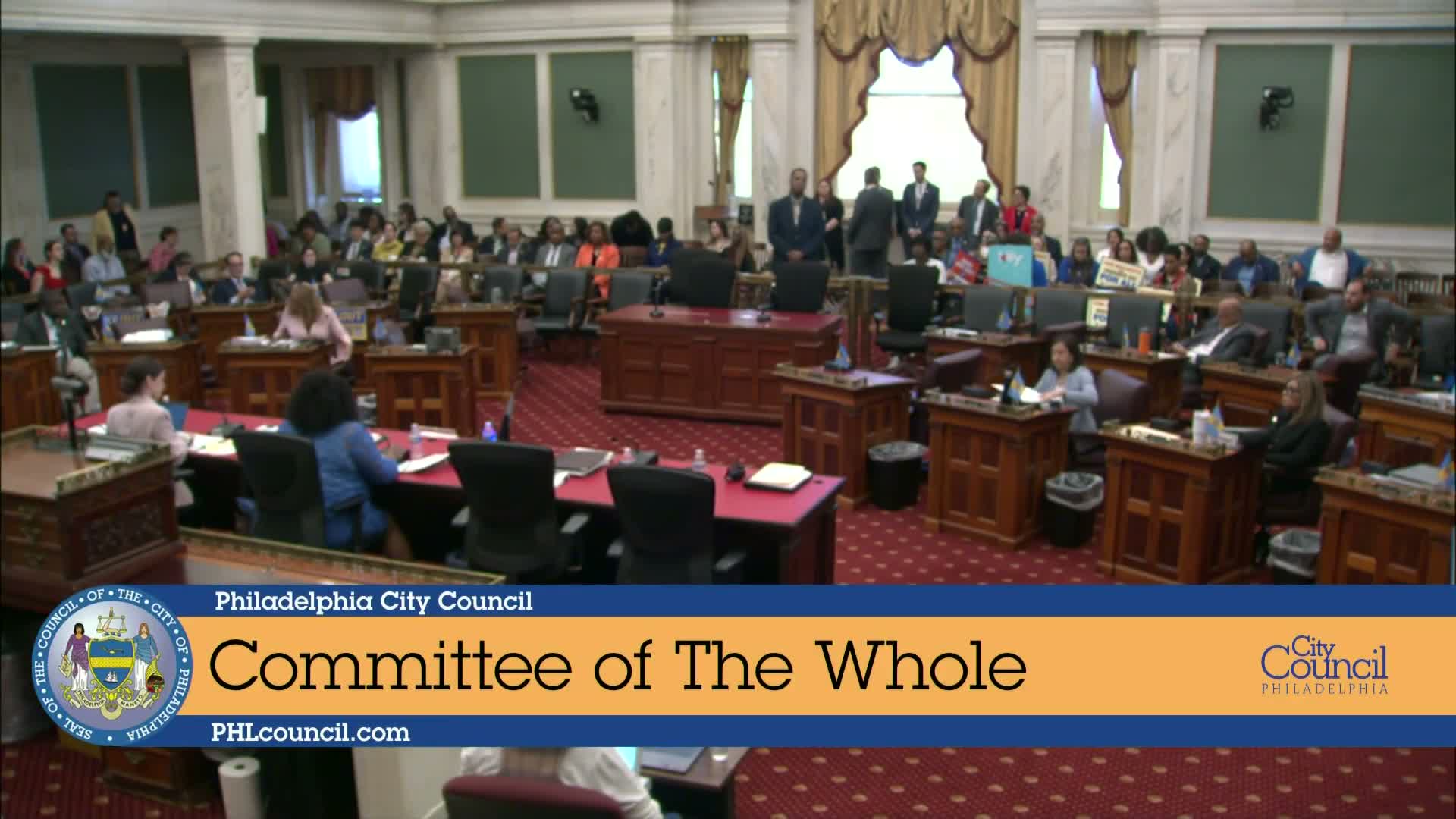
Community College of Philadelphia President Alicia Marshall told City Council that CCP is expanding enrollment, workforce programs and student supports while confronting flat state funding and rising costs.
Marshall said CCP enrolls about 21,000 students across credit and non‑credit programs, celebrated 1,968 graduates at the recent commencement and called the college an "economic engine of mobility," citing an eConsult report the president said shows roughly $1 billion in annual economic activity tied to the institution and about $882 million locally.
The college presented workforce initiatives supported by federal and private funding, including a $2.7 million U.S. Navy investment to establish naval welding and non‑destructive testing programs. Marshall said short programs at the Career & Advanced Technology Center can quickly lead to family‑supporting wages: she told the committee the NDT program lasts 4½ months and graduates can begin earning about $77,000 a year.
Tuition, state support and Caddo scholarship
Marshall confirmed the board approved a tuition increase — the first in nine years — of about $15 per credit hour; college leaders said most students (she said roughly 75%) have some financial need and that the administration is pursuing additional private fundraising and state support to mitigate impacts. CCP finance staff said the college receives about $36 million from the state for operating support and is advocating for higher allocations in Harrisburg.
Marshall also described the Octavius Caddo last‑dollar scholarship, which serves lower‑income residents; college staff said Caddo recipients graduate at a higher rate (about 36%) than the general college population and CCP reallocates seats if scholars leave the program before completion.
SEPTA passes and union MOU
Council members and union representatives pressed the college about a memorandum of understanding formed during contract talks that committed CCP to negotiate with SEPTA for a student transit benefit. Marshall said the MOU was non‑contractual and the college has been negotiating with SEPTA since January 2024; she told the committee that providing free passes to every student at current enrollment would cost about $2.1 million per year and that the college cannot absorb that recurring obligation without a funding plan. CCP has launched a pilot at its Career & Advanced Technology Center, but adoption among eligible students in that pilot was lower than expected.
"We simply don't have that [funding]," Marshall said of the full pass program, adding that the college is surveying students and seeking state support to finance a broader benefit.
Safety, facilities and student supports
Council members raised facilities and safety concerns including HVAC problems at multiple campuses. Marshall said the college has prioritized urgent facilities work, is using some recent state funding to address HVAC and is addressing the highest‑traffic buildings first. On student parents and foster‑youth supports, Marshall described Rory's Cub House (a drop‑in space), an existing foster‑care connections program, and work to secure additional grant funding; college officials said they are exploring a sustainable childcare solution but previously closed an onsite childcare center due to insufficient consistent usage and operating costs.
Workforce program outcomes
Council members pressed CCP on results from the City College for Municipal Employment (CCME) workforce initiative. College staff said the program comprises multiple tracks and reported that 14 participants have secured city jobs so far and that roughly 56% of program participants have moved into "desirable next steps" such as city employment or continued education. Some council members challenged that return on investment and asked for more detailed placement data and plans to increase the number of graduates who move into city jobs.
What the college will provide next
College leadership agreed to follow up with the committee on specific counts for permanent housing placements from Riverview wellness vouchers, detailed enrollment figures and more granular data on program outcomes, financial projections for a possible SEPTA‑pass program and follow‑up materials about facilities work.
Marshall said CCP enrolls about 21,000 students across credit and non‑credit programs, celebrated 1,968 graduates at the recent commencement and called the college an "economic engine of mobility," citing an eConsult report the president said shows roughly $1 billion in annual economic activity tied to the institution and about $882 million locally.
The college presented workforce initiatives supported by federal and private funding, including a $2.7 million U.S. Navy investment to establish naval welding and non‑destructive testing programs. Marshall said short programs at the Career & Advanced Technology Center can quickly lead to family‑supporting wages: she told the committee the NDT program lasts 4½ months and graduates can begin earning about $77,000 a year.
Tuition, state support and Caddo scholarship
Marshall confirmed the board approved a tuition increase — the first in nine years — of about $15 per credit hour; college leaders said most students (she said roughly 75%) have some financial need and that the administration is pursuing additional private fundraising and state support to mitigate impacts. CCP finance staff said the college receives about $36 million from the state for operating support and is advocating for higher allocations in Harrisburg.
Marshall also described the Octavius Caddo last‑dollar scholarship, which serves lower‑income residents; college staff said Caddo recipients graduate at a higher rate (about 36%) than the general college population and CCP reallocates seats if scholars leave the program before completion.
SEPTA passes and union MOU
Council members and union representatives pressed the college about a memorandum of understanding formed during contract talks that committed CCP to negotiate with SEPTA for a student transit benefit. Marshall said the MOU was non‑contractual and the college has been negotiating with SEPTA since January 2024; she told the committee that providing free passes to every student at current enrollment would cost about $2.1 million per year and that the college cannot absorb that recurring obligation without a funding plan. CCP has launched a pilot at its Career & Advanced Technology Center, but adoption among eligible students in that pilot was lower than expected.
"We simply don't have that [funding]," Marshall said of the full pass program, adding that the college is surveying students and seeking state support to finance a broader benefit.
Safety, facilities and student supports
Council members raised facilities and safety concerns including HVAC problems at multiple campuses. Marshall said the college has prioritized urgent facilities work, is using some recent state funding to address HVAC and is addressing the highest‑traffic buildings first. On student parents and foster‑youth supports, Marshall described Rory's Cub House (a drop‑in space), an existing foster‑care connections program, and work to secure additional grant funding; college officials said they are exploring a sustainable childcare solution but previously closed an onsite childcare center due to insufficient consistent usage and operating costs.
Workforce program outcomes
Council members pressed CCP on results from the City College for Municipal Employment (CCME) workforce initiative. College staff said the program comprises multiple tracks and reported that 14 participants have secured city jobs so far and that roughly 56% of program participants have moved into "desirable next steps" such as city employment or continued education. Some council members challenged that return on investment and asked for more detailed placement data and plans to increase the number of graduates who move into city jobs.
What the college will provide next
College leadership agreed to follow up with the committee on specific counts for permanent housing placements from Riverview wellness vouchers, detailed enrollment figures and more granular data on program outcomes, financial projections for a possible SEPTA‑pass program and follow‑up materials about facilities work.
Don't Miss a Word: See the Full Meeting!
Go beyond summaries. Unlock every video, transcript, and key insight with a Founder Membership.
✓
Get instant access to full meeting videos
✓
Search and clip any phrase from complete transcripts
✓
Receive AI-powered summaries & custom alerts
✓
Enjoy lifetime, unrestricted access to government data
30-day money-back guarantee
