Game On Nation's improv-driven "Level Up" program to expand to seven Manatee middle schools after pilot data
May 06, 2026 | Manatee, School Districts, Florida
This article was created by AI summarizing key points discussed. AI makes mistakes, so for full details and context, please refer to the video of the full meeting. Please report any errors so we can fix them. Report an error »
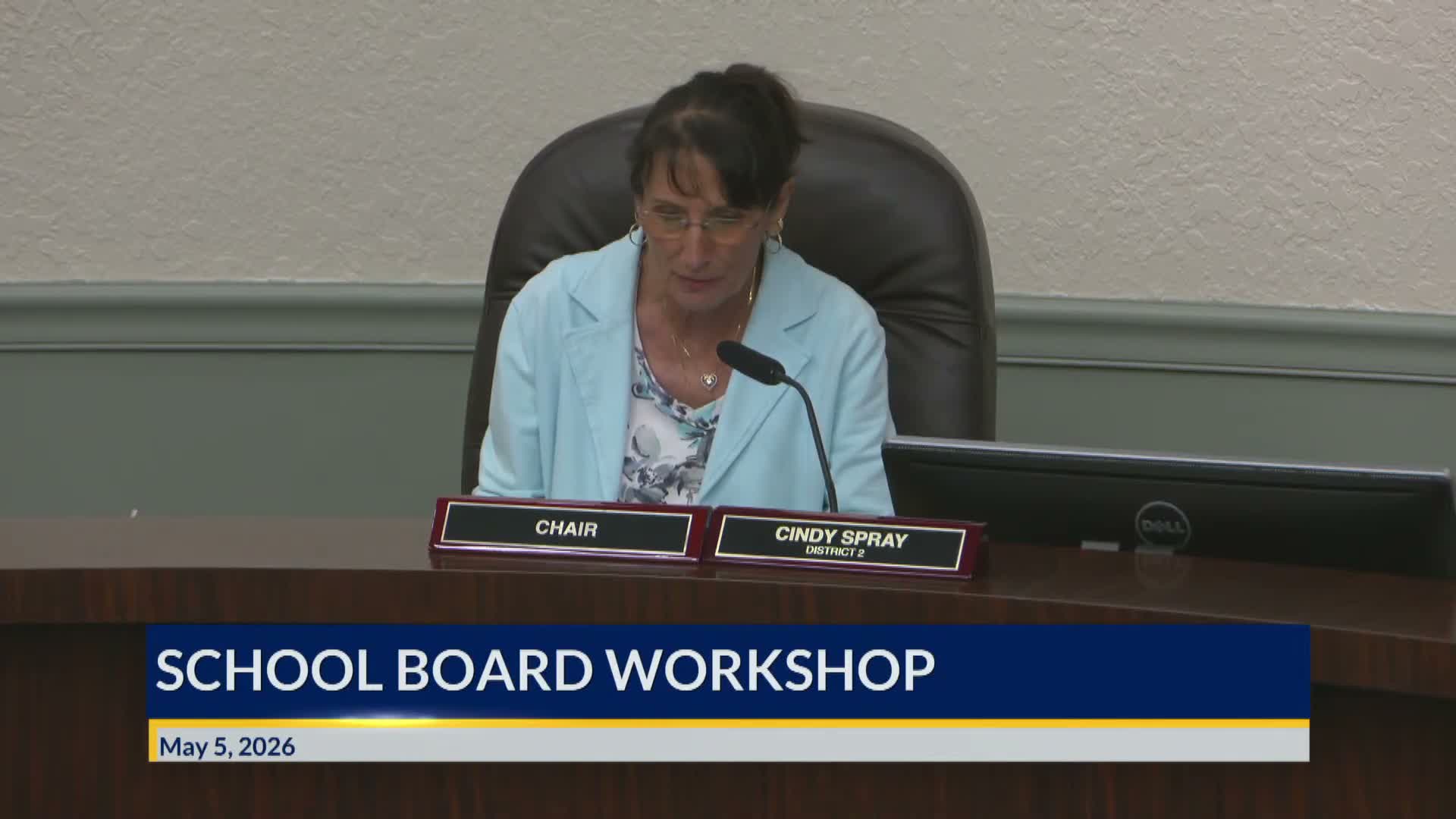
Erin Watson, director of programs for Game On Nation, described the nonprofit's Level Up curriculum on Tuesday during a Manatee County School Board workshop and urged the district to expand the improv-based classes that staff say helped participating middle school students.
"If I'm gonna teach you to be a good communicator, we're going to have to communicate in class," Watson said, describing an experiential approach that pairs teacher training with student games and a workbook for reflection. She said Game On has used improv-based exercises with sports teams, corporations and military units and adapted the same activities for middle-school classrooms.
Deputy Superintendent Derek Jensen told the board the program piloted this year at Braden River, Lee and King middle schools in three different delivery models: Braden River used two semester sections and targeted selection of students; King integrated the curriculum into a year-long study-skills course for sixth graders; Lee offered it as an elective. Jensen said early district data comparing the same students from the prior third quarter to this year's third quarter show fewer D's and F's among participants, though staff cautioned comparability across delivery models is imperfect.
Principals and students provided testimonials that were read during the presentation. Watson said Game On runs a four-day professional development program for teachers and provides an online portal with videos of exercises, discussion boards and a teacher's guide to support classroom implementation.
Board members asked whether students would opt in or be selected. Watson and district staff said selection practices varied by site: some schools placed students by need, others ran it as an elective, and principals will retain discretion to choose the best delivery model for each campus next year. Jensen said staff recommended the Braden River selection model as one of the more successful approaches, but that a mix of elective and targeted placements might be appropriate as the district scales the program.
The district plans to expand the program to seven schools next year, budgeting roughly 22 sections and about 440 students. Watson said the district's materials and teacher training accompany the expansion; staff said teacher training is a summer program and that they will have more detailed data for the board in a year.
The board praised the program's focus on communication, empathy and resilience. "We laugh with, not at each other," Watson said, summarizing a central classroom norm the program emphasizes.
The presentation concluded with a board invitation to visit classrooms and observe the curriculum in action. Staff said the district will provide follow-up data and implementation plans as part of the coming school-year budget and scheduling work.
"If I'm gonna teach you to be a good communicator, we're going to have to communicate in class," Watson said, describing an experiential approach that pairs teacher training with student games and a workbook for reflection. She said Game On has used improv-based exercises with sports teams, corporations and military units and adapted the same activities for middle-school classrooms.
Deputy Superintendent Derek Jensen told the board the program piloted this year at Braden River, Lee and King middle schools in three different delivery models: Braden River used two semester sections and targeted selection of students; King integrated the curriculum into a year-long study-skills course for sixth graders; Lee offered it as an elective. Jensen said early district data comparing the same students from the prior third quarter to this year's third quarter show fewer D's and F's among participants, though staff cautioned comparability across delivery models is imperfect.
Principals and students provided testimonials that were read during the presentation. Watson said Game On runs a four-day professional development program for teachers and provides an online portal with videos of exercises, discussion boards and a teacher's guide to support classroom implementation.
Board members asked whether students would opt in or be selected. Watson and district staff said selection practices varied by site: some schools placed students by need, others ran it as an elective, and principals will retain discretion to choose the best delivery model for each campus next year. Jensen said staff recommended the Braden River selection model as one of the more successful approaches, but that a mix of elective and targeted placements might be appropriate as the district scales the program.
The district plans to expand the program to seven schools next year, budgeting roughly 22 sections and about 440 students. Watson said the district's materials and teacher training accompany the expansion; staff said teacher training is a summer program and that they will have more detailed data for the board in a year.
The board praised the program's focus on communication, empathy and resilience. "We laugh with, not at each other," Watson said, summarizing a central classroom norm the program emphasizes.
The presentation concluded with a board invitation to visit classrooms and observe the curriculum in action. Staff said the district will provide follow-up data and implementation plans as part of the coming school-year budget and scheduling work.
Don't Miss a Word: See the Full Meeting!
Go beyond summaries. Unlock every video, transcript, and key insight with a Founder Membership.
✓
Get instant access to full meeting videos
✓
Search and clip any phrase from complete transcripts
✓
Receive AI-powered summaries & custom alerts
✓
Enjoy lifetime, unrestricted access to government data
30-day money-back guarantee
