Grants-debarment bill fails in committee on 13-13 tie after debate on scope and verification
May 06, 2026 | 2026 Legislature MN, Minnesota
This article was created by AI summarizing key points discussed. AI makes mistakes, so for full details and context, please refer to the video of the full meeting. Please report any errors so we can fix them. Report an error »
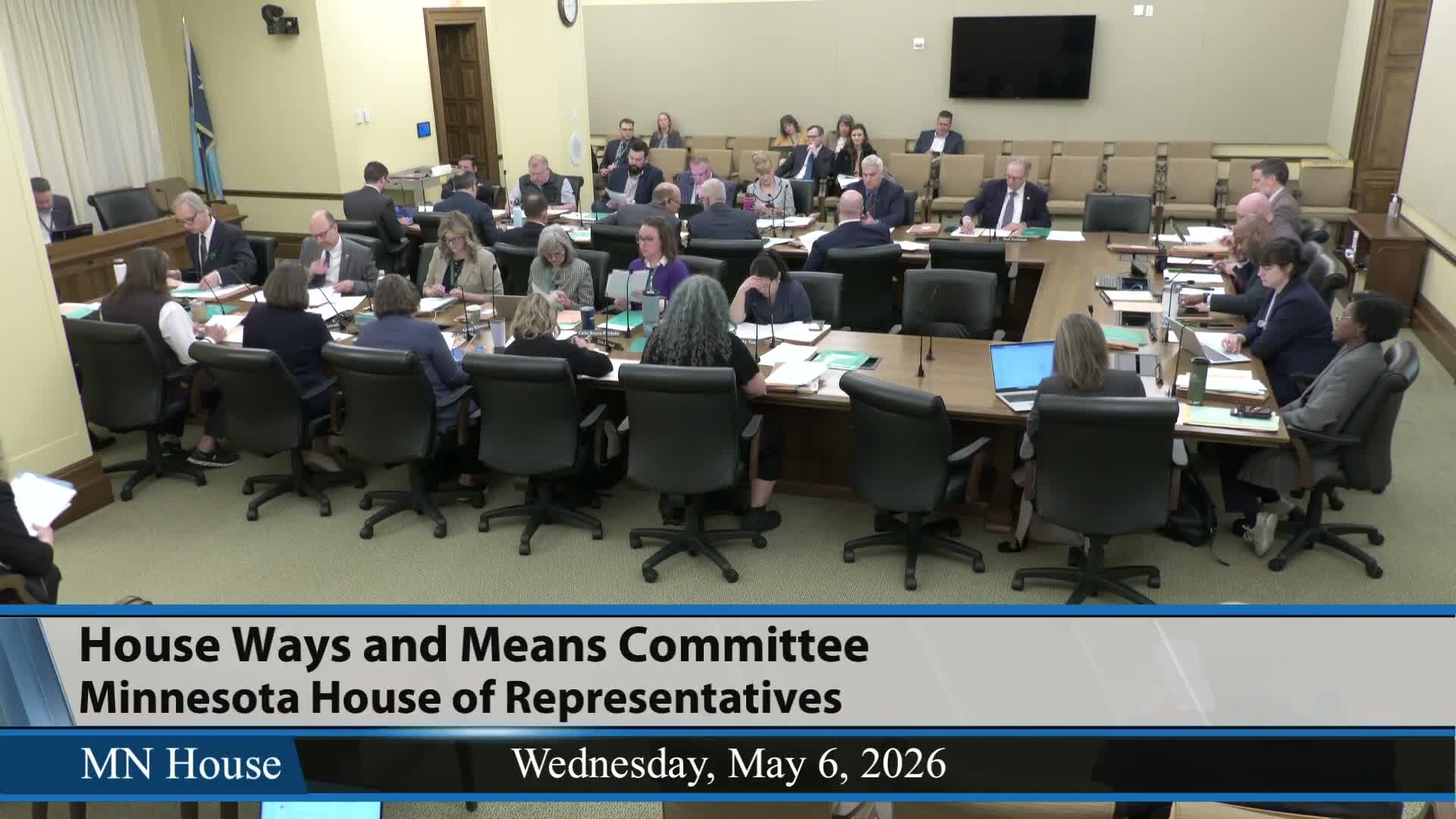
House File 3093, a bill aimed at preventing entities that have violated Minnesota fraud statutes from receiving state grants, failed to advance in the House Ways and Means Committee on May 6 after a roll-call vote ended in a 13-13 tie.
Representative Grama (sponsored bill and/or spoke to the measure as presented) and others described the proposal as a step to close gaps in the state’s pre-award review process. A sponsor summarized the bill’s core concept: "this bill implements a simple concept that entities who steal from the state government shouldn't be eligible for government grants." The bill would require potential grantees to certify compliance with laws including tax, workers' compensation, unemployment insurance and prevailing-wage requirements and would bar entities with certain fraud findings from grant eligibility.
Committee members split on whether the bill was sufficiently narrow and whether it should receive additional hearings in other committees. Chair Baker said he was concerned the bill had not gone through his committee and wanted more time for agency input, saying he feared the provision "is gonna turn into a mega cost in a budget year" if the language swept too broadly. Representative Scott and others questioned how verification would be performed and whether the process would merely accept an applicant’s statement of compliance.
Supporters argued the bill builds on existing frameworks such as the responsible-contractor law and a pre-risk assessment process and that it represents a bipartisan measure to prevent fraud. Representative Pinto noted that false statements under oath could carry criminal penalties under Minnesota law (citing the general disincentive of a false statement statute) and urged clarity on enforcement.
A roll-call was requested and granted. The clerk read votes and the committee chair announced the result: "On a vote of, 13 13, it is a tie. It means the motion fails." The bill did not advance; members who said they supported the bill urged further work to narrow language and coordinate with agencies.
Committee members previewed a possible noon meeting the next day and adjourned.
Representative Grama (sponsored bill and/or spoke to the measure as presented) and others described the proposal as a step to close gaps in the state’s pre-award review process. A sponsor summarized the bill’s core concept: "this bill implements a simple concept that entities who steal from the state government shouldn't be eligible for government grants." The bill would require potential grantees to certify compliance with laws including tax, workers' compensation, unemployment insurance and prevailing-wage requirements and would bar entities with certain fraud findings from grant eligibility.
Committee members split on whether the bill was sufficiently narrow and whether it should receive additional hearings in other committees. Chair Baker said he was concerned the bill had not gone through his committee and wanted more time for agency input, saying he feared the provision "is gonna turn into a mega cost in a budget year" if the language swept too broadly. Representative Scott and others questioned how verification would be performed and whether the process would merely accept an applicant’s statement of compliance.
Supporters argued the bill builds on existing frameworks such as the responsible-contractor law and a pre-risk assessment process and that it represents a bipartisan measure to prevent fraud. Representative Pinto noted that false statements under oath could carry criminal penalties under Minnesota law (citing the general disincentive of a false statement statute) and urged clarity on enforcement.
A roll-call was requested and granted. The clerk read votes and the committee chair announced the result: "On a vote of, 13 13, it is a tie. It means the motion fails." The bill did not advance; members who said they supported the bill urged further work to narrow language and coordinate with agencies.
Committee members previewed a possible noon meeting the next day and adjourned.
Don't Miss a Word: See the Full Meeting!
Go beyond summaries. Unlock every video, transcript, and key insight with a Founder Membership.
✓
Get instant access to full meeting videos
✓
Search and clip any phrase from complete transcripts
✓
Receive AI-powered summaries & custom alerts
✓
Enjoy lifetime, unrestricted access to government data
30-day money-back guarantee
