City meeting draws mixed public views on nearby data center development and local jobs
May 06, 2026 | Millville City, Cumberland County, New Jersey
This article was created by AI summarizing key points discussed. AI makes mistakes, so for full details and context, please refer to the video of the full meeting. Please report any errors so we can fix them. Report an error »
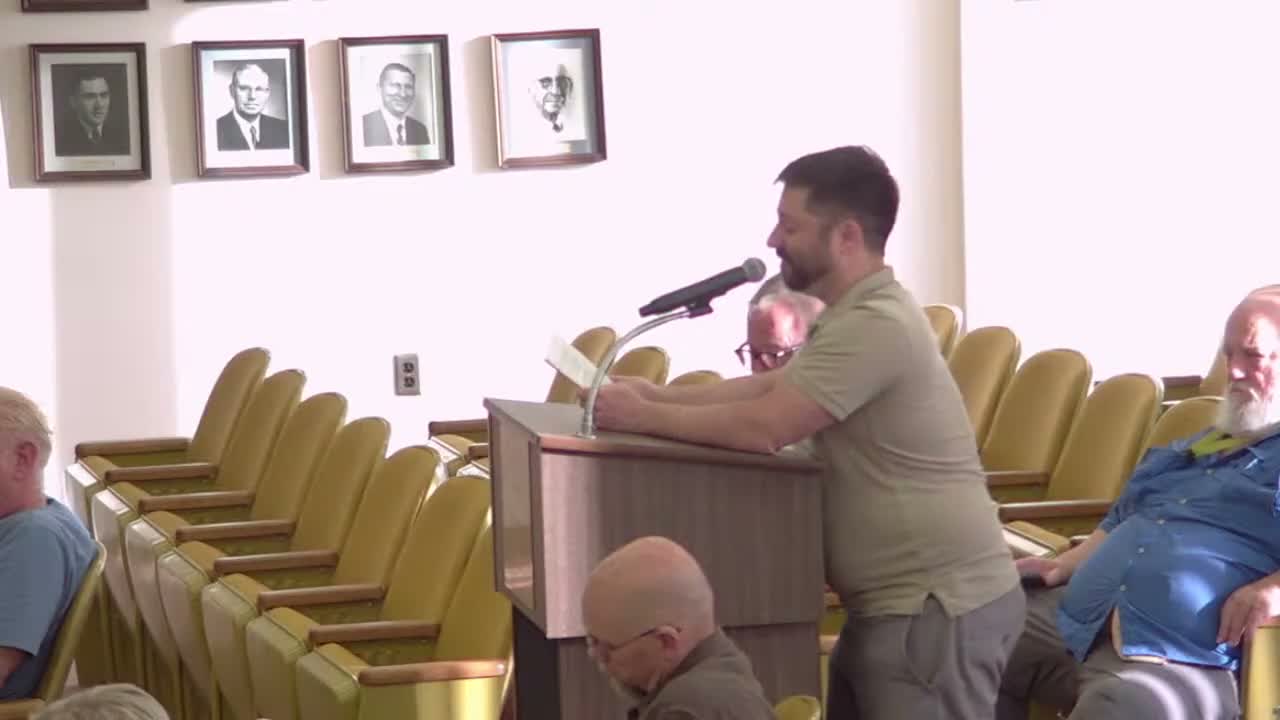
A Millville resident and local broadcaster, Steve Sola, told the commission that an anonymous local tech worker’s perspective merits consideration as the city debates restrictions on data-center development. Sola said that while opponents have legitimate environmental and character concerns, projects of this scale can deliver on-site job opportunities, new fiber and power infrastructure, and long-term tax revenue depending on project structure.
Sola relayed that the source — a software developer with experience in Microsoft-related systems — sees practical job pathways and potential for community-aligned infrastructure upgrades if the city and the applicant negotiate community benefits. "If we're serious about keeping skilled workers and students in this region, then projects like this at least represent one pathway to do that," Sola said, urging that policy choices weigh both risks and possible benefits.
Sola also cited an estimate, based on his source’s review, that projects of this size could generate "tens of millions of dollars per year in local revenue" depending on pilot agreements and structuring, though he emphasized that the figure is project-dependent and not guaranteed. He noted that infrastructure investments—fiber, power, drainage—are often built to the facility’s needs but can benefit surrounding neighborhoods if negotiated.
The public comment record also referenced opposition voiced at earlier meetings by groups such as Sustain SJ (represented previously by Zach Landesini), and Sola acknowledged that many residents felt "blindsided" by the Vineland data-center project. He urged the commission to ensure the full range of community perspectives are heard before considering bans or restrictions.
The commission did not take formal action on data-center policy at this meeting; Sola’s remarks were delivered during the public-comment portion and recorded for the public record.
Sola relayed that the source — a software developer with experience in Microsoft-related systems — sees practical job pathways and potential for community-aligned infrastructure upgrades if the city and the applicant negotiate community benefits. "If we're serious about keeping skilled workers and students in this region, then projects like this at least represent one pathway to do that," Sola said, urging that policy choices weigh both risks and possible benefits.
Sola also cited an estimate, based on his source’s review, that projects of this size could generate "tens of millions of dollars per year in local revenue" depending on pilot agreements and structuring, though he emphasized that the figure is project-dependent and not guaranteed. He noted that infrastructure investments—fiber, power, drainage—are often built to the facility’s needs but can benefit surrounding neighborhoods if negotiated.
The public comment record also referenced opposition voiced at earlier meetings by groups such as Sustain SJ (represented previously by Zach Landesini), and Sola acknowledged that many residents felt "blindsided" by the Vineland data-center project. He urged the commission to ensure the full range of community perspectives are heard before considering bans or restrictions.
The commission did not take formal action on data-center policy at this meeting; Sola’s remarks were delivered during the public-comment portion and recorded for the public record.
Don't Miss a Word: See the Full Meeting!
Go beyond summaries. Unlock every video, transcript, and key insight with a Founder Membership.
✓
Get instant access to full meeting videos
✓
Search and clip any phrase from complete transcripts
✓
Receive AI-powered summaries & custom alerts
✓
Enjoy lifetime, unrestricted access to government data
30-day money-back guarantee
