Oro Valley commission backs Rooney Ranch plan to boost open space, approves PAD rezoning 6-1
May 05, 2026 | Oro Valley, Pima County, Arizona
This article was created by AI summarizing key points discussed. AI makes mistakes, so for full details and context, please refer to the video of the full meeting. Please report any errors so we can fix them. Report an error »
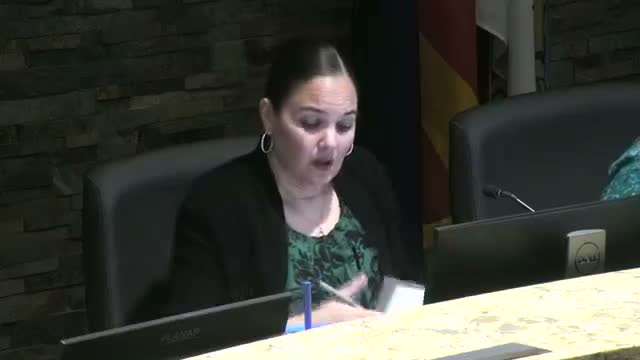
The Oro Valley Planning & Zoning Commission on May 5 recommended approval of two town-initiated applications for portions of the Oro Valley Town Center (the former Rooney Ranch), endorsing a general plan amendment and a Planned Area Development (PAD) rezoning intended to increase permanent open space, reduce building heights on town-owned parcels and create new commercial and housing opportunities.
Michael Spath, the town’s principal planner, told commissioners the package of changes would preserve roughly 88 acres of the PAD as permanent open space, increasing preserved acreage from about 69 acres, and convert 77 entitled single-family lots in Area 4 into trails and open space. Spath said the proposal also reduces building heights across town-owned portions, removes an entitled 75-foot hotel in Area 3 and increases commercial acreage on the town-owned land to support development along the Oracle Road corridor. “Staff is recommending approval of both items,” Spath said.
The proposal includes two commercial concepts for a new Area 2B (traditional shopping-center and linear/strip designs) with height limits of about 34 feet within 200 feet of the Oracle Road right of way and 49 feet beyond 200 feet on town-owned property. For Area 3 staff presented two residential options — roughly 225–300 apartment units in one concept or about 105–110 townhomes in another — and said future developers must substantially conform to one of the approved illustrative site plans.
Residents who spoke during the public hearing pressed the commission to protect the landscape. “This is a very unique and special piece of property…there’s something sacred about it,” resident Kurt Wyrick said, urging commissioners to keep the land as open space. Judy Scheffler, who lives at nearby San Dorado Villas, asked whether the project would extend First Avenue across the Rooney Wash and how ADOT would coordinate traffic-signal timing on Oracle Road; Spath replied that a vehicular bridge at First Avenue was envisioned for future development and that updated traffic numbers would be submitted to ADOT for signal timing revisions.
Commissioners pressed staff on traffic impacts and cross-access between private and town-owned parcels. Spath said the property is already entitled for retail, residential and mixed uses and that — by eliminating 77 single-family lots and adjusting some entitlements — staff expects the proposed configurations to generate less traffic than what is currently entitled. He also said cross-access easements across privately owned Area 2A (owned by Kitchell) would need to be negotiated should Area 2B be sold or developed.
On motions, Commissioner Zielinski moved to recommend approval of Item A, the general plan amendment for town-owned portions of Area 4 (Low Density Residential 2 to Community and Regional Commercial and Open Space); Commissioner Thomas seconded and the motion passed unanimously (7-0). Commissioner Zielinski later moved to limit Area 3 to townhomes only, but that motion received no second and did not advance. A subsequent motion by Commissioner Stegman to recommend approval of the PAD amendment (Attachment 2) was seconded by Commissioner Thomas and passed 6-1, with Commissioner Zielinski recorded as opposed.
The commission’s recommendations will be forwarded to the town council, which is scheduled to consider the applications at its next meeting. Staff also reminded commissioners that the applications were phase one of a longer process to set zoning and illustrative site plans; any future decision to sell town-owned parcels or approve final development proposals would be made by the council and subject to detailed traffic and design review.
The commission closed the public hearing, received a short planning update on other neighborhood meetings, and adjourned.
Michael Spath, the town’s principal planner, told commissioners the package of changes would preserve roughly 88 acres of the PAD as permanent open space, increasing preserved acreage from about 69 acres, and convert 77 entitled single-family lots in Area 4 into trails and open space. Spath said the proposal also reduces building heights across town-owned portions, removes an entitled 75-foot hotel in Area 3 and increases commercial acreage on the town-owned land to support development along the Oracle Road corridor. “Staff is recommending approval of both items,” Spath said.
The proposal includes two commercial concepts for a new Area 2B (traditional shopping-center and linear/strip designs) with height limits of about 34 feet within 200 feet of the Oracle Road right of way and 49 feet beyond 200 feet on town-owned property. For Area 3 staff presented two residential options — roughly 225–300 apartment units in one concept or about 105–110 townhomes in another — and said future developers must substantially conform to one of the approved illustrative site plans.
Residents who spoke during the public hearing pressed the commission to protect the landscape. “This is a very unique and special piece of property…there’s something sacred about it,” resident Kurt Wyrick said, urging commissioners to keep the land as open space. Judy Scheffler, who lives at nearby San Dorado Villas, asked whether the project would extend First Avenue across the Rooney Wash and how ADOT would coordinate traffic-signal timing on Oracle Road; Spath replied that a vehicular bridge at First Avenue was envisioned for future development and that updated traffic numbers would be submitted to ADOT for signal timing revisions.
Commissioners pressed staff on traffic impacts and cross-access between private and town-owned parcels. Spath said the property is already entitled for retail, residential and mixed uses and that — by eliminating 77 single-family lots and adjusting some entitlements — staff expects the proposed configurations to generate less traffic than what is currently entitled. He also said cross-access easements across privately owned Area 2A (owned by Kitchell) would need to be negotiated should Area 2B be sold or developed.
On motions, Commissioner Zielinski moved to recommend approval of Item A, the general plan amendment for town-owned portions of Area 4 (Low Density Residential 2 to Community and Regional Commercial and Open Space); Commissioner Thomas seconded and the motion passed unanimously (7-0). Commissioner Zielinski later moved to limit Area 3 to townhomes only, but that motion received no second and did not advance. A subsequent motion by Commissioner Stegman to recommend approval of the PAD amendment (Attachment 2) was seconded by Commissioner Thomas and passed 6-1, with Commissioner Zielinski recorded as opposed.
The commission’s recommendations will be forwarded to the town council, which is scheduled to consider the applications at its next meeting. Staff also reminded commissioners that the applications were phase one of a longer process to set zoning and illustrative site plans; any future decision to sell town-owned parcels or approve final development proposals would be made by the council and subject to detailed traffic and design review.
The commission closed the public hearing, received a short planning update on other neighborhood meetings, and adjourned.
Don't Miss a Word: See the Full Meeting!
Go beyond summaries. Unlock every video, transcript, and key insight with a Founder Membership.
✓
Get instant access to full meeting videos
✓
Search and clip any phrase from complete transcripts
✓
Receive AI-powered summaries & custom alerts
✓
Enjoy lifetime, unrestricted access to government data
30-day money-back guarantee
