Sanford council advances rent-stabilization ordinance after crowded public hearing where residents warned of homelessness
May 06, 2026 | Sanford Public Schools, School Districts, Maine
This article was created by AI summarizing key points discussed. AI makes mistakes, so for full details and context, please refer to the video of the full meeting. Please report any errors so we can fix them. Report an error »
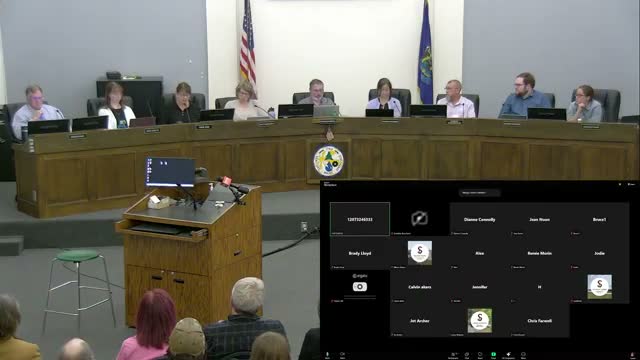
Sanford City Council on May 6 heard more than a dozen residents describe sharp lot-rent increases and plead with elected officials to pass a mobile-home lot rent-stabilization ordinance intended to limit future hikes and provide a formal process for larger increases.
"If this ordinance does not go in favor of the residents of the mobile home parks, it will be catastrophic, causing so many people to become homeless," said Michael Healy, a resident who testified during the hearing and asked the council to extend the emergency moratorium that currently protects parks from immediate increases.
The draft ordinance, presented by City Manager Steve Buck, adapts the state model (LD 1765) and would allow routine annual increases tied to the consumer price index for urban wage earners (CPI-W) but capped at 3%. It also would establish a five-member Rent Stabilization Board with two alternates to review petitions for larger increases and to evaluate park financials under specified standards.
Why it matters: Many mobile-home residents own their dwelling but lease the lot, a dynamic speakers described as "sticky" because moving a manufactured home is costly or infeasible. Witnesses said that steep, repeated rent increases and nonrefundable entrance or background-check fees have left long-term residents unable to sell or relocate.
Residents and experts at the hearing gave examples and raised specific concerns. Janet Floyd, who said she moved into a park in 2021, described repeated 75-cent-per-month increases that have outpaced Social Security and left older residents with few options. Diane Emery, who said she retired into a manufactured home, told the council her lot rent rose from $335 to $600 and that new buyers face nonrefundable entrance fees as high as $1,800.
Union organizer Dan Nguyen, who has worked with mobile-home tenants in several Maine communities, told the council: "These firms aren't here to build community. They're here to extract profit," arguing that private-equity ownership and so-called "junk fees" have driven the problem statewide.
Council reaction and legal framing: Buck told the council the ordinance tries to balance tenant protections and property owners' legal rights. He said the ordinance caps routine increases at the lesser of CPI-W or 3% and creates a formal evidentiary review for larger increases, including a definition of a reasonable rate of return and standards for allowable capital and operating expenses. Buck also noted the ordinance was reviewed by the city attorney with attention to takings and due-process concerns.
Several councilors expressed support for the ordinance's goals but raised technical questions. One asked whether a credit-check fee could be capped "at cost"; another suggested the 3% cap might be low compared with recent cost pressures and recommended reviewing the cap after a year. One councilor said personal experience in a mobile-home community made them a strong supporter.
What the ordinance would do (key details residents and staff highlighted):
- Permit an annual increase tied to CPI-W but capped at 3% in most cases.
- Create a Rent Stabilization Board (five members, two alternates) with financial-analysis expertise to hear applications when lot rents exceed an affordability threshold or when owners seek increases beyond the annual allowance.
- Include an affordability threshold and a definition of an owner's reasonable rate of return (currently set in the draft at 7.5% as a reference point) and standards for reviewing three years of financial records.
- Preserve a petition and quasi-judicial hearing process for larger increases, with findings of fact to support potential judicial review.
Speakers at the hearing repeatedly asked the council to extend the emergency moratorium (set to expire June 14) to prevent imminent increases while the ordinance proceeds. Mayor Brink replied that the measure is a first reading and that the ordinance will return for a second reading in two weeks, at which point councilors may adopt changes; the mayor said that timeline meant an extension of the moratorium was not necessary if the council completes the process on schedule.
No formal vote on the ordinance occurred at the meeting; the council scheduled the second reading in two weeks. Residents and advocates will have the opportunity to respond to any amendments before the council takes final action.
Next steps: The council will hold a second reading in two weeks when it may vote on the ordinance or amend it. If adopted, the city would establish the Rent Stabilization Board and implement the application and review procedures described in the draft.
"If this ordinance does not go in favor of the residents of the mobile home parks, it will be catastrophic, causing so many people to become homeless," said Michael Healy, a resident who testified during the hearing and asked the council to extend the emergency moratorium that currently protects parks from immediate increases.
The draft ordinance, presented by City Manager Steve Buck, adapts the state model (LD 1765) and would allow routine annual increases tied to the consumer price index for urban wage earners (CPI-W) but capped at 3%. It also would establish a five-member Rent Stabilization Board with two alternates to review petitions for larger increases and to evaluate park financials under specified standards.
Why it matters: Many mobile-home residents own their dwelling but lease the lot, a dynamic speakers described as "sticky" because moving a manufactured home is costly or infeasible. Witnesses said that steep, repeated rent increases and nonrefundable entrance or background-check fees have left long-term residents unable to sell or relocate.
Residents and experts at the hearing gave examples and raised specific concerns. Janet Floyd, who said she moved into a park in 2021, described repeated 75-cent-per-month increases that have outpaced Social Security and left older residents with few options. Diane Emery, who said she retired into a manufactured home, told the council her lot rent rose from $335 to $600 and that new buyers face nonrefundable entrance fees as high as $1,800.
Union organizer Dan Nguyen, who has worked with mobile-home tenants in several Maine communities, told the council: "These firms aren't here to build community. They're here to extract profit," arguing that private-equity ownership and so-called "junk fees" have driven the problem statewide.
Council reaction and legal framing: Buck told the council the ordinance tries to balance tenant protections and property owners' legal rights. He said the ordinance caps routine increases at the lesser of CPI-W or 3% and creates a formal evidentiary review for larger increases, including a definition of a reasonable rate of return and standards for allowable capital and operating expenses. Buck also noted the ordinance was reviewed by the city attorney with attention to takings and due-process concerns.
Several councilors expressed support for the ordinance's goals but raised technical questions. One asked whether a credit-check fee could be capped "at cost"; another suggested the 3% cap might be low compared with recent cost pressures and recommended reviewing the cap after a year. One councilor said personal experience in a mobile-home community made them a strong supporter.
What the ordinance would do (key details residents and staff highlighted):
- Permit an annual increase tied to CPI-W but capped at 3% in most cases.
- Create a Rent Stabilization Board (five members, two alternates) with financial-analysis expertise to hear applications when lot rents exceed an affordability threshold or when owners seek increases beyond the annual allowance.
- Include an affordability threshold and a definition of an owner's reasonable rate of return (currently set in the draft at 7.5% as a reference point) and standards for reviewing three years of financial records.
- Preserve a petition and quasi-judicial hearing process for larger increases, with findings of fact to support potential judicial review.
Speakers at the hearing repeatedly asked the council to extend the emergency moratorium (set to expire June 14) to prevent imminent increases while the ordinance proceeds. Mayor Brink replied that the measure is a first reading and that the ordinance will return for a second reading in two weeks, at which point councilors may adopt changes; the mayor said that timeline meant an extension of the moratorium was not necessary if the council completes the process on schedule.
No formal vote on the ordinance occurred at the meeting; the council scheduled the second reading in two weeks. Residents and advocates will have the opportunity to respond to any amendments before the council takes final action.
Next steps: The council will hold a second reading in two weeks when it may vote on the ordinance or amend it. If adopted, the city would establish the Rent Stabilization Board and implement the application and review procedures described in the draft.
Don't Miss a Word: See the Full Meeting!
Go beyond summaries. Unlock every video, transcript, and key insight with a Founder Membership.
✓
Get instant access to full meeting videos
✓
Search and clip any phrase from complete transcripts
✓
Receive AI-powered summaries & custom alerts
✓
Enjoy lifetime, unrestricted access to government data
30-day money-back guarantee
