Oklahoma House passes ‘Choosing Childbirth’ bill after heated floor debate over out-of-state providers and data privacy
May 05, 2026 | 2026 Legislature OK, Oklahoma
This article was created by AI summarizing key points discussed. AI makes mistakes, so for full details and context, please refer to the video of the full meeting. Please report any errors so we can fix them. Report an error »
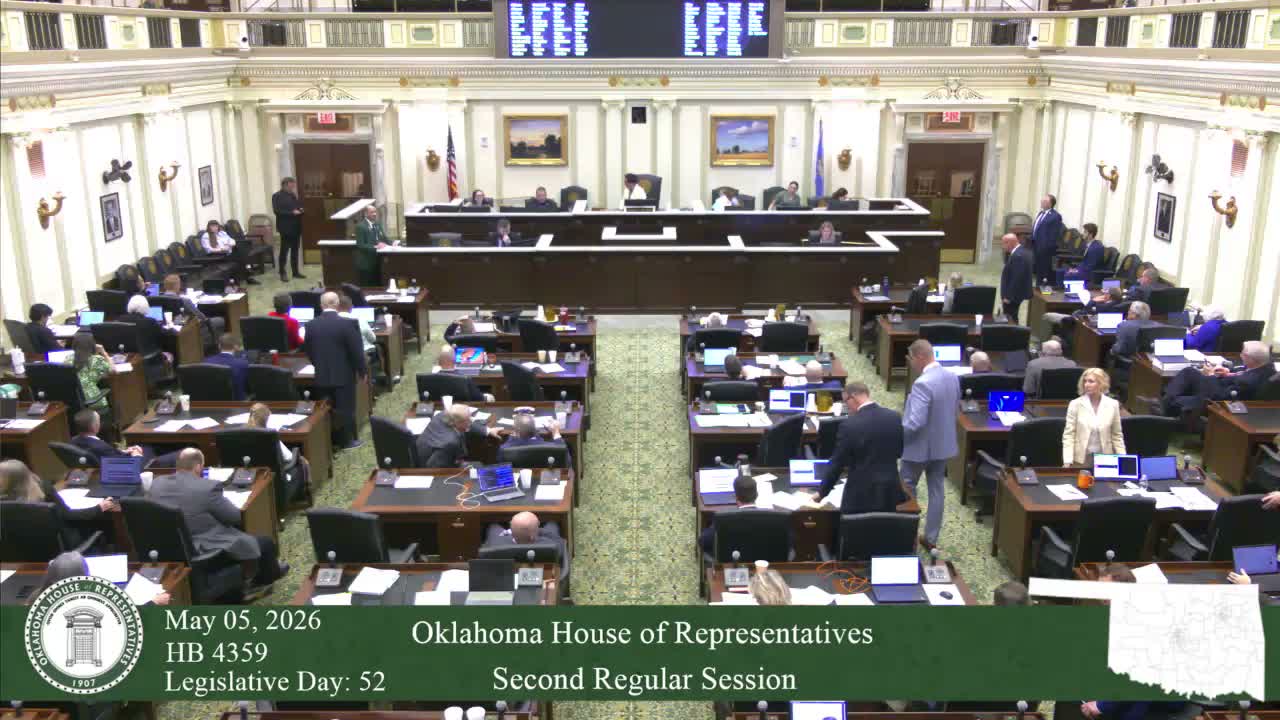
The Oklahoma House of Representatives passed Senate Bill 15-03, known as the Choosing Childbirth Act, on a final vote of 73 to 18 after an extended floor debate over whether state grant funds could be awarded to entities based outside Oklahoma and how client data would be protected.
Representative LePak, the bill’s floor sponsor, told colleagues the measure restores the original Senate language and removes a committee amendment that would have required certain client-facing personnel to be domiciled in Oklahoma. LePak defended the change as necessary to allow established national providers to participate, saying in debate that the funding and services would be used to “serve Oklahomans” and arguing, “We’re saving babies.”
Opponents raised repeated concerns about the amendment and its effect on existing Oklahoma organizations. Representative Roe asked whether the change would result in taxpayer dollars going out of state; LePak replied that grants are administered by the health department, that successful in-state programs should continue to receive funding, and that recipients would be auditable. Representative Lita Munson flagged data-privacy risks, citing language on a provider’s website that “the communication of information over the Internet, whether sent or received, is generally not secure,” and urged caution before sending state dollars to organizations that lack a local presence.
Other critics framed the choice as one about priorities and supports for mothers. Representative Timmons, arguing against the bill, urged members to consider local maternal-health capacity and economic supports for families. Proponents, including Representative Stegall and Pro Tem Anthony Moore, said the program puts resources into referral networks and supports that could prevent abortions by connecting women to pregnancy services and follow-up care; Moore said during debate that a “vote no on this bill is a vote in favor of murder,” characterizing the stakes as life and death.
Lawmakers also discussed administrative details: the bill creates a grant process (three-year cycles were referenced), requires reporting and auditing of funds, and leaves implementation and recipient selection to the administering agency. Several members asked whether the same functions could be performed through existing state resources such as 2-1-1 and whether local pregnancy resource centers would be displaced; proponents responded that the program aims to capture individuals seeking abortion services online and direct them to local care where appropriate.
After floor amendment discussion, the House adopted the amendment, advanced the bill to a final vote and passed SB 15-03 73–18. Debate concluded on the floor and the chamber recessed later in the day.
The bill’s adoption does not itself create specific contracts; it funds a grant-making process that the health department will administer, subject to audits and application review. The House record shows no final list of grant recipients on the floor; those decisions would be made in the grant cycle and are subject to subsequent administrative oversight.
What happens next: the House recorded the final passage. The transcript records the chamber’s adjournment into a recess at 2:00 p.m. after the vote.
Representative LePak, the bill’s floor sponsor, told colleagues the measure restores the original Senate language and removes a committee amendment that would have required certain client-facing personnel to be domiciled in Oklahoma. LePak defended the change as necessary to allow established national providers to participate, saying in debate that the funding and services would be used to “serve Oklahomans” and arguing, “We’re saving babies.”
Opponents raised repeated concerns about the amendment and its effect on existing Oklahoma organizations. Representative Roe asked whether the change would result in taxpayer dollars going out of state; LePak replied that grants are administered by the health department, that successful in-state programs should continue to receive funding, and that recipients would be auditable. Representative Lita Munson flagged data-privacy risks, citing language on a provider’s website that “the communication of information over the Internet, whether sent or received, is generally not secure,” and urged caution before sending state dollars to organizations that lack a local presence.
Other critics framed the choice as one about priorities and supports for mothers. Representative Timmons, arguing against the bill, urged members to consider local maternal-health capacity and economic supports for families. Proponents, including Representative Stegall and Pro Tem Anthony Moore, said the program puts resources into referral networks and supports that could prevent abortions by connecting women to pregnancy services and follow-up care; Moore said during debate that a “vote no on this bill is a vote in favor of murder,” characterizing the stakes as life and death.
Lawmakers also discussed administrative details: the bill creates a grant process (three-year cycles were referenced), requires reporting and auditing of funds, and leaves implementation and recipient selection to the administering agency. Several members asked whether the same functions could be performed through existing state resources such as 2-1-1 and whether local pregnancy resource centers would be displaced; proponents responded that the program aims to capture individuals seeking abortion services online and direct them to local care where appropriate.
After floor amendment discussion, the House adopted the amendment, advanced the bill to a final vote and passed SB 15-03 73–18. Debate concluded on the floor and the chamber recessed later in the day.
The bill’s adoption does not itself create specific contracts; it funds a grant-making process that the health department will administer, subject to audits and application review. The House record shows no final list of grant recipients on the floor; those decisions would be made in the grant cycle and are subject to subsequent administrative oversight.
What happens next: the House recorded the final passage. The transcript records the chamber’s adjournment into a recess at 2:00 p.m. after the vote.
View the Full Meeting & All Its Details
This article offers just a summary. Unlock complete video, transcripts, and insights as a Founder Member.
✓
Watch full, unedited meeting videos
✓
Search every word spoken in unlimited transcripts
✓
AI summaries & real-time alerts (all government levels)
✓
Permanent access to expanding government content
30-day money-back guarantee
