Facilities committee debates surplusing Santa Rosa school sites, flags Comstock and Herbert Slater for further study
May 04, 2026 | Santa Rosa High, School Districts, California
This article was created by AI summarizing key points discussed. AI makes mistakes, so for full details and context, please refer to the video of the full meeting. Please report any errors so we can fix them. Report an error »
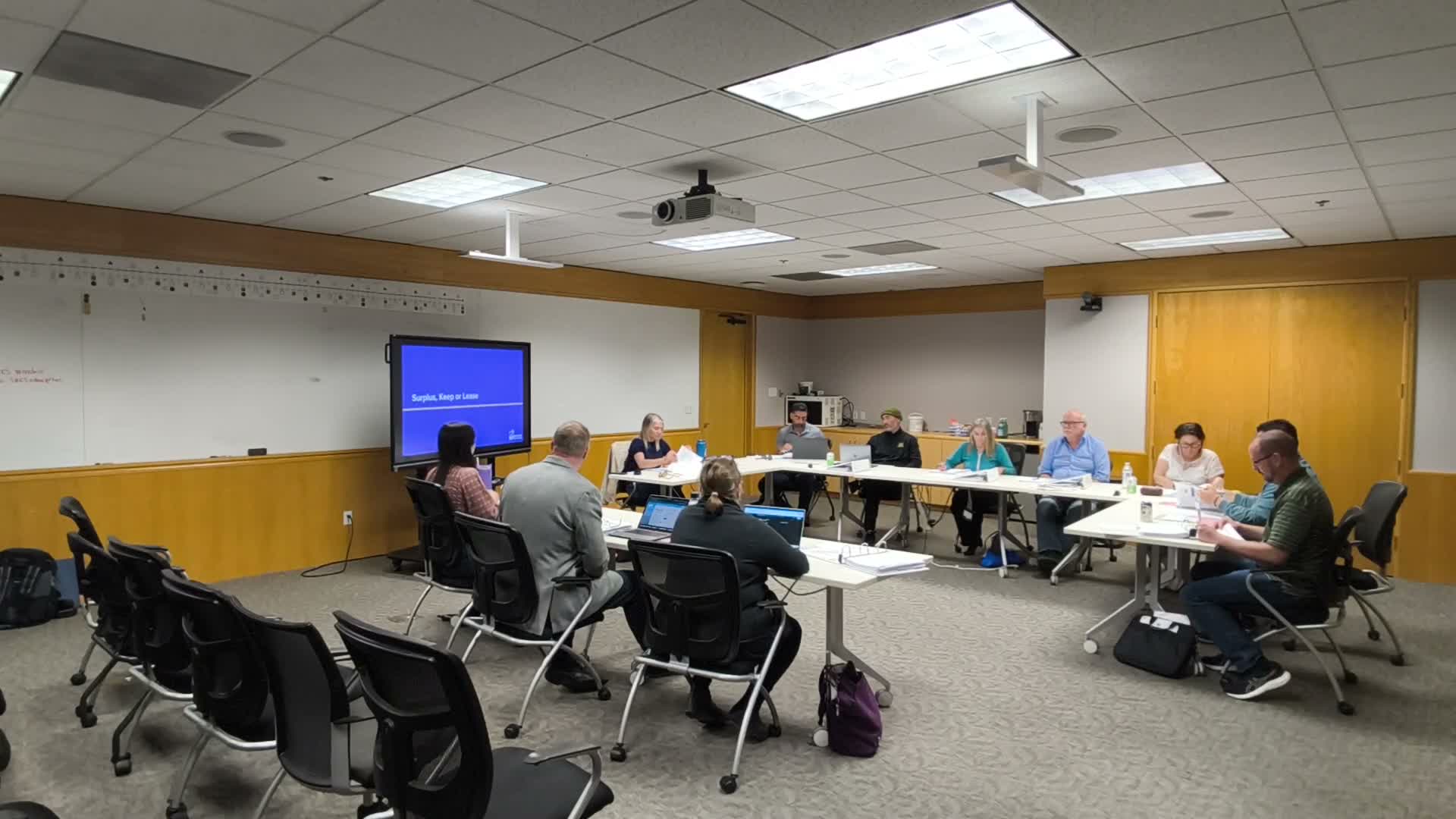
A facilities committee convened to review the district’s updated facilities master plan and to advise the school board on whether to keep, lease or surplus several school properties.
Staff member (S3) told the committee the board adopted an updated facilities master plan on April 22 that includes revised enrollment, demographics and capacity planning data the committee should use in forming recommendations. S3 summarized evaluation criteria for each site: educational value, program potential, geographic fit, cost to operate and maintain, sale-versus-lease revenue, facility condition, marketability and community impact.
Committee members discussed how Education Code 17642 relates to proceeds from sales or leases. Planning-commission representative S2 and others emphasized that any recommendation forwarded to the board is advisory: the board may accept or reject the committee’s proposals and must follow statutory steps before any property is sold or formally designated surplus.
Committee member S3 said the group should consider options that preserve the district’s flexibility and value. “I would vote to say we should surplus them all,” S3 said, while also noting that detailed financial analysis would be needed before decisions were finalized. Several members pushed back against an immediate blanket approach, arguing some sites serve important community or athletic functions.
A number of site-specific observations were raised in the discussion: Brookhill was repeatedly identified as a strong candidate for near-term surplus, while members urged more caution on Herbert Slater and Comstock because of athletic fields and community use. S4, describing community concerns, warned the committee that “the sale of Slater will indicate that you cannot move back to a middle school, high school approach” and urged preserving options for athletics and joint-use agreements.
The committee also considered where proceeds from sales or long-term leases would flow. S5 noted that under applicable surplus accounting the money from long-term leases or sales typically flows into Fund 40 (facilities) and is not automatically available to the district’s general fund. S5 also said the consultant’s materials on development potential needed correction and that the City Center plan allows higher density in some areas, affecting market value estimates. “There is no general plan amendment requirement of any of these properties to be able to develop them,” S5 said.
S5 offered a revenue estimate for context: “Something in the order of $80,000,000 over 10 years can be generated” if certain properties are surplused, and cautioned that state waiver rules require treating such proceeds as one-time funds. Committee members discussed phasing options and how waiver timing and eligibility (including a 10‑year ineligibility window discussed in the meeting) would influence recommendations.
Near the end of the session S3 proposed a motion "that we surplus the entire parcel, with the first priority use of housing, and the second priority use of a community-serving partner organization." The transcript records the motion but does not record a second or a formal vote in these segments.
The committee agreed to move forward on easier items first (members noted apparent consensus on Brookhill and certain smaller sites) and to return at a future meeting for deeper discussion of Comstock, Herbert Slater and other properties where community impact and athletic facilities are key concerns. Staff will include the committee’s findings in a written report to the board and follow up on posting the meeting recording.
Staff member (S3) told the committee the board adopted an updated facilities master plan on April 22 that includes revised enrollment, demographics and capacity planning data the committee should use in forming recommendations. S3 summarized evaluation criteria for each site: educational value, program potential, geographic fit, cost to operate and maintain, sale-versus-lease revenue, facility condition, marketability and community impact.
Committee members discussed how Education Code 17642 relates to proceeds from sales or leases. Planning-commission representative S2 and others emphasized that any recommendation forwarded to the board is advisory: the board may accept or reject the committee’s proposals and must follow statutory steps before any property is sold or formally designated surplus.
Committee member S3 said the group should consider options that preserve the district’s flexibility and value. “I would vote to say we should surplus them all,” S3 said, while also noting that detailed financial analysis would be needed before decisions were finalized. Several members pushed back against an immediate blanket approach, arguing some sites serve important community or athletic functions.
A number of site-specific observations were raised in the discussion: Brookhill was repeatedly identified as a strong candidate for near-term surplus, while members urged more caution on Herbert Slater and Comstock because of athletic fields and community use. S4, describing community concerns, warned the committee that “the sale of Slater will indicate that you cannot move back to a middle school, high school approach” and urged preserving options for athletics and joint-use agreements.
The committee also considered where proceeds from sales or long-term leases would flow. S5 noted that under applicable surplus accounting the money from long-term leases or sales typically flows into Fund 40 (facilities) and is not automatically available to the district’s general fund. S5 also said the consultant’s materials on development potential needed correction and that the City Center plan allows higher density in some areas, affecting market value estimates. “There is no general plan amendment requirement of any of these properties to be able to develop them,” S5 said.
S5 offered a revenue estimate for context: “Something in the order of $80,000,000 over 10 years can be generated” if certain properties are surplused, and cautioned that state waiver rules require treating such proceeds as one-time funds. Committee members discussed phasing options and how waiver timing and eligibility (including a 10‑year ineligibility window discussed in the meeting) would influence recommendations.
Near the end of the session S3 proposed a motion "that we surplus the entire parcel, with the first priority use of housing, and the second priority use of a community-serving partner organization." The transcript records the motion but does not record a second or a formal vote in these segments.
The committee agreed to move forward on easier items first (members noted apparent consensus on Brookhill and certain smaller sites) and to return at a future meeting for deeper discussion of Comstock, Herbert Slater and other properties where community impact and athletic facilities are key concerns. Staff will include the committee’s findings in a written report to the board and follow up on posting the meeting recording.
Don't Miss a Word: See the Full Meeting!
Go beyond summaries. Unlock every video, transcript, and key insight with a Founder Membership.
✓
Get instant access to full meeting videos
✓
Search and clip any phrase from complete transcripts
✓
Receive AI-powered summaries & custom alerts
✓
Enjoy lifetime, unrestricted access to government data
30-day money-back guarantee
