DFPI defends expanded consumer-protection staffing as industry warns debt-collector fees are too high
May 05, 2026 | California State Assembly, House, Legislative, California
This article was created by AI summarizing key points discussed. AI makes mistakes, so for full details and context, please refer to the video of the full meeting. Please report any errors so we can fix them. Report an error »
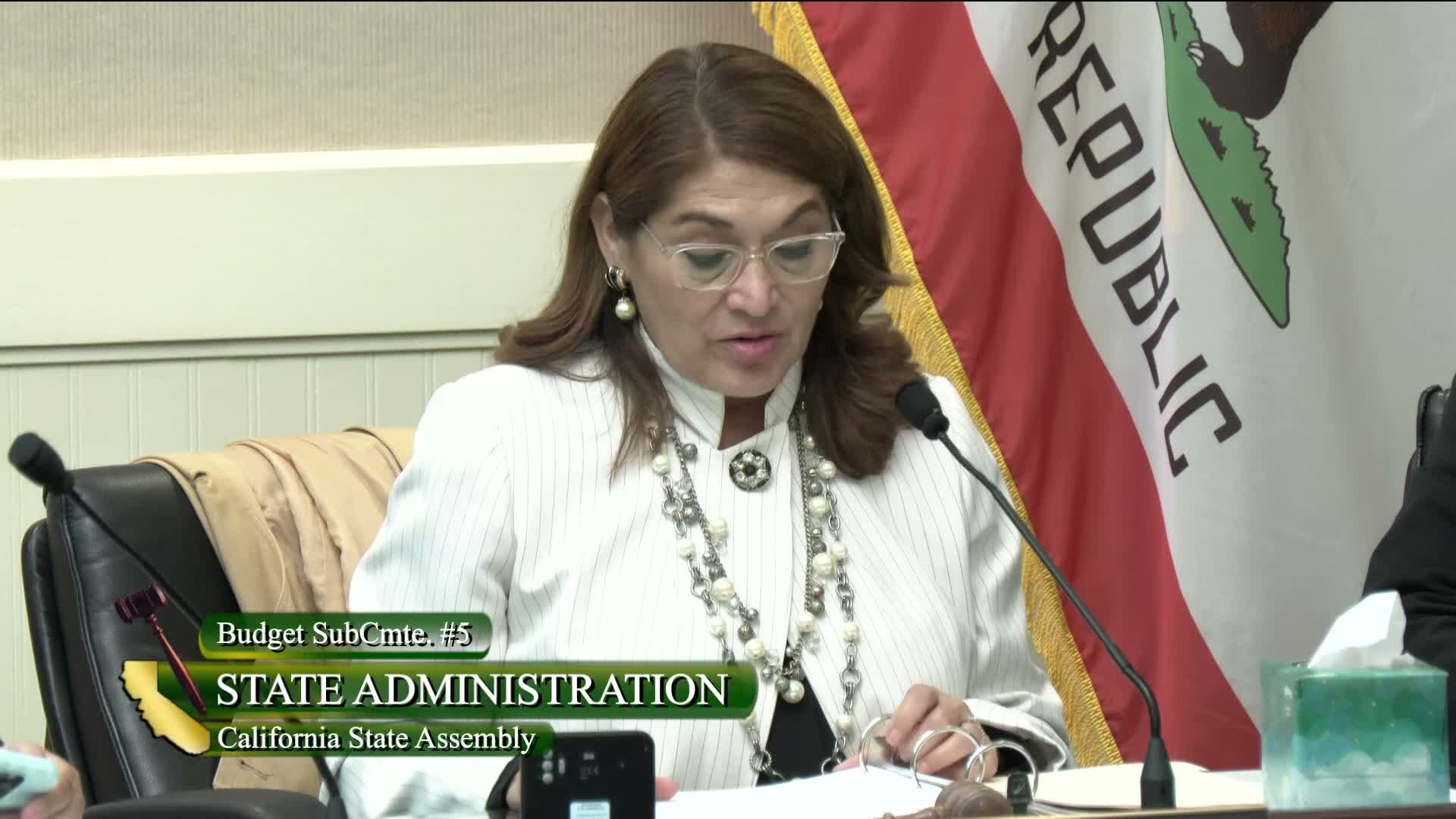
The Department of Financial Protection and Innovation asked the Assembly Budget Subcommittee 5 to continue funding for three programs created or expanded after 2020, saying those resources are needed to administer the California Consumer Financial Protection Law and the Debt Collector Licensing Act.
"The California Consumer Financial Protection Law enacted in 2020 significantly broadened our capacity to safeguard Californians against abusive and predatory products and services in the financial space," DFPI Chief Deputy Commissioner Suzanne Martindale told the subcommittee as she outlined requests to preserve existing positions and funding.
Martindale said the CCFPL supports complaint resolution, outreach and supervision of certain registrants, while other enforcement revenue and general departmental resources support innovation and consumer-education efforts. On the Debt Collector Licensing Act, DFPI officials said early estimates of the licensed population were revised during implementation and that the agency now supervises roughly 1,275 licensees while continuing to finalize regulations that will clarify who must obtain a license.
Industry speakers challenged DFPI’s fee model and the size of some assessments. "We remain very concerned that the assessments or licensing fees under the Debt Collector's Licensing Act are disproportionately high to what our members are experiencing from other states," said Clifford of the California Association of Collectors during the public-comment period. Ron Kingston of the Escrow Institute of California said assessments had risen from roughly $2,800 to as much as $7,200 per license/location and warned the structure lacked transparency.
DFPI’s fiscal staff explained assessments are pro rata, based on a statutory definition of "net proceeds," and noted that a minimum assessment ($250) applies to many small licensees while a handful of large national firms pay the greatest shares. DFPI’s acting deputy for the licensing program said the statute’s language and regulatory definition of net proceeds required clarification through rulemaking, which is pending.
Supporters of DFPI’s continued staffing argued the consumer-protection workload justifies the positions. Ed Howard, speaking on behalf of the office of Kat Taylor, said enforcement actions and incoming complaints demonstrate the program’s public-safety role.
The subcommittee accepted the presentation and took the item under consideration; the department agreed to provide additional details on fee calculations and to follow up with members on questions about transfer and new-license patterns.
Next steps: DFPI will provide follow-up materials requested by the committee (including lists of registrants and a further breakdown of assessment calculations); votes on continuation requests were handled on the committee's vote calendar or held open for completion during the May Revision process.
"The California Consumer Financial Protection Law enacted in 2020 significantly broadened our capacity to safeguard Californians against abusive and predatory products and services in the financial space," DFPI Chief Deputy Commissioner Suzanne Martindale told the subcommittee as she outlined requests to preserve existing positions and funding.
Martindale said the CCFPL supports complaint resolution, outreach and supervision of certain registrants, while other enforcement revenue and general departmental resources support innovation and consumer-education efforts. On the Debt Collector Licensing Act, DFPI officials said early estimates of the licensed population were revised during implementation and that the agency now supervises roughly 1,275 licensees while continuing to finalize regulations that will clarify who must obtain a license.
Industry speakers challenged DFPI’s fee model and the size of some assessments. "We remain very concerned that the assessments or licensing fees under the Debt Collector's Licensing Act are disproportionately high to what our members are experiencing from other states," said Clifford of the California Association of Collectors during the public-comment period. Ron Kingston of the Escrow Institute of California said assessments had risen from roughly $2,800 to as much as $7,200 per license/location and warned the structure lacked transparency.
DFPI’s fiscal staff explained assessments are pro rata, based on a statutory definition of "net proceeds," and noted that a minimum assessment ($250) applies to many small licensees while a handful of large national firms pay the greatest shares. DFPI’s acting deputy for the licensing program said the statute’s language and regulatory definition of net proceeds required clarification through rulemaking, which is pending.
Supporters of DFPI’s continued staffing argued the consumer-protection workload justifies the positions. Ed Howard, speaking on behalf of the office of Kat Taylor, said enforcement actions and incoming complaints demonstrate the program’s public-safety role.
The subcommittee accepted the presentation and took the item under consideration; the department agreed to provide additional details on fee calculations and to follow up with members on questions about transfer and new-license patterns.
Next steps: DFPI will provide follow-up materials requested by the committee (including lists of registrants and a further breakdown of assessment calculations); votes on continuation requests were handled on the committee's vote calendar or held open for completion during the May Revision process.
View the Full Meeting & All Its Details
This article offers just a summary. Unlock complete video, transcripts, and insights as a Founder Member.
✓
Watch full, unedited meeting videos
✓
Search every word spoken in unlimited transcripts
✓
AI summaries & real-time alerts (all government levels)
✓
Permanent access to expanding government content
30-day money-back guarantee
