PASA and PASBO warn of superintendent turnover, rising health costs and business‑office vacancies
May 06, 2026 | Education, House of Representatives, Legislative, Pennsylvania
This article was created by AI summarizing key points discussed. AI makes mistakes, so for full details and context, please refer to the video of the full meeting. Please report any errors so we can fix them. Report an error »
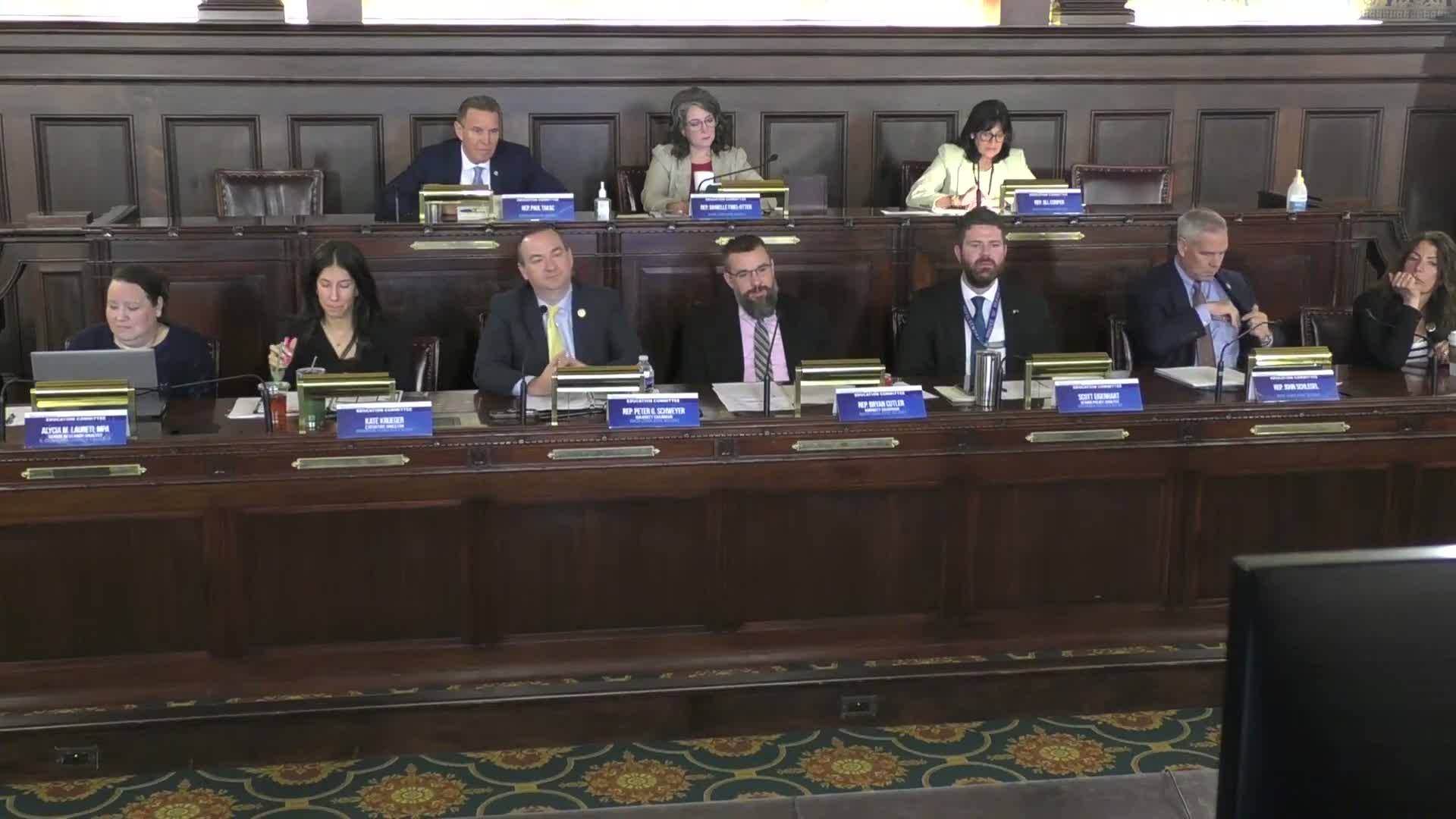
Dr. Sherry Smith, executive director of the Pennsylvania Association of School Administrators, told the committee that while progress has been made to attract new educators, districts continue to face staffing shortages, rising health‑insurance costs and rapid turnover among school leaders.
"We had 91 again last year, in 82 districts, turnover," Dr. Smith said, describing superintendent churn and warning that frequent leadership changes harm stability, morale and instructional continuity. She urged attention to leadership pipelines, paid student‑teacher stipends, and creative policy options (including selective consolidation of back‑office functions such as HR or business offices) rather than full administrative consolidation across multiple school boards.
Brian Pauling, president of the Pennsylvania Association of School Business Officials and director of business administration in Radnor, said PASBO is seeing rising vacancies among business officials that impair essential functions — payroll, benefits, facilities and transportation — and described PASBO efforts (interim placements, internship toolkits, hiring guides, mentorship) to stabilize operations. "Without them, schools can't operate," Pauling told the committee. He cited causes such as political pressure, expanding mandates and compensation that often lags the private sector.
Members asked whether countywide administrative models could cut costs. Dr. Smith cautioned that one administrative team serving multiple districts would struggle to respond to different boards and community expectations, but she said districts can sometimes consolidate specific support offices to gain efficiencies. The committee thanked both witnesses for recommendations and written testimony; no votes or formal actions were taken during the hearing.
"We had 91 again last year, in 82 districts, turnover," Dr. Smith said, describing superintendent churn and warning that frequent leadership changes harm stability, morale and instructional continuity. She urged attention to leadership pipelines, paid student‑teacher stipends, and creative policy options (including selective consolidation of back‑office functions such as HR or business offices) rather than full administrative consolidation across multiple school boards.
Brian Pauling, president of the Pennsylvania Association of School Business Officials and director of business administration in Radnor, said PASBO is seeing rising vacancies among business officials that impair essential functions — payroll, benefits, facilities and transportation — and described PASBO efforts (interim placements, internship toolkits, hiring guides, mentorship) to stabilize operations. "Without them, schools can't operate," Pauling told the committee. He cited causes such as political pressure, expanding mandates and compensation that often lags the private sector.
Members asked whether countywide administrative models could cut costs. Dr. Smith cautioned that one administrative team serving multiple districts would struggle to respond to different boards and community expectations, but she said districts can sometimes consolidate specific support offices to gain efficiencies. The committee thanked both witnesses for recommendations and written testimony; no votes or formal actions were taken during the hearing.
Don't Miss a Word: See the Full Meeting!
Go beyond summaries. Unlock every video, transcript, and key insight with a Founder Membership.
✓
Get instant access to full meeting videos
✓
Search and clip any phrase from complete transcripts
✓
Receive AI-powered summaries & custom alerts
✓
Enjoy lifetime, unrestricted access to government data
30-day money-back guarantee
