Veterans groups and private claims consultants debate protections for Montana veterans
May 04, 2026 | 2026 Legislature MT, Montana
This article was created by AI summarizing key points discussed. AI makes mistakes, so for full details and context, please refer to the video of the full meeting. Please report any errors so we can fix them. Report an error »
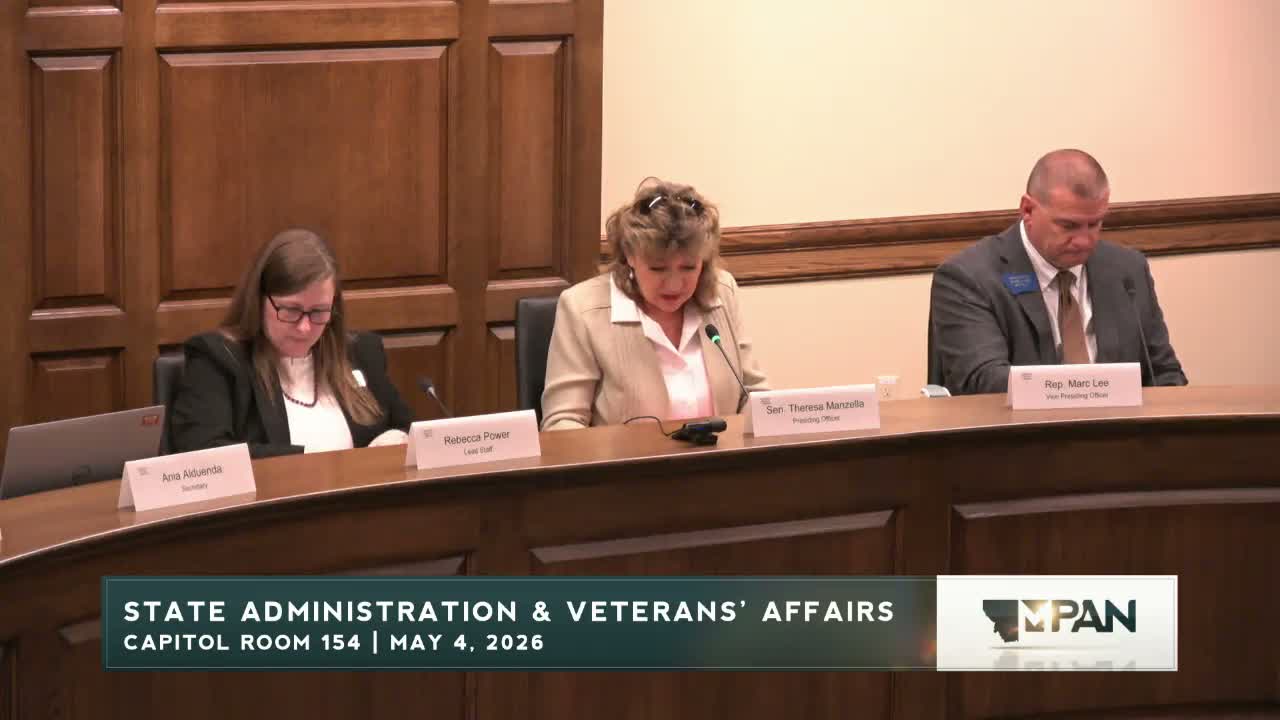
John Blomstrom, manager for government relations at Veterans Guardian, and Peter O’Rourke, president of the National Association for Veterans Rights and former acting VA secretary, briefed the State Administration and Veterans’ Affairs Committee on the VA disability claims process and the role of private claims consultants. Blomstrom said private firms focus on “fully developed claims,” helping veterans assemble medical evidence when they cannot get timely local VSO help. He told the committee Montana has roughly 89,000 veterans but only about 29 accredited VSOs, and said consultants can “bring the VSO to the veteran” in sparsely populated counties.
The presenters emphasized they do not aim to replace accredited veteran service organizations. “We implore them to use those free services first,” Blomstrom said, adding that Veterans Guardian operates on contingency fees and does not touch back pay. O’Rourke described how the fully developed claims pathway provides veterans a voluntary option to prepare and submit evidence themselves and said federal accreditation rules and case law complicate state-level regulation of representatives.
Public commenters and VSOs pushed back. Irene Nickerson, vice commander of the American Legion Department of Montana, and Shannon Wilson of the VFW described cases in which veterans were charged large contingency fees and struggled to escape ongoing charges. “No veteran should have to navigate predatory contracts while managing their health and well‑being,” Nickerson said. Roger Hagen, legislative vice chair for the American Legion, noted a whistleblower lawsuit alleging misconduct by a private firm and urged the state to prioritize accredited VSO capacity rather than allowing unregulated actors to proliferate.
Committee members and the presenters discussed state approaches in other jurisdictions. O’Rourke and Blomstrom pointed to Idaho and federal bills that would require consumer disclosures, limit contingent fee practices and impose privacy and operational standards. Several committee members asked whether Montana should adopt guardrails similar to other states; no bill vote was taken, but staff were asked to draft potential language for future consideration.
The committee heard repeated appeals to expand the number and geographic reach of accredited VSOs, and participants urged stronger enforcement tools for unaccredited actors who engage in deceptive marketing or alleged fabrication of medical evidence. The committee also requested staff follow up with proposals that balance veteran choice, consumer protection, and the limits of state authority over federally administered VA benefits.
The presenters emphasized they do not aim to replace accredited veteran service organizations. “We implore them to use those free services first,” Blomstrom said, adding that Veterans Guardian operates on contingency fees and does not touch back pay. O’Rourke described how the fully developed claims pathway provides veterans a voluntary option to prepare and submit evidence themselves and said federal accreditation rules and case law complicate state-level regulation of representatives.
Public commenters and VSOs pushed back. Irene Nickerson, vice commander of the American Legion Department of Montana, and Shannon Wilson of the VFW described cases in which veterans were charged large contingency fees and struggled to escape ongoing charges. “No veteran should have to navigate predatory contracts while managing their health and well‑being,” Nickerson said. Roger Hagen, legislative vice chair for the American Legion, noted a whistleblower lawsuit alleging misconduct by a private firm and urged the state to prioritize accredited VSO capacity rather than allowing unregulated actors to proliferate.
Committee members and the presenters discussed state approaches in other jurisdictions. O’Rourke and Blomstrom pointed to Idaho and federal bills that would require consumer disclosures, limit contingent fee practices and impose privacy and operational standards. Several committee members asked whether Montana should adopt guardrails similar to other states; no bill vote was taken, but staff were asked to draft potential language for future consideration.
The committee heard repeated appeals to expand the number and geographic reach of accredited VSOs, and participants urged stronger enforcement tools for unaccredited actors who engage in deceptive marketing or alleged fabrication of medical evidence. The committee also requested staff follow up with proposals that balance veteran choice, consumer protection, and the limits of state authority over federally administered VA benefits.
Don't Miss a Word: See the Full Meeting!
Go beyond summaries. Unlock every video, transcript, and key insight with a Founder Membership.
✓
Get instant access to full meeting videos
✓
Search and clip any phrase from complete transcripts
✓
Receive AI-powered summaries & custom alerts
✓
Enjoy lifetime, unrestricted access to government data
30-day money-back guarantee
