Commissioners approve temporary 35 mph speed limit in Crosswind Solar project area amid safety concerns
May 04, 2026 | Dubois County, Indiana
This article was created by AI summarizing key points discussed. AI makes mistakes, so for full details and context, please refer to the video of the full meeting. Please report any errors so we can fix them. Report an error »
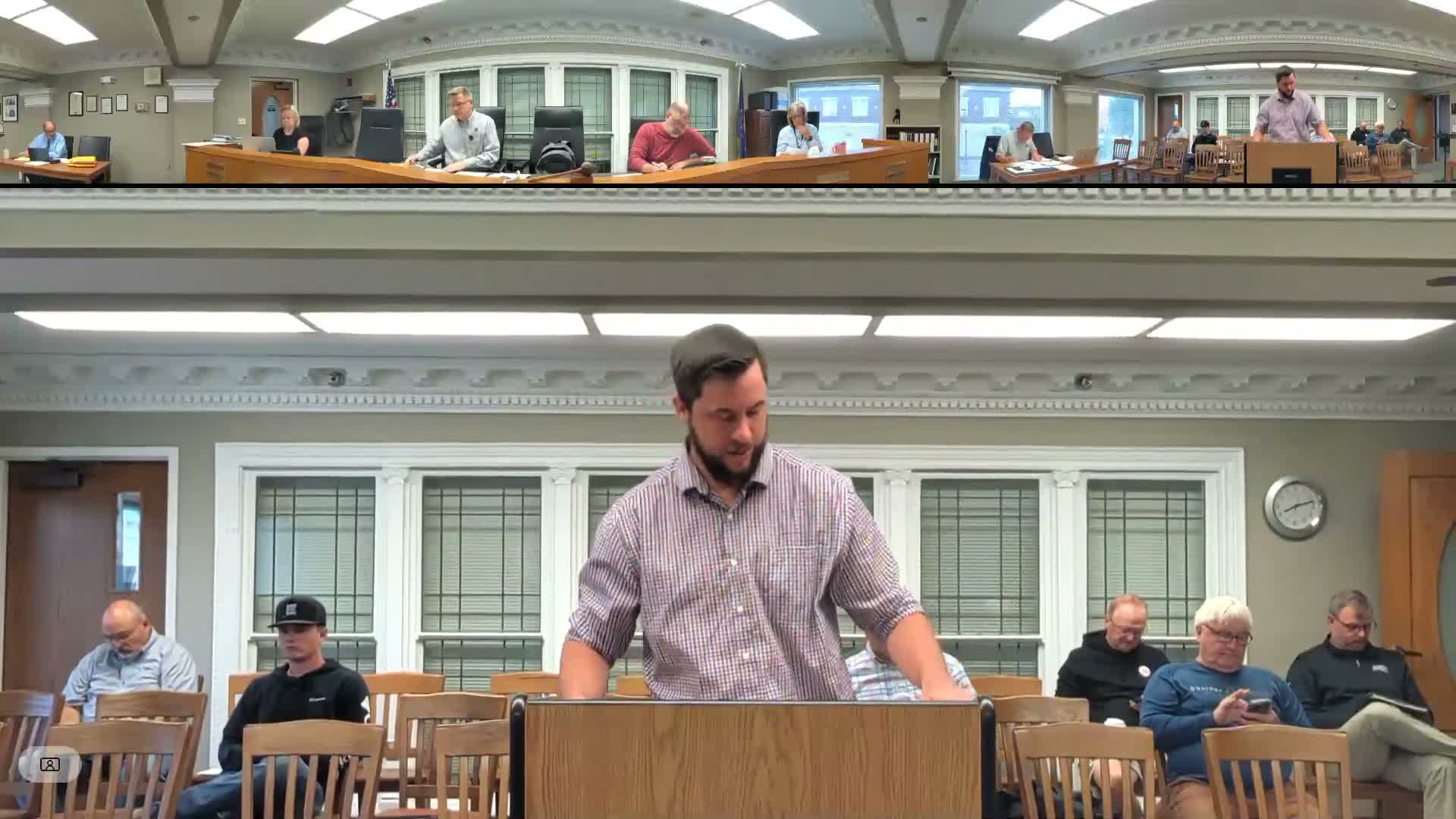
The Dubois County Board of Commissioners voted to approve a temporary reduction of posted speed limits to 35 miles per hour on roads within the Crosswind Solar project area after the county engineer recommended the measure to improve safety during construction.
David Lefford, the county highway department mechanical engineer, told the board his review of the project area and county code found a temporary 10-mph reduction is permitted without an engineering study and would be legally enforceable if signed and coordinated with the sheriff's office. "So I will recommend to the board for consideration to do temporary reduction speed on various roads throughout the Crosswind Solar area," Lefford said. The board then moved and approved the motion; the vote was taken by voice.
Lefford said AES offered to purchase, post and install the required speed-limit signs according to county standards and to transfer ownership of the signs to the county at project end so the county can retain them if needed. Commissioners asked that the signs be standard metal, retroreflective signs and that the sheriff's office be able to enforce the limits.
Residents and several commissioners raised related concerns about contractor conduct on the project, including heavy equipment use during school-bus periods, trucks parked on narrow shoulders, and contractor crews leaving rock and mud on county roads. One resident asked the board to restrict heavy equipment movements during morning school runs; another urged prompt enforcement when drivers create hazardous conditions. The board asked highway staff to monitor problem locations and to obtain photographic confirmation when AES places barricades or signage.
The temporary reduction is intended to remain in place for the duration of heavy construction. Commissioners described the step as a safety mitigation tied to the construction schedule rather than a permanent speed change; Lefford said permanent reductions would require an engineering study.
David Lefford, the county highway department mechanical engineer, told the board his review of the project area and county code found a temporary 10-mph reduction is permitted without an engineering study and would be legally enforceable if signed and coordinated with the sheriff's office. "So I will recommend to the board for consideration to do temporary reduction speed on various roads throughout the Crosswind Solar area," Lefford said. The board then moved and approved the motion; the vote was taken by voice.
Lefford said AES offered to purchase, post and install the required speed-limit signs according to county standards and to transfer ownership of the signs to the county at project end so the county can retain them if needed. Commissioners asked that the signs be standard metal, retroreflective signs and that the sheriff's office be able to enforce the limits.
Residents and several commissioners raised related concerns about contractor conduct on the project, including heavy equipment use during school-bus periods, trucks parked on narrow shoulders, and contractor crews leaving rock and mud on county roads. One resident asked the board to restrict heavy equipment movements during morning school runs; another urged prompt enforcement when drivers create hazardous conditions. The board asked highway staff to monitor problem locations and to obtain photographic confirmation when AES places barricades or signage.
The temporary reduction is intended to remain in place for the duration of heavy construction. Commissioners described the step as a safety mitigation tied to the construction schedule rather than a permanent speed change; Lefford said permanent reductions would require an engineering study.
View the Full Meeting & All Its Details
This article offers just a summary. Unlock complete video, transcripts, and insights as a Founder Member.
✓
Watch full, unedited meeting videos
✓
Search every word spoken in unlimited transcripts
✓
AI summaries & real-time alerts (all government levels)
✓
Permanent access to expanding government content
30-day money-back guarantee
