House backs law to block future hospital sale‑leasebacks after private‑equity failures
May 04, 2026 | 2026 Legislature CT, Connecticut
This article was created by AI summarizing key points discussed. AI makes mistakes, so for full details and context, please refer to the video of the full meeting. Please report any errors so we can fix them. Report an error »
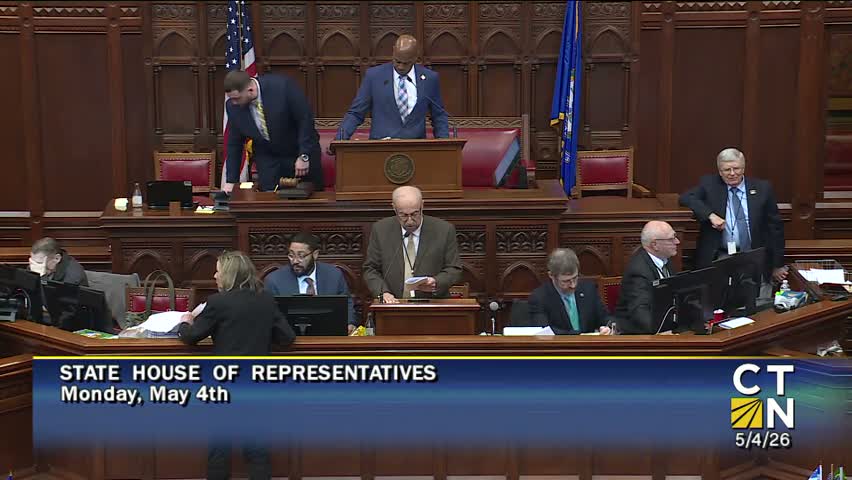
The House voted to pass SB196 in concurrence with the Senate after a floor debate that cited recent private‑equity takeovers and their effects on community hospitals. Representative Sarah McCarthy Vey framed the bill as a patient‑safety measure: "This ensures that that won't happen again," she said, referencing the Prospect Medical episode and arguing sale‑leasebacks can divert proceeds away from local patient care.
Supporters from towns affected by past transactions described the local impacts. Representative Delnicki and other members from the communities that lost services said private‑equity purchases had disrupted care and left hospitals undercapitalized. Representative David and others described efforts to stabilize facilities and welcomed the new oversight.
Opponents noted the bill’s broad definition of "private equity" and warned it could block legitimate long‑term investment and partnerships. Several members pressed sponsors about whether the law would preclude publicly traded firms or other non‑traditional investors that could be constructive partners for hospitals. Sponsors and backers said the bill was narrowly targeted to prevent transactions that would transfer controlling financial interest in ways that remove clinical control from hospital leadership.
The bill also requires annual attestations to the Department of Public Health about whether private‑equity or controlling interests could interfere with clinical decision‑making. The Department would have authority to assess attestations and impose penalties for failure to comply. Supporters said the change is designed to safeguard patient care and preserve local access; critics warned it could deter needed investment.
After extensive floor colloquy, the bill passed; sponsors said it was the first step in a broader effort to monitor and regulate financial transactions that put local health access at risk.
Supporters from towns affected by past transactions described the local impacts. Representative Delnicki and other members from the communities that lost services said private‑equity purchases had disrupted care and left hospitals undercapitalized. Representative David and others described efforts to stabilize facilities and welcomed the new oversight.
Opponents noted the bill’s broad definition of "private equity" and warned it could block legitimate long‑term investment and partnerships. Several members pressed sponsors about whether the law would preclude publicly traded firms or other non‑traditional investors that could be constructive partners for hospitals. Sponsors and backers said the bill was narrowly targeted to prevent transactions that would transfer controlling financial interest in ways that remove clinical control from hospital leadership.
The bill also requires annual attestations to the Department of Public Health about whether private‑equity or controlling interests could interfere with clinical decision‑making. The Department would have authority to assess attestations and impose penalties for failure to comply. Supporters said the change is designed to safeguard patient care and preserve local access; critics warned it could deter needed investment.
After extensive floor colloquy, the bill passed; sponsors said it was the first step in a broader effort to monitor and regulate financial transactions that put local health access at risk.
Don't Miss a Word: See the Full Meeting!
Go beyond summaries. Unlock every video, transcript, and key insight with a Founder Membership.
✓
Get instant access to full meeting videos
✓
Search and clip any phrase from complete transcripts
✓
Receive AI-powered summaries & custom alerts
✓
Enjoy lifetime, unrestricted access to government data
30-day money-back guarantee
