Council presses Visit Grants Pass on DMO contract: IP rights, audits and welcome‑center hours are focal points
May 05, 2026 | Grants Pass City, Josephine County, Oregon
This article was created by AI summarizing key points discussed. AI makes mistakes, so for full details and context, please refer to the video of the full meeting. Please report any errors so we can fix them. Report an error »
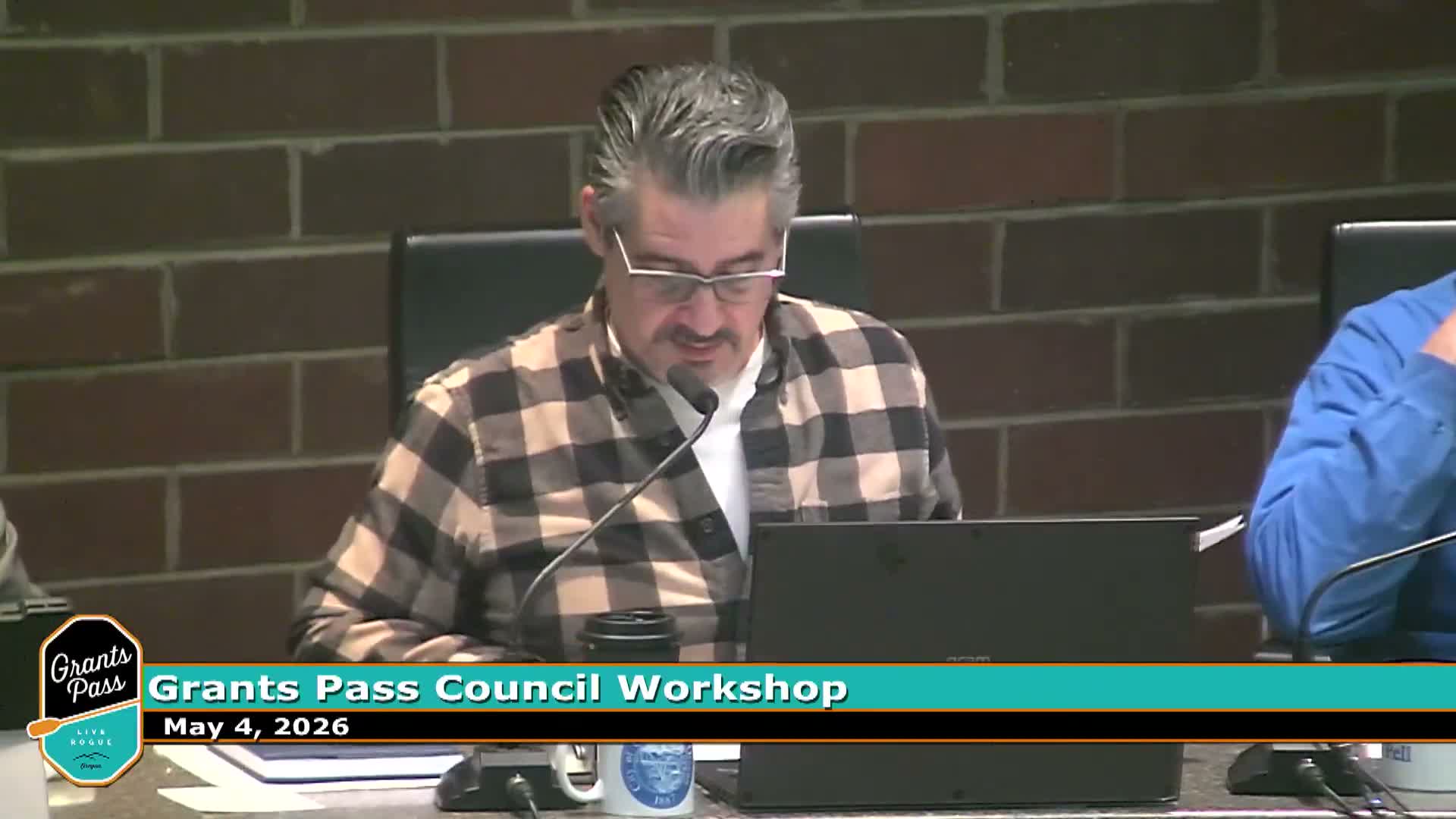
Grants Pass councilors spent the bulk of a May 4 workshop scrutinizing the destination marketing organization contract that funds Visit Grants Pass, pressing staff and the nonprofit for clearer audit language, documented funding sources for promotional materials and assurances about welcome‑center hours.
Dana Pierce, economic development staff, opened the DMO segment by explaining that the city contributes 28% of net transient lodging tax (TLT) receipts to fund Visit Grants Pass (Josephine County Visitors Association DBA Visit Grants Pass). She said Oregon statute and municipal code restrict promotion funds to activities that attract visitors from more than 50 miles away or that lead to overnight stays.
A Visit Grants Pass board representative outlined the DMO’s history and structure, tracing a PAVE audit and a DMO Pros review in 2020 that led the city and stakeholders to form a nonprofit board and transition tourism promotion out of the chamber. The speaker urged council to view the DMO as an investment in community economic development: “This is a huge investment in the economic development of this community, and I would implore the council to begin looking at it as more of an investment,” the representative said.
Key areas of council inquiry
Funding mechanics and metrics: Councilors asked how the 28% allocation operates in practice, how TLT totals are reported, and whether occupancy increases reflect tourists or placements that do not generate TLT (government‑contracted placements, long‑term stays). City staff and tax administrators explained exemptions (federal government, stays over 28 days) and that quarterly TLT reports and Dean Runyon benchmarking reports are available for review.
Financial transparency: Several councilors requested full P&Ls, balance sheets and independent audits for recent years; Visit Grants Pass officials said audits and the Dean Runyon report had been provided to city staff and that they supplied audits and financial statements to staff last week. Council asked that quarterly narrative progress reports be included going forward; Visit Grants Pass acknowledged there was a gap during the transition year and pledged to provide the requested materials.
Intellectual property and merchandising: Councilors expressed concern that the contract as written grants the contractor perpetual ownership and that the nonprofit could continue to use or profit from branding created with public funds. City attorney Stephanie explained the legal rationale for treating the nonprofit as an independent contractor and why that typically leaves intellectual property ownership with the contractor, but she offered fixes: require documentation of funding sources for any created materials, prohibit use of public funds to create merchandise, or include a first‑right/purchase option for city acquisition of IP created with public funds. She said: “In independent contractor relationships, the typical is to have the contractor retain ownership of intellectual property.”
Welcome center operations, hours and staffing tradeoffs: The renewed contract proposes adding downtown welcome‑center operations to the DMO scope. Staff estimated potential staffing cost savings of roughly $45,000 if operations are shifted and suggested Visit Grants Pass could share space and staff with Main Street. Visit Grants Pass leadership said proposed off‑season hour reductions were illustrative and that they could coordinate hours with council preferences; the DMO also described plans to keep people present at the center even if fewer paid staff are scheduled.
Audit and enforcement language: Councilors asked that contract language use the word “audit” consistently and clarify how an independent CPA is selected. Staff agreed to revise contract language to require an annual independent audit and to retain the city’s right to demand an additional audit if cause is shown.
What was not decided
Council did not take a final vote on the contract at the workshop. Staff said they would incorporate clarifying edits (audit language, reporting expectations and draft clauses to limit use of public funds for merchandise or to require documentation of non‑city funding) and bring the revised agreement to the council consent/approval process on Wednesday night.
Dana Pierce, economic development staff, opened the DMO segment by explaining that the city contributes 28% of net transient lodging tax (TLT) receipts to fund Visit Grants Pass (Josephine County Visitors Association DBA Visit Grants Pass). She said Oregon statute and municipal code restrict promotion funds to activities that attract visitors from more than 50 miles away or that lead to overnight stays.
A Visit Grants Pass board representative outlined the DMO’s history and structure, tracing a PAVE audit and a DMO Pros review in 2020 that led the city and stakeholders to form a nonprofit board and transition tourism promotion out of the chamber. The speaker urged council to view the DMO as an investment in community economic development: “This is a huge investment in the economic development of this community, and I would implore the council to begin looking at it as more of an investment,” the representative said.
Key areas of council inquiry
Funding mechanics and metrics: Councilors asked how the 28% allocation operates in practice, how TLT totals are reported, and whether occupancy increases reflect tourists or placements that do not generate TLT (government‑contracted placements, long‑term stays). City staff and tax administrators explained exemptions (federal government, stays over 28 days) and that quarterly TLT reports and Dean Runyon benchmarking reports are available for review.
Financial transparency: Several councilors requested full P&Ls, balance sheets and independent audits for recent years; Visit Grants Pass officials said audits and the Dean Runyon report had been provided to city staff and that they supplied audits and financial statements to staff last week. Council asked that quarterly narrative progress reports be included going forward; Visit Grants Pass acknowledged there was a gap during the transition year and pledged to provide the requested materials.
Intellectual property and merchandising: Councilors expressed concern that the contract as written grants the contractor perpetual ownership and that the nonprofit could continue to use or profit from branding created with public funds. City attorney Stephanie explained the legal rationale for treating the nonprofit as an independent contractor and why that typically leaves intellectual property ownership with the contractor, but she offered fixes: require documentation of funding sources for any created materials, prohibit use of public funds to create merchandise, or include a first‑right/purchase option for city acquisition of IP created with public funds. She said: “In independent contractor relationships, the typical is to have the contractor retain ownership of intellectual property.”
Welcome center operations, hours and staffing tradeoffs: The renewed contract proposes adding downtown welcome‑center operations to the DMO scope. Staff estimated potential staffing cost savings of roughly $45,000 if operations are shifted and suggested Visit Grants Pass could share space and staff with Main Street. Visit Grants Pass leadership said proposed off‑season hour reductions were illustrative and that they could coordinate hours with council preferences; the DMO also described plans to keep people present at the center even if fewer paid staff are scheduled.
Audit and enforcement language: Councilors asked that contract language use the word “audit” consistently and clarify how an independent CPA is selected. Staff agreed to revise contract language to require an annual independent audit and to retain the city’s right to demand an additional audit if cause is shown.
What was not decided
Council did not take a final vote on the contract at the workshop. Staff said they would incorporate clarifying edits (audit language, reporting expectations and draft clauses to limit use of public funds for merchandise or to require documentation of non‑city funding) and bring the revised agreement to the council consent/approval process on Wednesday night.
View the Full Meeting & All Its Details
This article offers just a summary. Unlock complete video, transcripts, and insights as a Founder Member.
✓
Watch full, unedited meeting videos
✓
Search every word spoken in unlimited transcripts
✓
AI summaries & real-time alerts (all government levels)
✓
Permanent access to expanding government content
30-day money-back guarantee
