Bethlehem Area School District recommends limiting K–5 Chromebook take-home as Freemansburg pilots schoolwide 'digital detox'
May 04, 2026 | Bethlehem Area SD, School Districts, Pennsylvania
This article was created by AI summarizing key points discussed. AI makes mistakes, so for full details and context, please refer to the video of the full meeting. Please report any errors so we can fix them. Report an error »
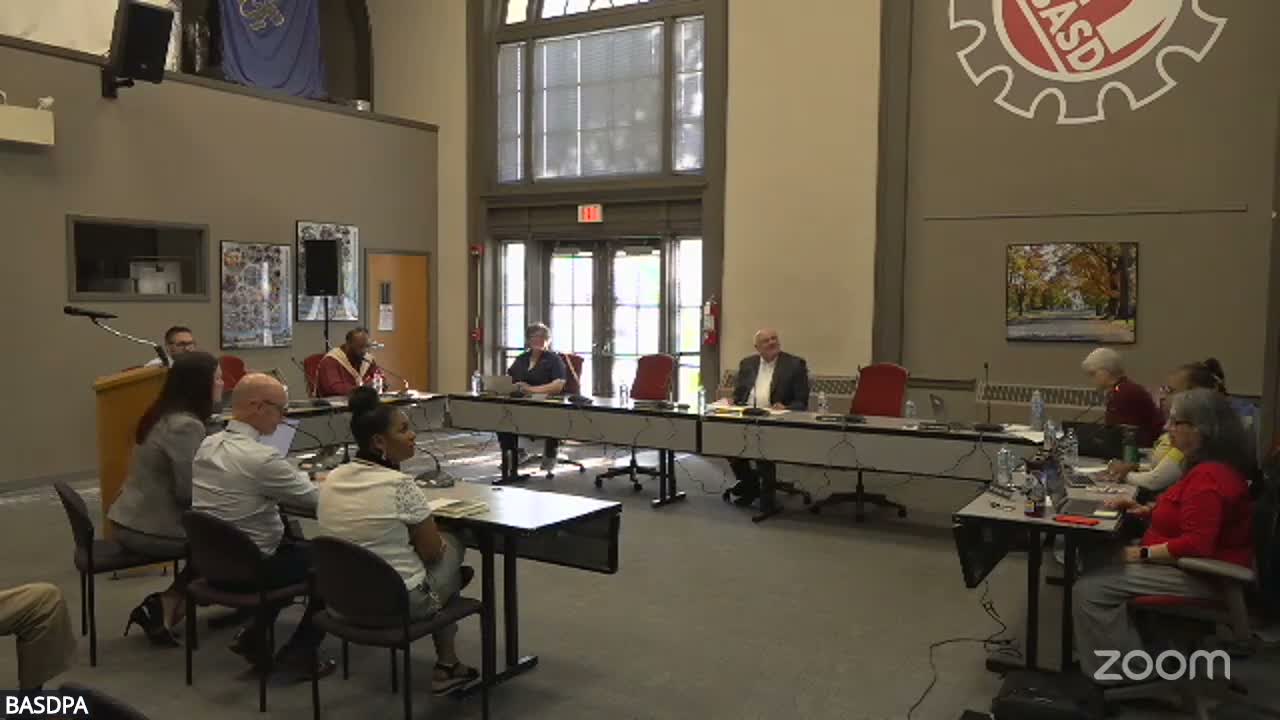
Dr. Leeson said the district is preparing recommendations to limit routine Chromebook take-home for grades K–5, saying the change is aimed at prioritizing high-quality instructional use over passive device time. "We are recommending that we do not take Chromebooks home from K to 5," Dr. Leeson said.
The recommendation is part of a broader instructional-technology update that reviewed the district's 1:1 device rollout and research on screen time. Staff described prior district planning, a 2018 screen-time statement and the view that not all screen time is equal — instructional uses such as formative assessment or student collaboration are treated differently than passive entertainment.
As an example of practice at the school level, Ashley Woodson, principal of Freemansburg Elementary School, described a schoolwide low-tech week her staff piloted for K–5. Woodson said the effort involved teacher-led, curriculum-aligned low-tech activities, family engagement through a home "bingo" activity board and a plan to survey families, staff and students after the week. "This week that we are doing... all stemmed from a book club conversation and has been a collaborative approach," Woodson said.
Board members asked about instructional continuity and equity. One member asked whether teachers would still be able to assign work that requires home technology for older students; staff said K–5 assignments would not generally require devices at home and that exceptions could be approved by principals for short, specific needs. Concerns about students who lack home technology were raised and acknowledged; staff repeatedly emphasized that device-dependent homework would not be the district's default for K–5.
Staff also previewed operational steps tied to the policy recommendation: simplifying logins for younger students (QR-code sign-in), discouraging passive Chromebook use during indoor recess and offering teacher/principal guidance to support intentional, high-quality uses of technology. Staff said the policy proposal and supporting materials will continue to be refined and shared with the board and community.
The committee heard examples of instructional frameworks the district plans to use (such as SAMR) to guide when technology should replace, augment or transform learning tasks. The update concluded with the school-level pilot results and a plan for follow-up surveys and discussion at future meetings.
The recommendation is part of a broader instructional-technology update that reviewed the district's 1:1 device rollout and research on screen time. Staff described prior district planning, a 2018 screen-time statement and the view that not all screen time is equal — instructional uses such as formative assessment or student collaboration are treated differently than passive entertainment.
As an example of practice at the school level, Ashley Woodson, principal of Freemansburg Elementary School, described a schoolwide low-tech week her staff piloted for K–5. Woodson said the effort involved teacher-led, curriculum-aligned low-tech activities, family engagement through a home "bingo" activity board and a plan to survey families, staff and students after the week. "This week that we are doing... all stemmed from a book club conversation and has been a collaborative approach," Woodson said.
Board members asked about instructional continuity and equity. One member asked whether teachers would still be able to assign work that requires home technology for older students; staff said K–5 assignments would not generally require devices at home and that exceptions could be approved by principals for short, specific needs. Concerns about students who lack home technology were raised and acknowledged; staff repeatedly emphasized that device-dependent homework would not be the district's default for K–5.
Staff also previewed operational steps tied to the policy recommendation: simplifying logins for younger students (QR-code sign-in), discouraging passive Chromebook use during indoor recess and offering teacher/principal guidance to support intentional, high-quality uses of technology. Staff said the policy proposal and supporting materials will continue to be refined and shared with the board and community.
The committee heard examples of instructional frameworks the district plans to use (such as SAMR) to guide when technology should replace, augment or transform learning tasks. The update concluded with the school-level pilot results and a plan for follow-up surveys and discussion at future meetings.
View the Full Meeting & All Its Details
This article offers just a summary. Unlock complete video, transcripts, and insights as a Founder Member.
✓
Watch full, unedited meeting videos
✓
Search every word spoken in unlimited transcripts
✓
AI summaries & real-time alerts (all government levels)
✓
Permanent access to expanding government content
30-day money-back guarantee
