Budget director presents $1.41B FY27 plan; aldermen, public press for cuts to police spending and more funding for social programs
May 05, 2026 | St. Louis City, St. Louis County, Missouri
This article was created by AI summarizing key points discussed. AI makes mistakes, so for full details and context, please refer to the video of the full meeting. Please report any errors so we can fix them. Report an error »
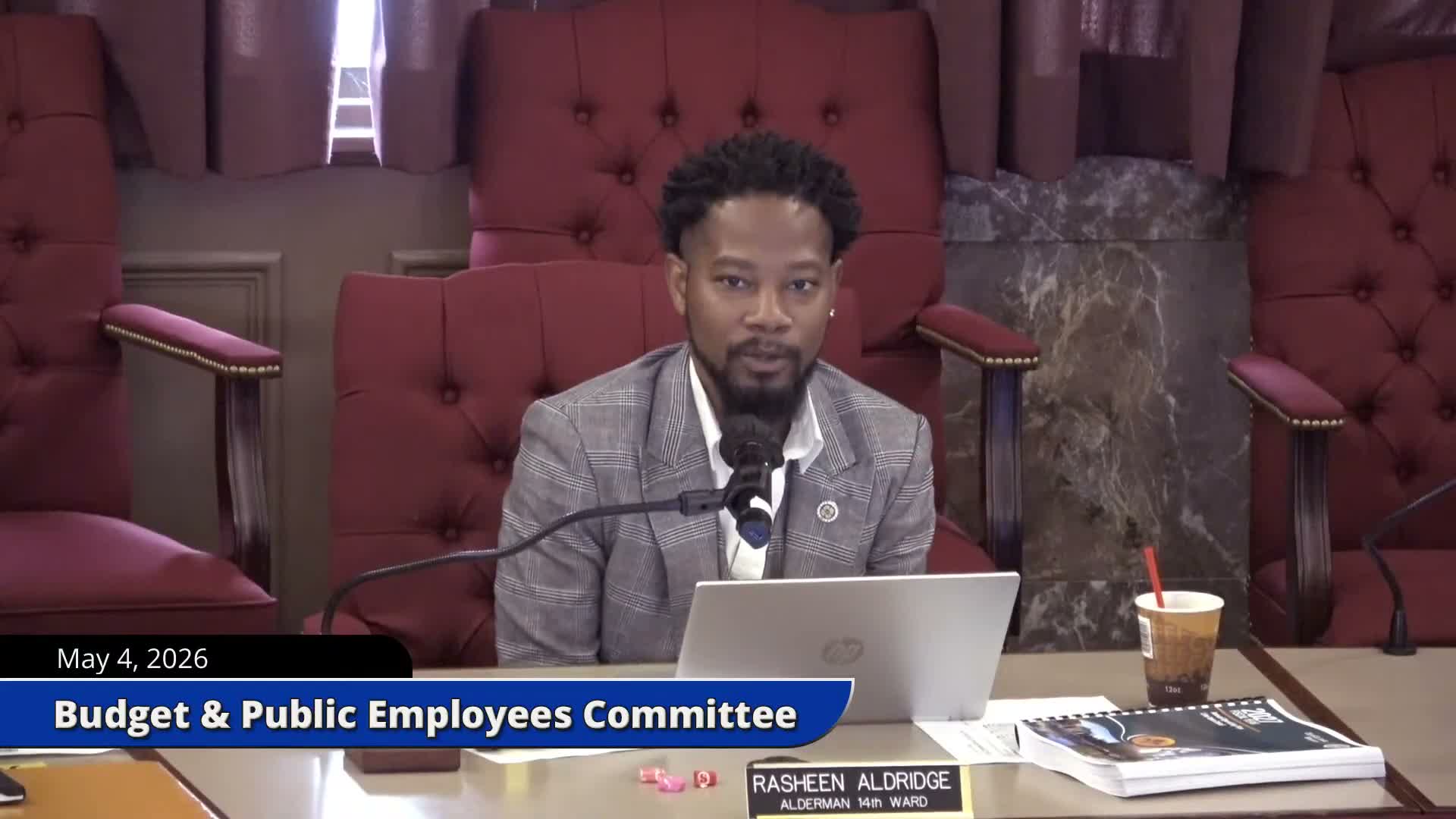
Budget Director Paul Payne presented the City of St. Louis’s proposed FY27 operating plan to the Budget and Public Employees Committee on May 4, totaling $1,410,000,000 and described as a modest 0.5% increase over the prior fiscal year. Payne told the committee the general fund proposal is $637,100,000 (a 4.9% increase) and summarized major revenue and expenditure changes, including new allocations for employee pay, housing stabilization and completion of the PSAP.
"The proposed FY 27 annual operating plan totals $1,410,000,000," Payne said at the start of his slide presentation. He highlighted $18,000,000 proposed for pay increases (entry‑level adjustments and a 3% across‑the‑board increase for many employees), a 7% parity increase for uniformed police and firefighters already incorporated, and a $5,000,000 ARPA interest reappropriation to finish the PSAP.
Several aldermen pressed Payne on the absence of police leadership and the Board of Police Commissioners from committee hearings this year. Vice Chair Browning and others described that absence as an impediment to oversight and asked whether the budget complies with a state statute that, as written, would require approximately 23–24% of general revenue to be allocated to the police. Payne said the statute’s text is unclear because the city operates on a fiscal year rather than a calendar year but indicated he believes the budget exceeds the statute’s percentage as interpreted by city staff.
The committee heard lengthy public comment—dozens of residents and organization representatives—nearly all urging limits on police funding above legal minimums and calling for more money for programs they say prevent harm. Mark Orihuela of Ward 9 asked the committee to "reject the proposed police budget" and said investments in housing and treatment produce public safety outcomes that enforcement alone does not. Alicia Hernandez, advocacy director for the Migrant and Immigrant Community Action Project, told the committee it should "add no additional funding over what is legally required for SLMPD and give that money to the people, to the people of St. Louis City."
Public testimonies repeatedly called to fully fund Right to Counsel, increase funding for Code Blue, and restore requests for the Office of Violence Prevention; speakers argued those investments reduce harm, stabilize housing and support tornado recovery. Several commenters also alleged police cooperation with immigration enforcement and accused the Board of Police Commissioners of nontransparency; those are claims raised in public comment and not adjudicated at the hearing.
Payne also briefed the committee on pension and OPEB costs: combined pension contributions were presented as roughly $101,400,000 and the city’s reported unfunded liabilities were discussed alongside a roughly $379,200,000 retiree health liability for police retiree health coverage. Payne described the pensions as generally well funded in actuarial terms (many plans near or above 80% funding), but noted the absolute cost is a major budget pressure.
The chair held Board Bill 1 (the general operating budget) for detailed departmental review; the committee scheduled further hearings (including presentations by the mayor’s office, the Office of Violence Prevention and other departments) and public hearings in the coming weeks. The transcript shows the committee will continue department‑by‑department review and take additional public comment in upcoming sessions.
"The proposed FY 27 annual operating plan totals $1,410,000,000," Payne said at the start of his slide presentation. He highlighted $18,000,000 proposed for pay increases (entry‑level adjustments and a 3% across‑the‑board increase for many employees), a 7% parity increase for uniformed police and firefighters already incorporated, and a $5,000,000 ARPA interest reappropriation to finish the PSAP.
Several aldermen pressed Payne on the absence of police leadership and the Board of Police Commissioners from committee hearings this year. Vice Chair Browning and others described that absence as an impediment to oversight and asked whether the budget complies with a state statute that, as written, would require approximately 23–24% of general revenue to be allocated to the police. Payne said the statute’s text is unclear because the city operates on a fiscal year rather than a calendar year but indicated he believes the budget exceeds the statute’s percentage as interpreted by city staff.
The committee heard lengthy public comment—dozens of residents and organization representatives—nearly all urging limits on police funding above legal minimums and calling for more money for programs they say prevent harm. Mark Orihuela of Ward 9 asked the committee to "reject the proposed police budget" and said investments in housing and treatment produce public safety outcomes that enforcement alone does not. Alicia Hernandez, advocacy director for the Migrant and Immigrant Community Action Project, told the committee it should "add no additional funding over what is legally required for SLMPD and give that money to the people, to the people of St. Louis City."
Public testimonies repeatedly called to fully fund Right to Counsel, increase funding for Code Blue, and restore requests for the Office of Violence Prevention; speakers argued those investments reduce harm, stabilize housing and support tornado recovery. Several commenters also alleged police cooperation with immigration enforcement and accused the Board of Police Commissioners of nontransparency; those are claims raised in public comment and not adjudicated at the hearing.
Payne also briefed the committee on pension and OPEB costs: combined pension contributions were presented as roughly $101,400,000 and the city’s reported unfunded liabilities were discussed alongside a roughly $379,200,000 retiree health liability for police retiree health coverage. Payne described the pensions as generally well funded in actuarial terms (many plans near or above 80% funding), but noted the absolute cost is a major budget pressure.
The chair held Board Bill 1 (the general operating budget) for detailed departmental review; the committee scheduled further hearings (including presentations by the mayor’s office, the Office of Violence Prevention and other departments) and public hearings in the coming weeks. The transcript shows the committee will continue department‑by‑department review and take additional public comment in upcoming sessions.
Don't Miss a Word: See the Full Meeting!
Go beyond summaries. Unlock every video, transcript, and key insight with a Founder Membership.
✓
Get instant access to full meeting videos
✓
Search and clip any phrase from complete transcripts
✓
Receive AI-powered summaries & custom alerts
✓
Enjoy lifetime, unrestricted access to government data
30-day money-back guarantee
