Dr. Carrie Weibel outlines anti-bullying goals and investigation timeline
May 04, 2026 | South Orange-Maplewood School District, School Districts, New Jersey
This article was created by AI summarizing key points discussed. AI makes mistakes, so for full details and context, please refer to the video of the full meeting. Please report any errors so we can fix them. Report an error »
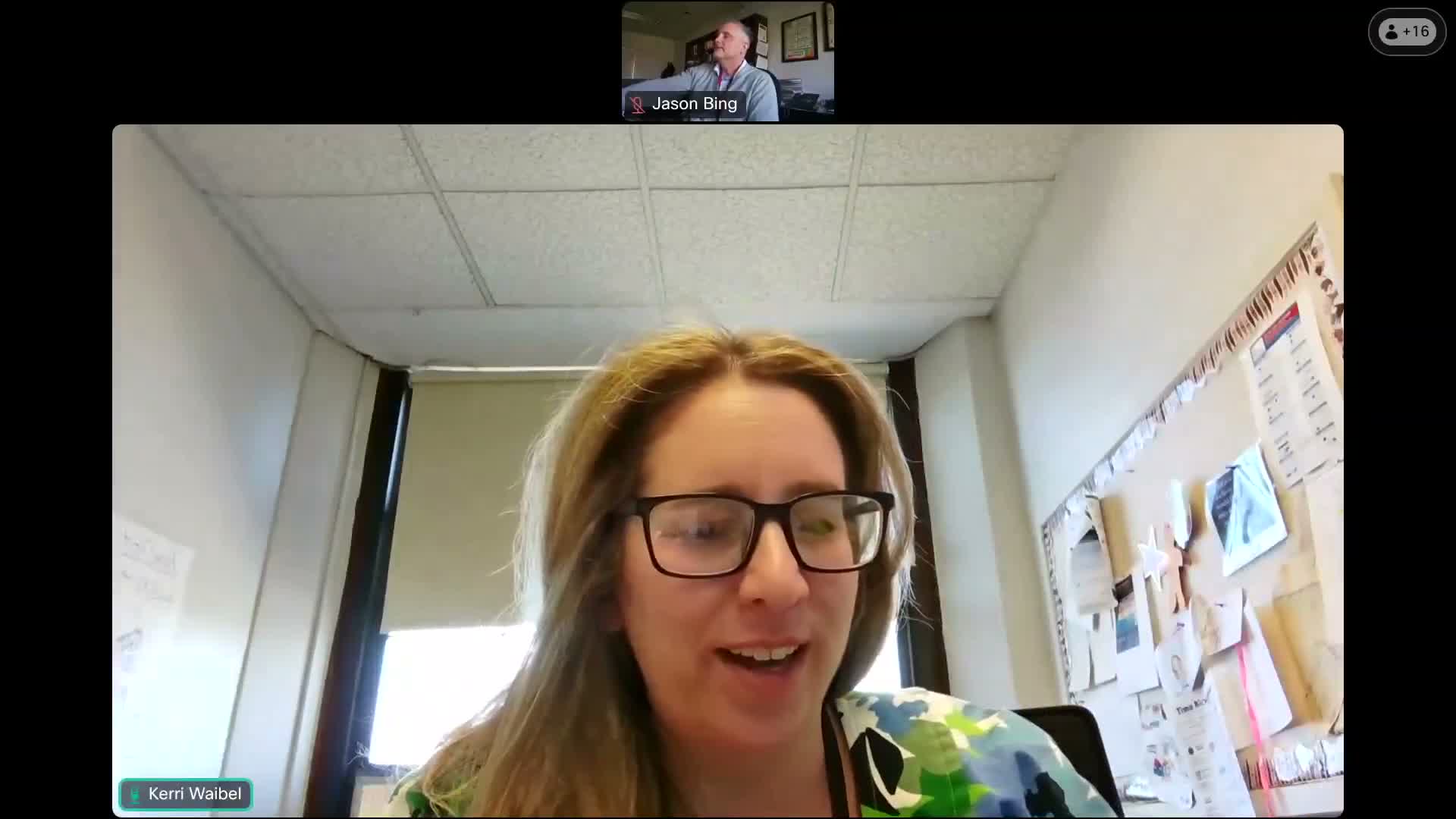
Dr. Carrie Weibel, director of data planning, research and evaluation, presented the district's anti-bullying work during a lunch-and-learn session, reviewing last year's training and family outreach, this year's priorities and the legally mandated investigation timeline.
Weibel said the district increased time for staff training on school climate, expanded social-emotional learning and anti-bullying investigation training last year, and broadened family outreach including a parent-focused bullying night and letters tied to the district's bullying curriculum. "There's no expectation that any child should be bullied in school, and we adamantly, feel that all children and all schools should be bully free," Weibel said.
The presenter gave specific counts from the most recent year: elementary schools had 43 investigated incidents with 10 found to meet the legal bullying threshold; middle schools had 35 investigated with 7 founded; and the high school had 19 investigated with 4 founded. Weibel explained that "founded" means an incident met the state's legal criteria for bullying, and she cautioned that a "mean moment" can still be important even if it does not meet that legal threshold.
Weibel reviewed New Jersey's statutory framework, noting the 2011 definition: a written, gestured, physical or electronic act motivated by a real or perceived characteristic that substantially disrupts a student's education or infringes the rights of a student. She emphasized the law covers incidents on and off school grounds, including electronic communication.
On categories of behavior, Weibel distinguished three tracks the district uses: incidents that meet the bullying legal definition, code-of-conduct violations, and student conflicts. Each track can trigger different responses but, she said, the district's focus is consistent support for students: counseling, check-ins, restorative lessons, parent and student conferences and, where required, disciplinary steps aimed at teaching new skills. "If a student bullies three or more times, they are legally mandated to have an intervention plan," she said.
Weibel also described the district's investigation timeline: staff notified the principal within one day of a report; the anti-bullying specialist has 10 days to complete an investigation; the board of education reviews cases and sends an official letter to families after about 60 days; police involvement or prolonged student absence can lengthen that timeline.
She announced a new anti-bullying toolkit on the district website under the Title IX/harassment, intimidation and bullying and affirmative action section that includes parent letters, the five-lesson curriculum from the New Jersey State Bar Foundation aligned with state law, FAQs and a list of anti-bullying specialists. Weibel said a recording and the resources will be posted and offered her email for follow-up.
In a question from the host, Mr. May, about what happens when a student is falsely accused, Weibel said parents should first speak to the principal or anti-bullying specialist, and that if a case is founded families may appeal after receiving the board's letter; a further appeal to the commissioner is possible. She described the appeals process as lengthy.
The session closed with Weibel thanking attendees and confirming follow-up materials would be made available online.
Weibel said the district increased time for staff training on school climate, expanded social-emotional learning and anti-bullying investigation training last year, and broadened family outreach including a parent-focused bullying night and letters tied to the district's bullying curriculum. "There's no expectation that any child should be bullied in school, and we adamantly, feel that all children and all schools should be bully free," Weibel said.
The presenter gave specific counts from the most recent year: elementary schools had 43 investigated incidents with 10 found to meet the legal bullying threshold; middle schools had 35 investigated with 7 founded; and the high school had 19 investigated with 4 founded. Weibel explained that "founded" means an incident met the state's legal criteria for bullying, and she cautioned that a "mean moment" can still be important even if it does not meet that legal threshold.
Weibel reviewed New Jersey's statutory framework, noting the 2011 definition: a written, gestured, physical or electronic act motivated by a real or perceived characteristic that substantially disrupts a student's education or infringes the rights of a student. She emphasized the law covers incidents on and off school grounds, including electronic communication.
On categories of behavior, Weibel distinguished three tracks the district uses: incidents that meet the bullying legal definition, code-of-conduct violations, and student conflicts. Each track can trigger different responses but, she said, the district's focus is consistent support for students: counseling, check-ins, restorative lessons, parent and student conferences and, where required, disciplinary steps aimed at teaching new skills. "If a student bullies three or more times, they are legally mandated to have an intervention plan," she said.
Weibel also described the district's investigation timeline: staff notified the principal within one day of a report; the anti-bullying specialist has 10 days to complete an investigation; the board of education reviews cases and sends an official letter to families after about 60 days; police involvement or prolonged student absence can lengthen that timeline.
She announced a new anti-bullying toolkit on the district website under the Title IX/harassment, intimidation and bullying and affirmative action section that includes parent letters, the five-lesson curriculum from the New Jersey State Bar Foundation aligned with state law, FAQs and a list of anti-bullying specialists. Weibel said a recording and the resources will be posted and offered her email for follow-up.
In a question from the host, Mr. May, about what happens when a student is falsely accused, Weibel said parents should first speak to the principal or anti-bullying specialist, and that if a case is founded families may appeal after receiving the board's letter; a further appeal to the commissioner is possible. She described the appeals process as lengthy.
The session closed with Weibel thanking attendees and confirming follow-up materials would be made available online.
Don't Miss a Word: See the Full Meeting!
Go beyond summaries. Unlock every video, transcript, and key insight with a Founder Membership.
✓
Get instant access to full meeting videos
✓
Search and clip any phrase from complete transcripts
✓
Receive AI-powered summaries & custom alerts
✓
Enjoy lifetime, unrestricted access to government data
30-day money-back guarantee
