Gadsden County commissioners deny special exception for bar and event center in Havana after heated public hearing
May 05, 2026 | Gadsden County, Florida
This article was created by AI summarizing key points discussed. AI makes mistakes, so for full details and context, please refer to the video of the full meeting. Please report any errors so we can fix them. Report an error »
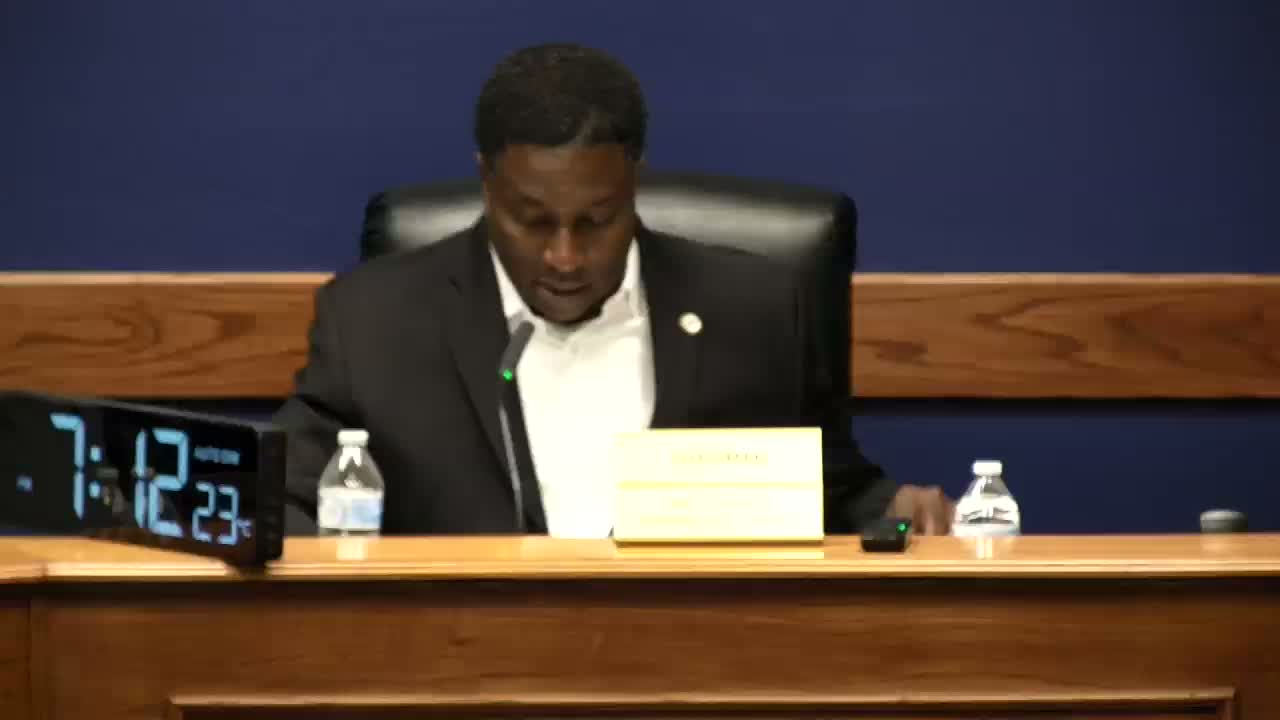
Gadsden County commissioners on Tuesday denied a special‑exception request to reopen and operate a bar, lounge and event center at 6766 Florida‑Georgia Highway in Havana, concluding a lengthy quasi‑judicial public hearing that drew dozens of residents, pastors and business supporters.
The request, proposed by Curtis and Tiffany James, sought county approval to operate a bar and event venue in an existing commercial structure and to support an alcohol license. Planning staff and the county'9s planning commission both recommended denial, telling the board the application failed to demonstrate required parking, buffering and noise mitigation and did not meet the county'9s alcohol‑separation standards.
“The planning commission voted unanimously to deny,” planning director Justin Steele told the commission, citing multiple shortfalls in the application including inadequate demonstration of 55 required parking spaces, lack of a traffic or event management plan, inadequate buffering between the building and nearby sensitive uses and a failure to show compliance with the county'9s 1,000‑foot separation requirement for alcohol sales. Steele said staff had suggested conditions the board could impose if it chose to approve the request, including a solid buffer adjacent to a daycare, limits on outdoor amplified music, a traffic and event plan, and proof of compliant off‑street parking.
The applicant said the venue would be operated with mitigation measures and a community focus. Owner Curtis James told commissioners, “My goal is not to create problems. It'9s to create opportunity,” and said the venue would host funerals, weddings and community events and would rely on ID checks, security and internal rules to maintain order.
Residents, pastors and nearby property owners, however, urged denial. Edna Hall Whitehead, owner of a funeral home three‑tenths of a mile from the site, said the neighborhood still bears scars from earlier nighttime activity at the location and urged the board to protect elderly neighbors, places of worship and children. Pastor Randy Ross, who said his school serves about 225 children, warned that allowing the exception would “start cutting away at our regulations” and could put students at risk. Multiple neighbors described past problems linked to the earlier use of the building, concerns about blocking a single EMS driveway, and the inability of the site plan to accommodate required parking.
Supporters of the proposal—neighbors who patronized the applicant'9s other businesses—asked commissioners to give the owners a chance. “Give him a chance,” several speakers said, arguing the current operators are not the same people who ran the prior venue and pledging contractual security arrangements with the sheriff'9s office.
Commissioners wrestled with policy, precedent and public safety. Some said they did not doubt the applicant'9s intentions but deferred to the planning commission'9s factual findings. Others raised questions about how the county'9s separation requirement was written and whether it had been applied fairly in the past when churches and alcohol licenses coexisted. The county attorney reminded the board that the record before it was the basis for a quasi‑judicial decision.
Commissioner Simpkins moved to deny the special‑exception use, citing the unanimous recommendations from planning and staff and the application'9s failure to meet the county'9s approval criteria, including required compatibility and alcohol‑separation standards. Chair (speaker 1) seconded the motion. The board voted 4–1 to deny the application; Commissioner Holt cast the lone dissenting vote. The denial was recorded as consistent with staff and Planning Commission findings.
Next steps: Staff will record the decision in the county file and will continue to process any pending administrative items for the property (for example, building‑code compliance) separate from the special‑exception decision. The denial preserves the county'9s current alcohol‑separation policy as applied in this case.
Sources: testimony and exhibits presented in the public hearing and planning staff analysis presented to the commission. The Planning Commission and staff recommended denial; the board'9s motion to deny carried 4–1.
The request, proposed by Curtis and Tiffany James, sought county approval to operate a bar and event venue in an existing commercial structure and to support an alcohol license. Planning staff and the county'9s planning commission both recommended denial, telling the board the application failed to demonstrate required parking, buffering and noise mitigation and did not meet the county'9s alcohol‑separation standards.
“The planning commission voted unanimously to deny,” planning director Justin Steele told the commission, citing multiple shortfalls in the application including inadequate demonstration of 55 required parking spaces, lack of a traffic or event management plan, inadequate buffering between the building and nearby sensitive uses and a failure to show compliance with the county'9s 1,000‑foot separation requirement for alcohol sales. Steele said staff had suggested conditions the board could impose if it chose to approve the request, including a solid buffer adjacent to a daycare, limits on outdoor amplified music, a traffic and event plan, and proof of compliant off‑street parking.
The applicant said the venue would be operated with mitigation measures and a community focus. Owner Curtis James told commissioners, “My goal is not to create problems. It'9s to create opportunity,” and said the venue would host funerals, weddings and community events and would rely on ID checks, security and internal rules to maintain order.
Residents, pastors and nearby property owners, however, urged denial. Edna Hall Whitehead, owner of a funeral home three‑tenths of a mile from the site, said the neighborhood still bears scars from earlier nighttime activity at the location and urged the board to protect elderly neighbors, places of worship and children. Pastor Randy Ross, who said his school serves about 225 children, warned that allowing the exception would “start cutting away at our regulations” and could put students at risk. Multiple neighbors described past problems linked to the earlier use of the building, concerns about blocking a single EMS driveway, and the inability of the site plan to accommodate required parking.
Supporters of the proposal—neighbors who patronized the applicant'9s other businesses—asked commissioners to give the owners a chance. “Give him a chance,” several speakers said, arguing the current operators are not the same people who ran the prior venue and pledging contractual security arrangements with the sheriff'9s office.
Commissioners wrestled with policy, precedent and public safety. Some said they did not doubt the applicant'9s intentions but deferred to the planning commission'9s factual findings. Others raised questions about how the county'9s separation requirement was written and whether it had been applied fairly in the past when churches and alcohol licenses coexisted. The county attorney reminded the board that the record before it was the basis for a quasi‑judicial decision.
Commissioner Simpkins moved to deny the special‑exception use, citing the unanimous recommendations from planning and staff and the application'9s failure to meet the county'9s approval criteria, including required compatibility and alcohol‑separation standards. Chair (speaker 1) seconded the motion. The board voted 4–1 to deny the application; Commissioner Holt cast the lone dissenting vote. The denial was recorded as consistent with staff and Planning Commission findings.
Next steps: Staff will record the decision in the county file and will continue to process any pending administrative items for the property (for example, building‑code compliance) separate from the special‑exception decision. The denial preserves the county'9s current alcohol‑separation policy as applied in this case.
Sources: testimony and exhibits presented in the public hearing and planning staff analysis presented to the commission. The Planning Commission and staff recommended denial; the board'9s motion to deny carried 4–1.
View the Full Meeting & All Its Details
This article offers just a summary. Unlock complete video, transcripts, and insights as a Founder Member.
✓
Watch full, unedited meeting videos
✓
Search every word spoken in unlimited transcripts
✓
AI summaries & real-time alerts (all government levels)
✓
Permanent access to expanding government content
30-day money-back guarantee
