Tennessee burial-services rules get clerical updates; preneed deposit window shortened to 15 days
May 04, 2026 | Commerce & Insurance, Deparments in Office of the Governor, Organizations, Executive, Tennessee
This article was created by AI summarizing key points discussed. AI makes mistakes, so for full details and context, please refer to the video of the full meeting. Please report any errors so we can fix them. Report an error »
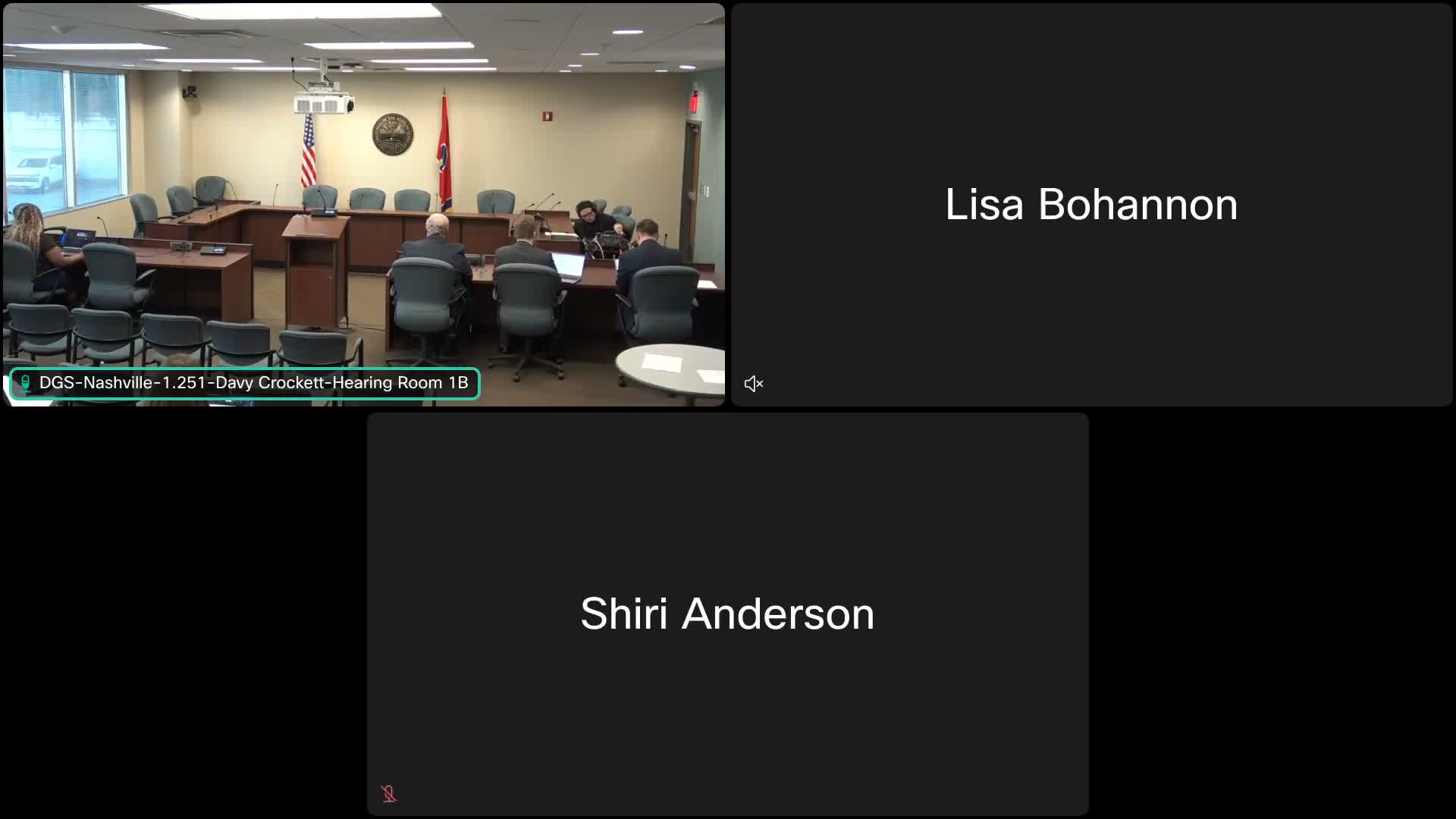
TROY BRYANT, associate general counsel for the Tennessee Department of Commerce & Insurance, read a package of mostly clerical amendments to the department's Burial Services Program rules at a rulemaking hearing on April 30, 2026, in Nashville.
The proposed changes would update references to the Bureau of Labor Statistics CPIU annual averages and remove outdated URLs and an infrequently purchased LexisNexis Tennessee funeral law packet and its associated fee. Bryant said the amendments also delete an obsolete requirement that community cemetery exemption requests be submitted in "typewritten form on 8 and a half inch paper." Robert Gribble, the burial services executive director, said notice of the hearing was posted on the program website and that the program notified interested parties on March 10, 2026.
The package includes several substance-adjacent edits that affect compliance and penalties. To align with a recent statutory change, the preneed rule would change the required deposit window for preneed funds from 30 days to 15 days. Bryant read the amendment into the record as replacing "30" with "15." The rule changes would also adjust civil-penalty language and ranges: one provision would state trustee civil penalties may be assessed in amounts from $1,000 to $10,000, and the floor for preneed civil penalties would be increased from $25 to $250.
Bryant said the amendments remove outdated statutory citations and replace certain terms for modern usage (for example, replacing the word "men" with "persons" in an investment-of-trust-funds rule). The department's regulatory-flexibility statement, also read into the record, said many cemeteries and funeral establishments would qualify as small businesses but that the proposed rules are not expected to impose additional reporting or administrative costs and may modestly reduce burdens by eliminating outdated paperwork and fees.
No members of the public offered oral comments at the hearing and the program reported it had not received pre-submitted written comments forwarded to the hearing officer. Bryant closed the public-comment period and outlined next procedural steps: the department will file the rules on the required form, submit them to the governor's office and the attorney general's office for review, and — if approved — the rules will be filed with the secretary of state and typically become effective 90 days after filing following a positive recommendation from the Joint Government Operations Committee.
Contacts for follow-up and the departmental representatives identified for committee meetings were Troy Bryant, associate general counsel; Robert Gribble, executive director of Burial Services; and Reid Witcher, assistant commissioner for regulatory boards. For details and the red-line text of amendments, Bryant directed interested parties to the Burial Services program website and the Bureau of Labor Statistics for CPIU data.
The proposed changes would update references to the Bureau of Labor Statistics CPIU annual averages and remove outdated URLs and an infrequently purchased LexisNexis Tennessee funeral law packet and its associated fee. Bryant said the amendments also delete an obsolete requirement that community cemetery exemption requests be submitted in "typewritten form on 8 and a half inch paper." Robert Gribble, the burial services executive director, said notice of the hearing was posted on the program website and that the program notified interested parties on March 10, 2026.
The package includes several substance-adjacent edits that affect compliance and penalties. To align with a recent statutory change, the preneed rule would change the required deposit window for preneed funds from 30 days to 15 days. Bryant read the amendment into the record as replacing "30" with "15." The rule changes would also adjust civil-penalty language and ranges: one provision would state trustee civil penalties may be assessed in amounts from $1,000 to $10,000, and the floor for preneed civil penalties would be increased from $25 to $250.
Bryant said the amendments remove outdated statutory citations and replace certain terms for modern usage (for example, replacing the word "men" with "persons" in an investment-of-trust-funds rule). The department's regulatory-flexibility statement, also read into the record, said many cemeteries and funeral establishments would qualify as small businesses but that the proposed rules are not expected to impose additional reporting or administrative costs and may modestly reduce burdens by eliminating outdated paperwork and fees.
No members of the public offered oral comments at the hearing and the program reported it had not received pre-submitted written comments forwarded to the hearing officer. Bryant closed the public-comment period and outlined next procedural steps: the department will file the rules on the required form, submit them to the governor's office and the attorney general's office for review, and — if approved — the rules will be filed with the secretary of state and typically become effective 90 days after filing following a positive recommendation from the Joint Government Operations Committee.
Contacts for follow-up and the departmental representatives identified for committee meetings were Troy Bryant, associate general counsel; Robert Gribble, executive director of Burial Services; and Reid Witcher, assistant commissioner for regulatory boards. For details and the red-line text of amendments, Bryant directed interested parties to the Burial Services program website and the Bureau of Labor Statistics for CPIU data.
View the Full Meeting & All Its Details
This article offers just a summary. Unlock complete video, transcripts, and insights as a Founder Member.
✓
Watch full, unedited meeting videos
✓
Search every word spoken in unlimited transcripts
✓
AI summaries & real-time alerts (all government levels)
✓
Permanent access to expanding government content
30-day money-back guarantee
