House Ways and Means sends toll‑increase bill to interim study after DOT testimony and industry comment
May 05, 2026 | Ways and Means, House of Representatives, Committees , Legislative, New Hampshire
This article was created by AI summarizing key points discussed. AI makes mistakes, so for full details and context, please refer to the video of the full meeting. Please report any errors so we can fix them. Report an error »
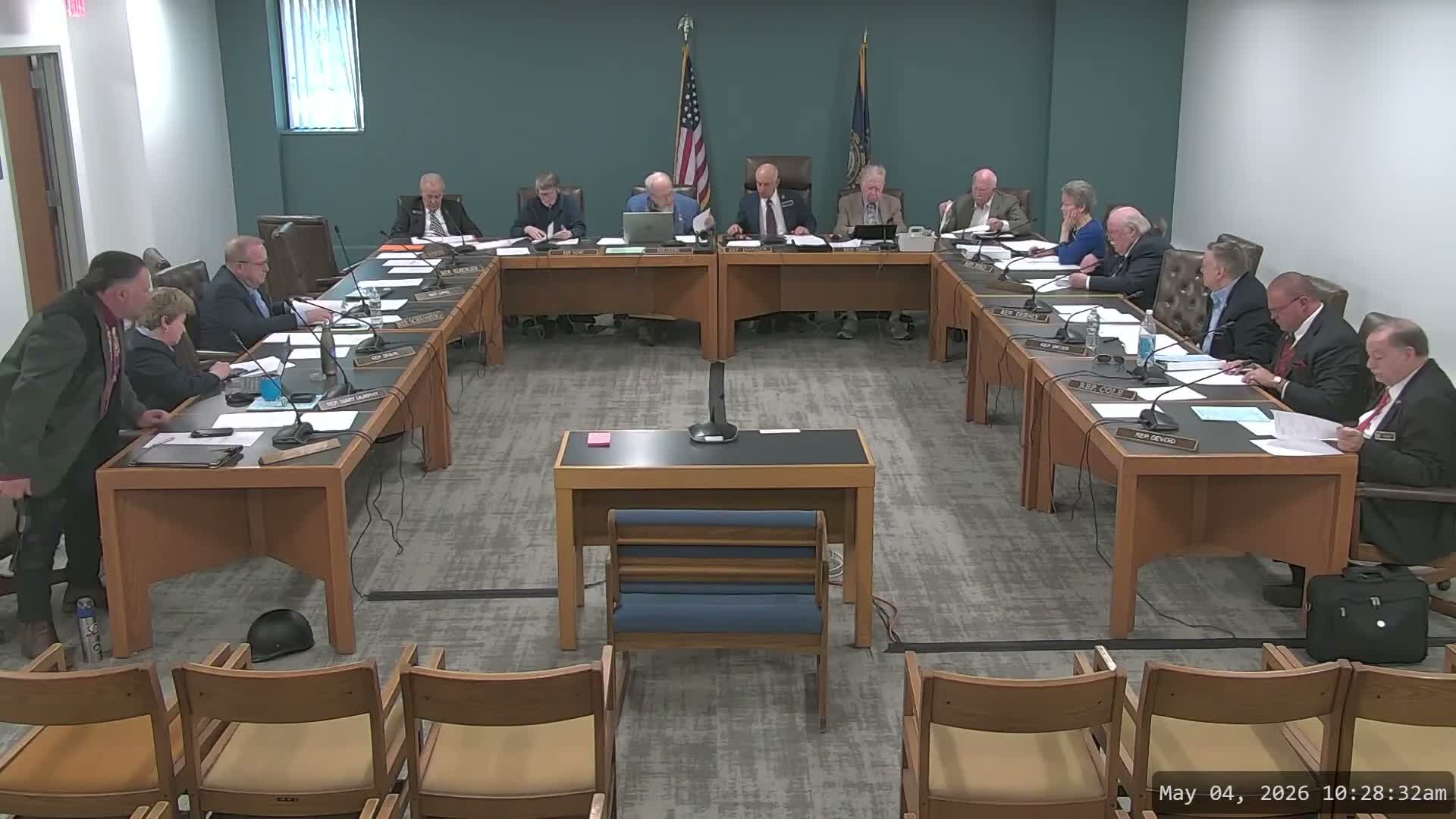
The House Ways and Means Committee on SB627 heard testimony from transportation stakeholders and the New Hampshire Department of Transportation before voting to place the measure in interim study.
Jim Jaber, owner of C & J Bus Lines, urged passage and argued the bill would produce new revenue to support the 10‑year transportation plan and to leverage federal "toll credits" that can increase available federal matching funds. Jaber described potential project benefits including the Manchester I‑93 Exit 6/7 work and other safety improvements, calling the bill "a no brainer."
David Rodrigue, commissioner of the New Hampshire Department of Transportation, explained the bill would double toll rates for non‑New Hampshire E‑ZPass users while keeping current discounted electronic rates for New Hampshire E‑ZPass customers. He told the committee the department "does not take a position on whether we support this bill or don't support this bill" but said the increase would generate an estimated $550–600 million over 10 years and that partial revenues (about $26.4 million) could begin within the first six months of collection. Rodrigue said those funds would allow inclusion of several projects in the 10‑year plan that otherwise lack funding.
Members probed operational mechanics (how electronic, transponder and cash collections would work), economic effects on heavy vehicles and pass‑through to consumers. Commissioner Rodrigue acknowledged heavier vehicle classes will pay higher tolls and that some costs could be passed through to consumers. Representative Murphy and others highlighted that nearby states charge significantly higher fees for heavy trucks and asked whether New Hampshire may be leaving revenue uncollected by setting lower heavy‑truck rates.
Industry testimony included Amy Charbonneau of Continental Paving, who said New Hampshire‑registered trucks would not see increases under the bill and that, once that was understood, trucking groups did not publicly oppose it.
Lawmakers also noted BEA (Business and Economic Analysis) was not present and urged additional study of tourism and consumer effects. Representative Ellery moved to place SB627 in interim study, seconded by Representative Elmi; the clerk's roll call recorded the motion as passing, 11–9. Committee members said they would revisit the bill in the fall with further data on rate structure and economic impacts.
The interim study decision pauses immediate enactment and directs additional analysis around the detailed toll schedule, heavy‑vehicle classes and projected economic effects before any final recommendation is reported out of Ways and Means.
Jim Jaber, owner of C & J Bus Lines, urged passage and argued the bill would produce new revenue to support the 10‑year transportation plan and to leverage federal "toll credits" that can increase available federal matching funds. Jaber described potential project benefits including the Manchester I‑93 Exit 6/7 work and other safety improvements, calling the bill "a no brainer."
David Rodrigue, commissioner of the New Hampshire Department of Transportation, explained the bill would double toll rates for non‑New Hampshire E‑ZPass users while keeping current discounted electronic rates for New Hampshire E‑ZPass customers. He told the committee the department "does not take a position on whether we support this bill or don't support this bill" but said the increase would generate an estimated $550–600 million over 10 years and that partial revenues (about $26.4 million) could begin within the first six months of collection. Rodrigue said those funds would allow inclusion of several projects in the 10‑year plan that otherwise lack funding.
Members probed operational mechanics (how electronic, transponder and cash collections would work), economic effects on heavy vehicles and pass‑through to consumers. Commissioner Rodrigue acknowledged heavier vehicle classes will pay higher tolls and that some costs could be passed through to consumers. Representative Murphy and others highlighted that nearby states charge significantly higher fees for heavy trucks and asked whether New Hampshire may be leaving revenue uncollected by setting lower heavy‑truck rates.
Industry testimony included Amy Charbonneau of Continental Paving, who said New Hampshire‑registered trucks would not see increases under the bill and that, once that was understood, trucking groups did not publicly oppose it.
Lawmakers also noted BEA (Business and Economic Analysis) was not present and urged additional study of tourism and consumer effects. Representative Ellery moved to place SB627 in interim study, seconded by Representative Elmi; the clerk's roll call recorded the motion as passing, 11–9. Committee members said they would revisit the bill in the fall with further data on rate structure and economic impacts.
The interim study decision pauses immediate enactment and directs additional analysis around the detailed toll schedule, heavy‑vehicle classes and projected economic effects before any final recommendation is reported out of Ways and Means.
View the Full Meeting & All Its Details
This article offers just a summary. Unlock complete video, transcripts, and insights as a Founder Member.
✓
Watch full, unedited meeting videos
✓
Search every word spoken in unlimited transcripts
✓
AI summaries & real-time alerts (all government levels)
✓
Permanent access to expanding government content
30-day money-back guarantee
