City staff summarize 2026 state legislative wins and bonding authority for water projects
May 04, 2026 | Milwaukee , Milwaukee County, Wisconsin
This article was created by AI summarizing key points discussed. AI makes mistakes, so for full details and context, please refer to the video of the full meeting. Please report any errors so we can fix them. Report an error »
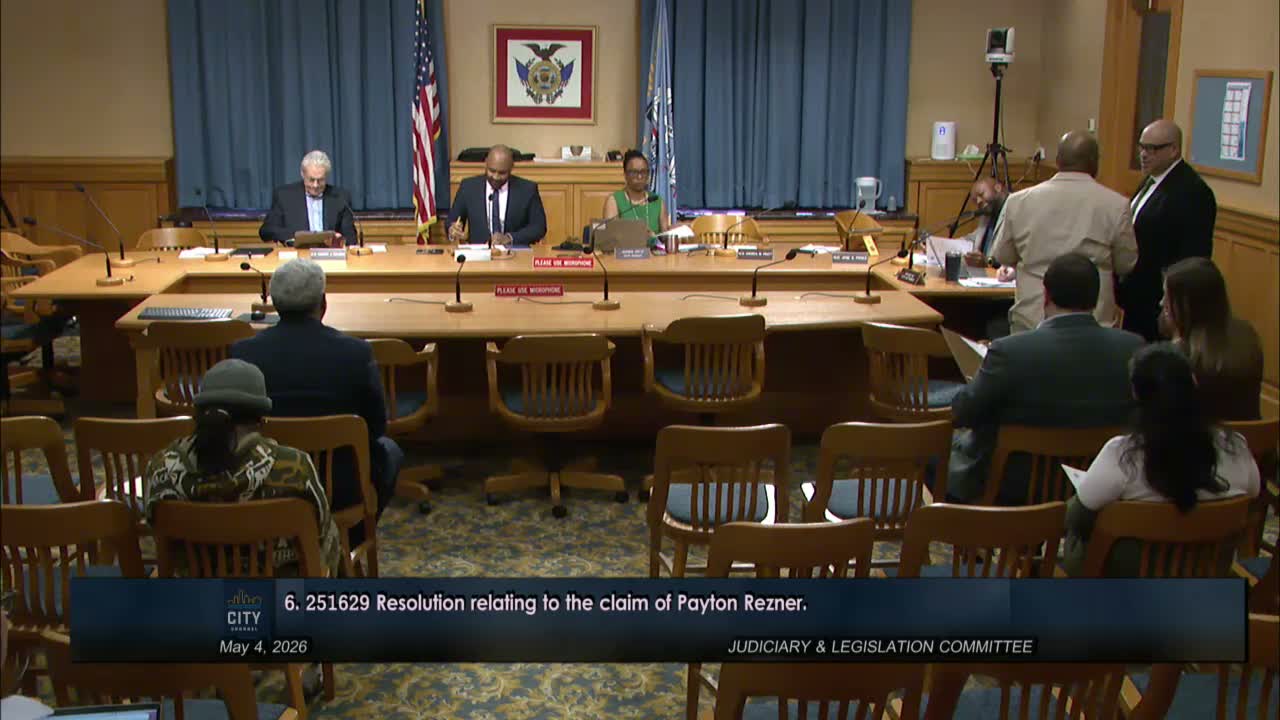
Jordan Premico and Katie Yeager of the city’s intergovernmental relations team briefed the committee on state legislative outcomes and the likely local impact.
Premico opened by listing bills the city tracked this session and noting key wins: changes to tax incremental financing (TID) rules and planning bills that are expected to increase the local pool for affordable housing projects, and expanded allowable uses for WEDA/WIDA development loans to better pair state funding with TIF and historic tax credits.
Yeager outlined several housing- and development-related measures, including increases to historic rehabilitation tax credits and adjustments to the state housing tax credit program intended to expand mixed- and middle-income development access. She told aldermen the governor signed bills that the city had supported and that these measures were expected to produce “millions” in new financing capacity.
The presentation also described environmental measures: Wisconsin Acts 170 and 171 create a battery stewardship program to shift recycling costs to producers, and a state bonding authority for the Environmental Improvement Fund that approved roughly $732,000,000 in new bonding authority to support water infrastructure projects (including potential lead lateral work). Premico said applications are ongoing and that the city could tap the authority if federal funding streams decline.
Staff noted multiple public-safety bills that passed or advanced, including measures addressing reckless driving impoundment, EMS reimbursement changes to support emergency services, and occupational-credential expansions for DACA recipients (to expand workforce opportunities). Yeager highlighted a postpartum Medicaid extension and a separate act that expands breast-cancer screening under the medical assistance program.
Committee members asked when and how the city could access bonding dollars and what oversight or application timing would look like. Staff said the $732 million authority was set this session, that application windows are open, and that use would depend on program rules and prioritization. Premico cautioned that federal funding lines the city has relied on may be uncertain in future years, making state bonding potentially important.
On a related note, staff briefed the committee on the U.S. Supreme Court decision affecting Section 2 of the Voting Rights Act and potential downstream impacts. Legislative affairs staff said they circulated an analysis and, while they did not foresee immediate redistricting changes in Wisconsin, they urged the city to monitor litigation and legislative activity.
The committee took no formal legislative action at the meeting beyond adding the speed-limiting-device proposal to the city’s legislative package for next session.
Premico opened by listing bills the city tracked this session and noting key wins: changes to tax incremental financing (TID) rules and planning bills that are expected to increase the local pool for affordable housing projects, and expanded allowable uses for WEDA/WIDA development loans to better pair state funding with TIF and historic tax credits.
Yeager outlined several housing- and development-related measures, including increases to historic rehabilitation tax credits and adjustments to the state housing tax credit program intended to expand mixed- and middle-income development access. She told aldermen the governor signed bills that the city had supported and that these measures were expected to produce “millions” in new financing capacity.
The presentation also described environmental measures: Wisconsin Acts 170 and 171 create a battery stewardship program to shift recycling costs to producers, and a state bonding authority for the Environmental Improvement Fund that approved roughly $732,000,000 in new bonding authority to support water infrastructure projects (including potential lead lateral work). Premico said applications are ongoing and that the city could tap the authority if federal funding streams decline.
Staff noted multiple public-safety bills that passed or advanced, including measures addressing reckless driving impoundment, EMS reimbursement changes to support emergency services, and occupational-credential expansions for DACA recipients (to expand workforce opportunities). Yeager highlighted a postpartum Medicaid extension and a separate act that expands breast-cancer screening under the medical assistance program.
Committee members asked when and how the city could access bonding dollars and what oversight or application timing would look like. Staff said the $732 million authority was set this session, that application windows are open, and that use would depend on program rules and prioritization. Premico cautioned that federal funding lines the city has relied on may be uncertain in future years, making state bonding potentially important.
On a related note, staff briefed the committee on the U.S. Supreme Court decision affecting Section 2 of the Voting Rights Act and potential downstream impacts. Legislative affairs staff said they circulated an analysis and, while they did not foresee immediate redistricting changes in Wisconsin, they urged the city to monitor litigation and legislative activity.
The committee took no formal legislative action at the meeting beyond adding the speed-limiting-device proposal to the city’s legislative package for next session.
Don't Miss a Word: See the Full Meeting!
Go beyond summaries. Unlock every video, transcript, and key insight with a Founder Membership.
✓
Get instant access to full meeting videos
✓
Search and clip any phrase from complete transcripts
✓
Receive AI-powered summaries & custom alerts
✓
Enjoy lifetime, unrestricted access to government data
30-day money-back guarantee
