Task force recommends consultant, shifts focus from micro-code edits to policy-process overhaul
April 30, 2026 | Grand Junction, Mesa County, Colorado
This article was created by AI summarizing key points discussed. AI makes mistakes, so for full details and context, please refer to the video of the full meeting. Please report any errors so we can fix them. Report an error »
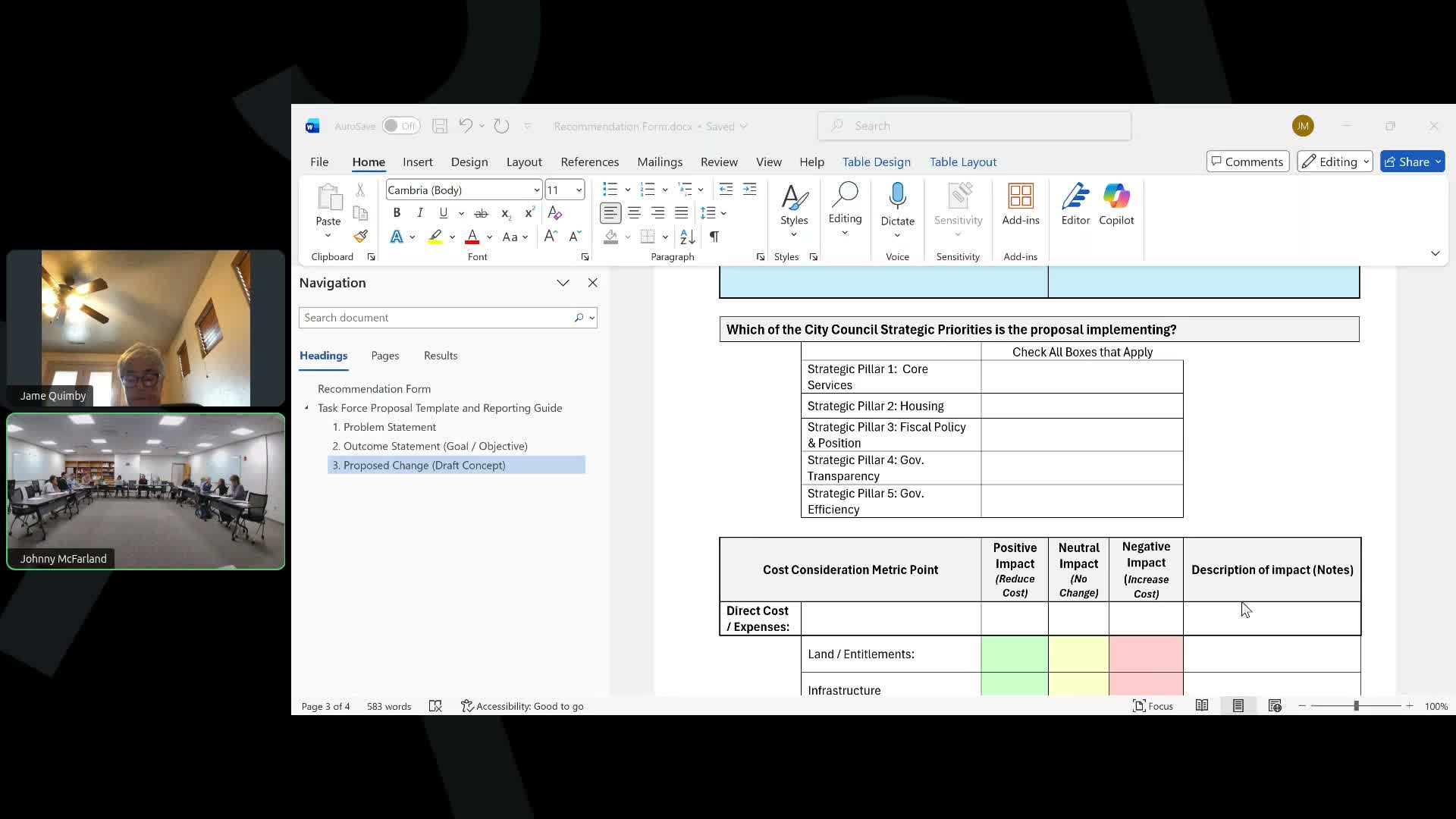
Task-force members recommended a strategic pivot: instead of only debating fine-grained code wording at each meeting, the group proposed a consultant-assisted effort to strengthen policy-development processes, data assumptions and stakeholder vetting.
Several members argued the committee has spent much of its time on detailed code language (the "thousand tiny cuts") and should instead identify a small set of high-impact priorities—scoping, survey/data standards for nexus studies, vetting methodologies, and clear definitions of which items are policy vs. code. One committee member said the group should help design an RFP and participate in consultant selection so the consultant's scope and data approach reflect the task force’s priorities.
The recommendation included practical items for consultant work: develop standards for survey/data collection used by consultants, review existing nexus methodologies (proportionality vs. needs-based) and propose when each is appropriate, prepare options for funding parks/open-space other than fee increases, and craft process safeguards so policy decisions are scoped with stakeholder input before they become codified. Members emphasized that a consultant is not a substitute for internal staff commitment but would help the task force package and prioritize its recommendations.
The task force agreed in principle to endorse hiring a consultant, asked staff to bring back recommended RFP language, and requested representation on the selection panel to avoid prior data/assumption problems seen in recent consultant work.
Several members argued the committee has spent much of its time on detailed code language (the "thousand tiny cuts") and should instead identify a small set of high-impact priorities—scoping, survey/data standards for nexus studies, vetting methodologies, and clear definitions of which items are policy vs. code. One committee member said the group should help design an RFP and participate in consultant selection so the consultant's scope and data approach reflect the task force’s priorities.
The recommendation included practical items for consultant work: develop standards for survey/data collection used by consultants, review existing nexus methodologies (proportionality vs. needs-based) and propose when each is appropriate, prepare options for funding parks/open-space other than fee increases, and craft process safeguards so policy decisions are scoped with stakeholder input before they become codified. Members emphasized that a consultant is not a substitute for internal staff commitment but would help the task force package and prioritize its recommendations.
The task force agreed in principle to endorse hiring a consultant, asked staff to bring back recommended RFP language, and requested representation on the selection panel to avoid prior data/assumption problems seen in recent consultant work.
Don't Miss a Word: See the Full Meeting!
Go beyond summaries. Unlock every video, transcript, and key insight with a Founder Membership.
✓
Get instant access to full meeting videos
✓
Search and clip any phrase from complete transcripts
✓
Receive AI-powered summaries & custom alerts
✓
Enjoy lifetime, unrestricted access to government data
30-day money-back guarantee
