Denver Parks and Recreation outlines drought plans, ADA remediation and park activation projects
May 05, 2026 | Denver (Consolidated County and City), Colorado
This article was created by AI summarizing key points discussed. AI makes mistakes, so for full details and context, please refer to the video of the full meeting. Please report any errors so we can fix them. Report an error »
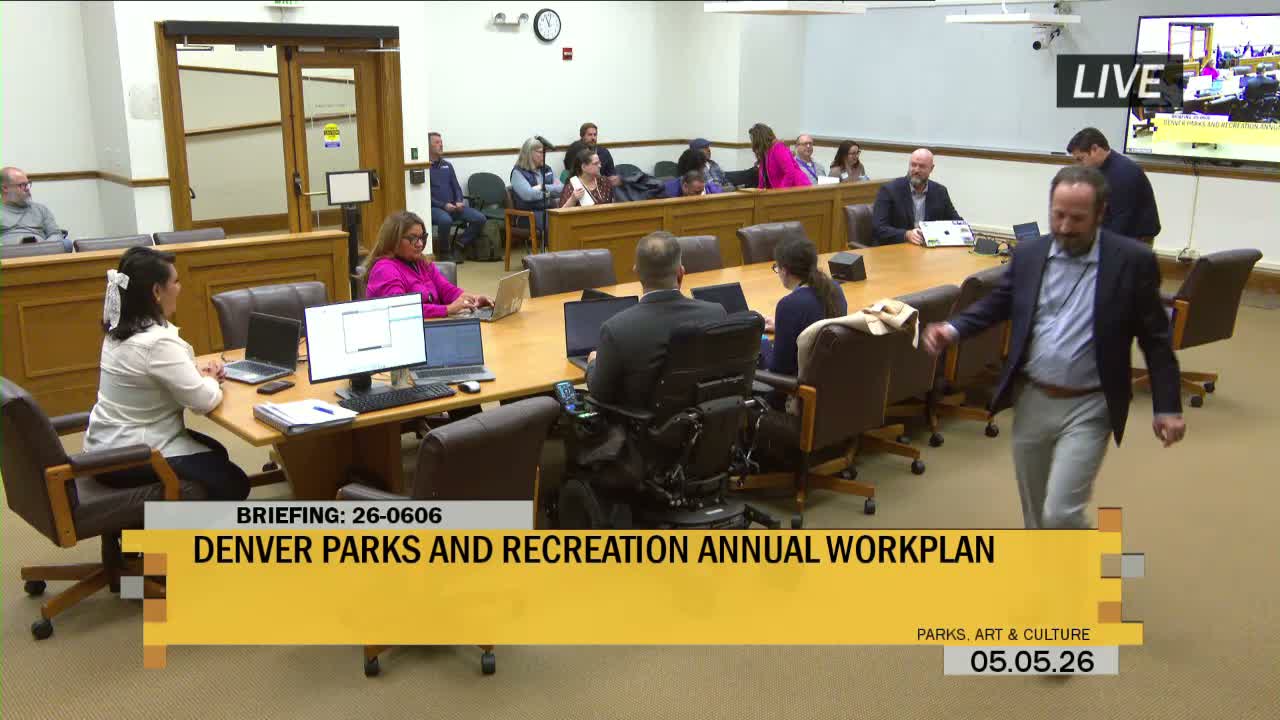
Joel Clark, executive director of Denver Parks and Recreation, told the Parks, Arts and Culture Committee that the department is balancing drought restrictions, asset maintenance and a large capital program of park and recreation projects.
Clark summarized system scale and goals: 348 miles of trails and park walks, 110 active capital projects, and 14,000 mountain‑park acres. He described the department’s game plan organized around adapt, diversify and grow, reinvest and connect.
On drought and water management, Clark said Parks is entering an active management period with Denver Water (May 1–Oct 31) and emphasized targeted conservation while keeping high‑use public amenities functional. He stressed the department is coordinating watering plans to support recently planted trees and noted forestry work on Emerald Ash Borer response.
Clark highlighted operational improvements such as consolidating permitting into a single point of entry and launching a dashboard to place porta‑lets more equitably using mobility data; he also acknowledged vandalism and theft of porta‑lets and backflow devices as ongoing operational challenges.
City Forester Luke Lawrence described tree‑watering guidance for residents and explained targeted internal watering plans for high‑value plantings. "For newly planted trees ... we're asking residents to water about 10 gallons per inch, so that'd be a 20 gallon watering cycle, weekly or biweekly," Lawrence said.
Parks described several growth and reinvestment projects: the Heron Pond / Carpio Sanguinetti regional park, Bethesda Park (first parcel purchased with the Park Legacy Fund), pickleball courts at Lowry and Rosemont, the Swansea indoor pool conversion to year‑round operation (ribbon cutting expected this month) and Westwood Recreation Center as a new regional facility.
During Q&A, councilmembers pressed Parks on equity of service (bookmobile timing and locations), deferred‑maintenance estimates, the impact of cuts on park rangers and maintenance staff, and how registrations for swim lessons are allocated. Deputy John Martinez said Parks added 164 additional swim‑lesson slots this cycle and introduced a 10% walk‑in allocation to address the digital divide.
On concessions and food in parks (Skyline Park, Sloan's Lake boathouse), Clark said proposed arrangements would be concession agreements designed to enhance user experience, not full enterprise operations, and that concession structures aim to cover costs without displacing park maintenance or ranger functions.
Parks committed to follow‑up on district‑specific deferred‑maintenance numbers, bookmobile schedules, and more details about bond rollouts for rec‑center projects. The committee took a single consent item and adjourned.
No formal votes on Parks policy were recorded during the meeting.
Clark summarized system scale and goals: 348 miles of trails and park walks, 110 active capital projects, and 14,000 mountain‑park acres. He described the department’s game plan organized around adapt, diversify and grow, reinvest and connect.
On drought and water management, Clark said Parks is entering an active management period with Denver Water (May 1–Oct 31) and emphasized targeted conservation while keeping high‑use public amenities functional. He stressed the department is coordinating watering plans to support recently planted trees and noted forestry work on Emerald Ash Borer response.
Clark highlighted operational improvements such as consolidating permitting into a single point of entry and launching a dashboard to place porta‑lets more equitably using mobility data; he also acknowledged vandalism and theft of porta‑lets and backflow devices as ongoing operational challenges.
City Forester Luke Lawrence described tree‑watering guidance for residents and explained targeted internal watering plans for high‑value plantings. "For newly planted trees ... we're asking residents to water about 10 gallons per inch, so that'd be a 20 gallon watering cycle, weekly or biweekly," Lawrence said.
Parks described several growth and reinvestment projects: the Heron Pond / Carpio Sanguinetti regional park, Bethesda Park (first parcel purchased with the Park Legacy Fund), pickleball courts at Lowry and Rosemont, the Swansea indoor pool conversion to year‑round operation (ribbon cutting expected this month) and Westwood Recreation Center as a new regional facility.
During Q&A, councilmembers pressed Parks on equity of service (bookmobile timing and locations), deferred‑maintenance estimates, the impact of cuts on park rangers and maintenance staff, and how registrations for swim lessons are allocated. Deputy John Martinez said Parks added 164 additional swim‑lesson slots this cycle and introduced a 10% walk‑in allocation to address the digital divide.
On concessions and food in parks (Skyline Park, Sloan's Lake boathouse), Clark said proposed arrangements would be concession agreements designed to enhance user experience, not full enterprise operations, and that concession structures aim to cover costs without displacing park maintenance or ranger functions.
Parks committed to follow‑up on district‑specific deferred‑maintenance numbers, bookmobile schedules, and more details about bond rollouts for rec‑center projects. The committee took a single consent item and adjourned.
No formal votes on Parks policy were recorded during the meeting.
Don't Miss a Word: See the Full Meeting!
Go beyond summaries. Unlock every video, transcript, and key insight with a Founder Membership.
✓
Get instant access to full meeting videos
✓
Search and clip any phrase from complete transcripts
✓
Receive AI-powered summaries & custom alerts
✓
Enjoy lifetime, unrestricted access to government data
30-day money-back guarantee
