County outlines child abuse prevention network, ARPA-funded supports and new reporting guidance
April 27, 2026 | Alameda County, California
This article was created by AI summarizing key points discussed. AI makes mistakes, so for full details and context, please refer to the video of the full meeting. Please report any errors so we can fix them. Report an error »
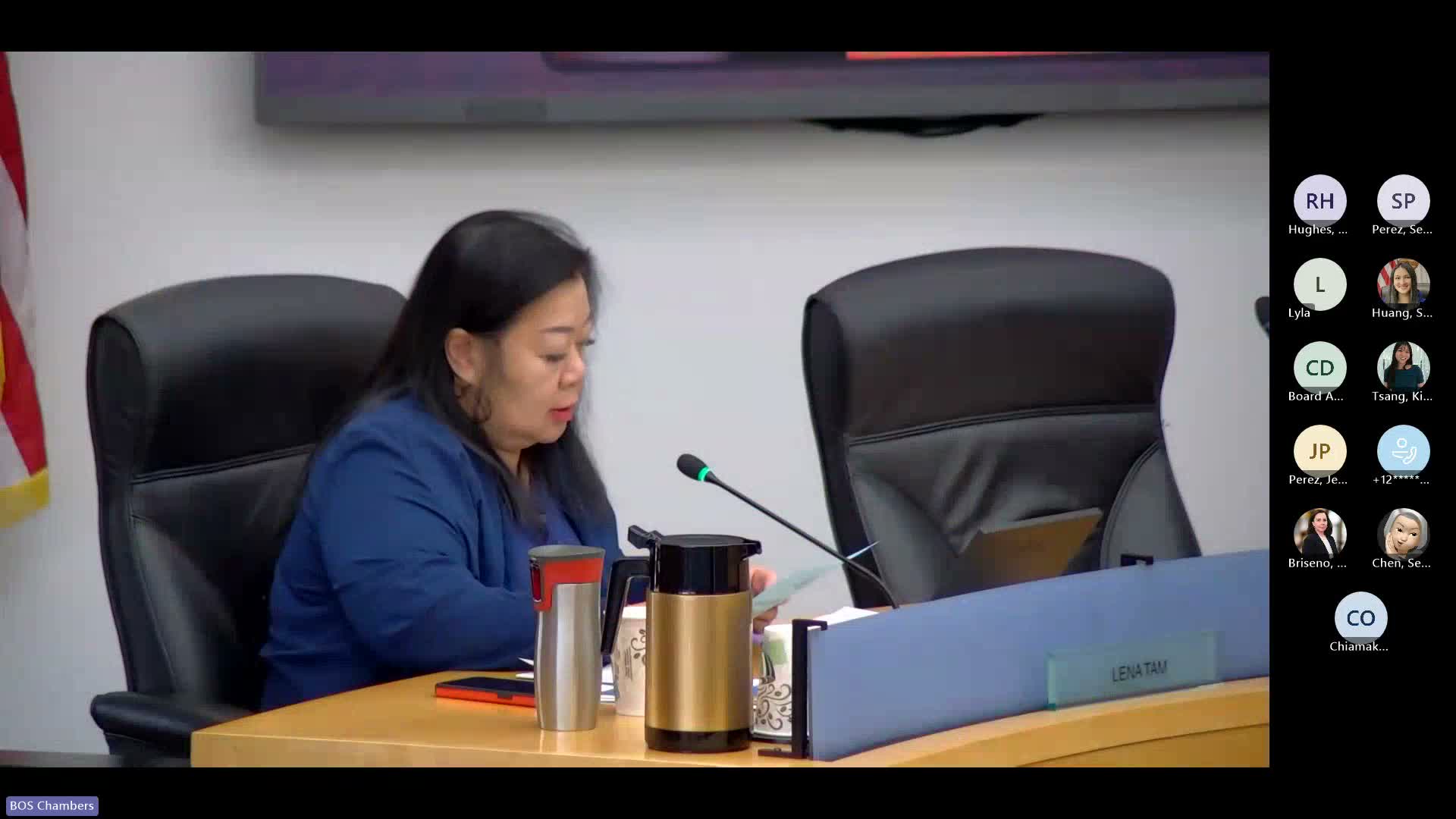
Colette Cotteswalla, Alameda County's child welfare supervisor and coordinator of the Child Abuse Prevention Council, briefed the Social Services Committee on April 27 about prevention efforts, funded partners and recent legal and programmatic changes.
Cotteswalla described a county task force and the Strong Families Alliance—a network of providers that coordinates referrals and wraparound supports. The county funds 12 organizations under CAPIT (child abuse prevention, intervention and treatment) contracts to provide primary prevention services (parent education, housing referrals and case management) and an annual CBCAP allocation (about $94,000) for public awareness and education.
The county reported it received $811,000 in ARPA supplemental funds that were distributed to five organizations via an RFP and served 2,148 families between December 2024 and December 2025. Staff said CAPIT contractors typically receive about $80,000 per year; county prevention services were cited at roughly $1,102,000 across the relevant program area.
Cotteswalla emphasized a shift in mandated-reporter expectations and training under Assembly Bill 2085 (2022), which clarifies that poverty alone is not general neglect. The county said it conducted mandated-reporter trainings reaching 25 organizations and more than 750 participants in 2025.
Board members asked about program metrics and whether ARPA-funded contractors remain in the network after one‑time funding ends. Staff replied that many contractors remain in the county prevention network through CalPrevents and referrals, but that providers consistently request additional funding to expand services.
A public commenter, Dionne Ehrenner, urged the board to consider historical prevention investments and asked whether shifting more resources upstream could reduce downstream child welfare costs; staff and supervisors acknowledged the trade-offs and noted prior federal waiver demonstrations that emphasized prevention.
Cotteswalla described a county task force and the Strong Families Alliance—a network of providers that coordinates referrals and wraparound supports. The county funds 12 organizations under CAPIT (child abuse prevention, intervention and treatment) contracts to provide primary prevention services (parent education, housing referrals and case management) and an annual CBCAP allocation (about $94,000) for public awareness and education.
The county reported it received $811,000 in ARPA supplemental funds that were distributed to five organizations via an RFP and served 2,148 families between December 2024 and December 2025. Staff said CAPIT contractors typically receive about $80,000 per year; county prevention services were cited at roughly $1,102,000 across the relevant program area.
Cotteswalla emphasized a shift in mandated-reporter expectations and training under Assembly Bill 2085 (2022), which clarifies that poverty alone is not general neglect. The county said it conducted mandated-reporter trainings reaching 25 organizations and more than 750 participants in 2025.
Board members asked about program metrics and whether ARPA-funded contractors remain in the network after one‑time funding ends. Staff replied that many contractors remain in the county prevention network through CalPrevents and referrals, but that providers consistently request additional funding to expand services.
A public commenter, Dionne Ehrenner, urged the board to consider historical prevention investments and asked whether shifting more resources upstream could reduce downstream child welfare costs; staff and supervisors acknowledged the trade-offs and noted prior federal waiver demonstrations that emphasized prevention.
Don't Miss a Word: See the Full Meeting!
Go beyond summaries. Unlock every video, transcript, and key insight with a Founder Membership.
✓
Get instant access to full meeting videos
✓
Search and clip any phrase from complete transcripts
✓
Receive AI-powered summaries & custom alerts
✓
Enjoy lifetime, unrestricted access to government data
30-day money-back guarantee
