Senate budget subcommittee approves $25M emergency grants for distressed hospitals
May 05, 2026 | California State Senate, Senate, Legislative, California
This article was created by AI summarizing key points discussed. AI makes mistakes, so for full details and context, please refer to the video of the full meeting. Please report any errors so we can fix them. Report an error »
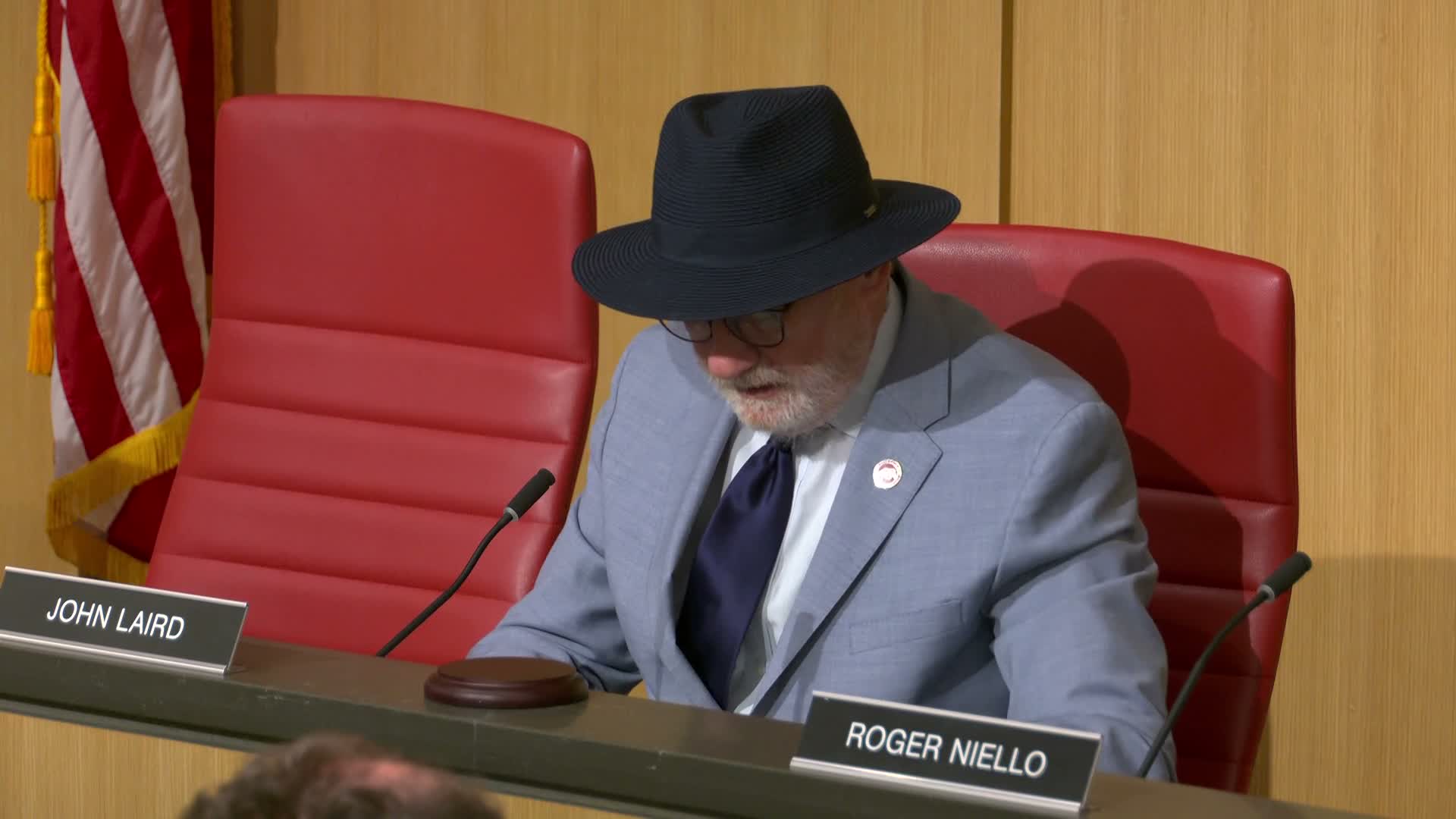
The California Senate budget subcommittee voted 18–0 to pass Assembly Bill 108, a one-time $25,000,000 appropriation to create an emergency hospital grant program administered by the Department of Health Care Access and Information (HCAI).
Chair Laird said the legislation is intended as an immediate bridge to prevent imminent hospital closures before the July 1 start of the fiscal year. "This bill addresses hospitals that might not make it till July 1," the chair said in opening remarks.
Guadalupe Rodriguez of the Department of Finance told the committee that AB 108 would fund grants for nonprofit hospitals that apply and meet narrowly defined eligibility: less than 10 days of cash on hand, documented efforts to exhaust other financial options, and a payer mix composed of more than 50 percent government payers and uninsured patients. Rodriguez said the bill includes contract and rulemaking exemptions to expedite disbursement.
Sunil Patel (Department of Finance) and other administration witnesses told senators the department lacks fully up-to-date, point-in-time data and would rely on hospitals to submit recent financial statements demonstrating eligibility; the bill requires eligibility data as of April 15 for this program. Rodriguez and Patel emphasized the program is designed to address the most urgent, short-term cases.
Committee members repeatedly questioned whether $25 million is adequate. Jason Conson (Tourocellio) contrasted the proposal with the prior $300 million distressed hospital loan program that supported 16 hospitals over multiple years, saying the new fund is a smaller, short-term bandage. Several senators urged that the emergency funding be paired with a data-driven May revise and follow-up hearings to address longer-term fixes.
Lawmakers and witnesses also raised systemic causes of distress, including low Medi‑Cal reimbursement rates, seismic retrofit costs, and federal funding delays. "There are long-term structural issues here," the Legislative Analyst's Office cautioned, noting prior programs used broader eligibility metrics (30–90 day cash-on-hand thresholds and multiple financial ratios).
The committee heard requests for additional, targeted funding. Senator Durazo requested a separate one-time appropriation for Children’s Hospital Los Angeles; public commenters and the California Hospital Association urged larger, ongoing support and referenced a $300 million figure for the broader distressed-hospital effort.
The subcommittee agreed to hold the roll open briefly and to revisit hospital funding in the May revise and subsequent hearings. The motion to pass AB 108 was made by Senator Richardson; the subcommittee recorded a final tally of 18 yes, 0 no. The chair said the bill "is out" and the committee adjourned.
What happens next: AB 108 will be reflected in the May revise budget package and the subcommittee indicated it will continue oversight and consider additional appropriations or policy changes after updated data and the May revise are released.
Chair Laird said the legislation is intended as an immediate bridge to prevent imminent hospital closures before the July 1 start of the fiscal year. "This bill addresses hospitals that might not make it till July 1," the chair said in opening remarks.
Guadalupe Rodriguez of the Department of Finance told the committee that AB 108 would fund grants for nonprofit hospitals that apply and meet narrowly defined eligibility: less than 10 days of cash on hand, documented efforts to exhaust other financial options, and a payer mix composed of more than 50 percent government payers and uninsured patients. Rodriguez said the bill includes contract and rulemaking exemptions to expedite disbursement.
Sunil Patel (Department of Finance) and other administration witnesses told senators the department lacks fully up-to-date, point-in-time data and would rely on hospitals to submit recent financial statements demonstrating eligibility; the bill requires eligibility data as of April 15 for this program. Rodriguez and Patel emphasized the program is designed to address the most urgent, short-term cases.
Committee members repeatedly questioned whether $25 million is adequate. Jason Conson (Tourocellio) contrasted the proposal with the prior $300 million distressed hospital loan program that supported 16 hospitals over multiple years, saying the new fund is a smaller, short-term bandage. Several senators urged that the emergency funding be paired with a data-driven May revise and follow-up hearings to address longer-term fixes.
Lawmakers and witnesses also raised systemic causes of distress, including low Medi‑Cal reimbursement rates, seismic retrofit costs, and federal funding delays. "There are long-term structural issues here," the Legislative Analyst's Office cautioned, noting prior programs used broader eligibility metrics (30–90 day cash-on-hand thresholds and multiple financial ratios).
The committee heard requests for additional, targeted funding. Senator Durazo requested a separate one-time appropriation for Children’s Hospital Los Angeles; public commenters and the California Hospital Association urged larger, ongoing support and referenced a $300 million figure for the broader distressed-hospital effort.
The subcommittee agreed to hold the roll open briefly and to revisit hospital funding in the May revise and subsequent hearings. The motion to pass AB 108 was made by Senator Richardson; the subcommittee recorded a final tally of 18 yes, 0 no. The chair said the bill "is out" and the committee adjourned.
What happens next: AB 108 will be reflected in the May revise budget package and the subcommittee indicated it will continue oversight and consider additional appropriations or policy changes after updated data and the May revise are released.
Don't Miss a Word: See the Full Meeting!
Go beyond summaries. Unlock every video, transcript, and key insight with a Founder Membership.
✓
Get instant access to full meeting videos
✓
Search and clip any phrase from complete transcripts
✓
Receive AI-powered summaries & custom alerts
✓
Enjoy lifetime, unrestricted access to government data
30-day money-back guarantee
