Surveyors tell Vermillion County commissioners legacy mine work shifted section lines, complicating plans to pave 1800 South
May 05, 2026 | Vermillion County, Indiana
This article was created by AI summarizing key points discussed. AI makes mistakes, so for full details and context, please refer to the video of the full meeting. Please report any errors so we can fix them. Report an error »
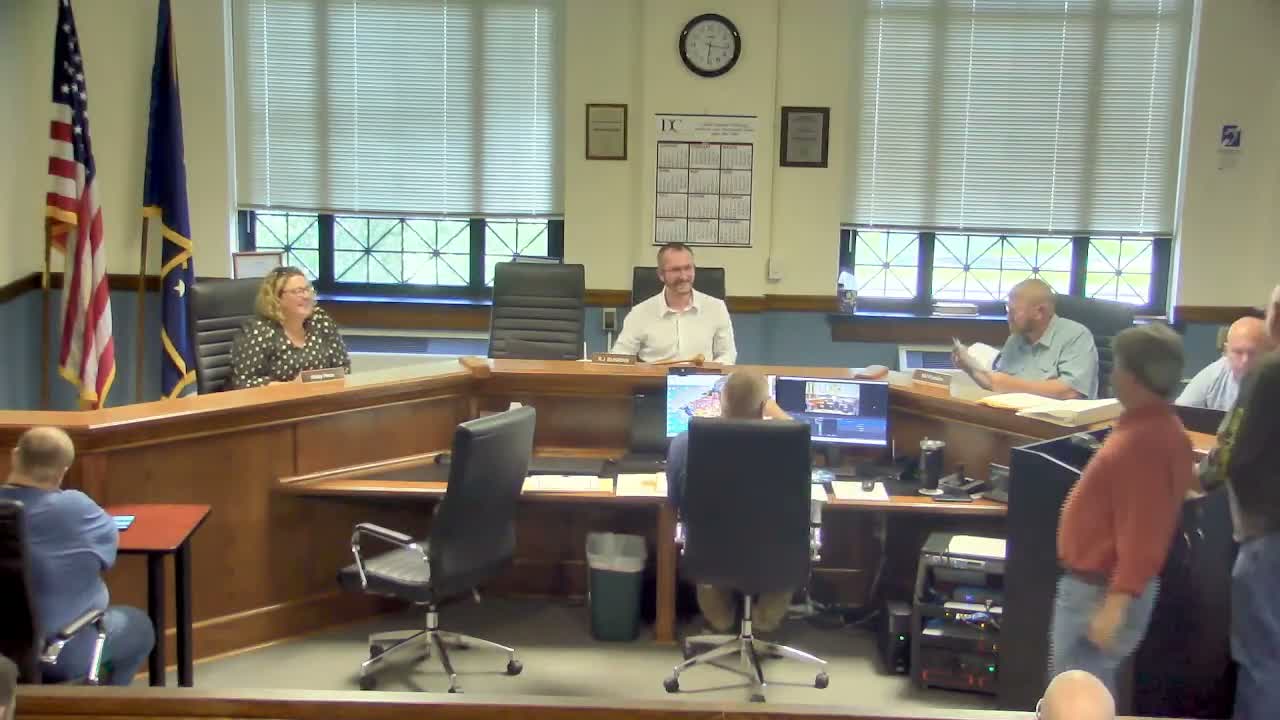
Jim Smith, who said he performed historical and recent surveys for local residents, told commissioners that Peabody mine activity in the 1960s and 1970s moved roads and destroyed original right-of-way markers, leaving modern county maps mismatched with physical monuments. He showed aerial and GIS imagery and pointed to recent private surveys that follow raised monuments rather than historic section lines.
"Where is the center of the road? Is it where the center of the road was in 1960? Is it where it is now?" Smith asked, illustrating why the county must decide whether to accept current alignments or attempt to re-establish old section lines.
Smith and other presenters described markers set by an earlier surveyor (identified in the presentation as Alvin Paul) and a 1971 petition from the mine promising to repair and repave roads and post bonds that, according to the presenters, were never fully acted on. They said some deeds and easements now stop at section lines short of the traveled roadway, potentially leaving parcels without recorded access.
Commissioners and the county attorney discussed options that would avoid trying to rework every road at once. The county attorney said the easiest near-term approach is to focus on a single priority — 1800 South — and review what litigation, agreements or reclamation actions apply there. Chair asked the highway department and the county attorney to work with nearby landowners and to obtain quotes for targeted surveying where needed.
The commission did not adopt any ordinance or binding change to property lines. Instead, commissioners agreed to direct the county attorney and highway department to scope needed legal descriptions and surveying for priority segments and to return with cost estimates or proposals for limited, phased work.
Next steps: the county attorney will coordinate with the highway department and the presenters to determine whether targeted surveys or legal actions are necessary before paving or installing side ditches on 1800 South.
"Where is the center of the road? Is it where the center of the road was in 1960? Is it where it is now?" Smith asked, illustrating why the county must decide whether to accept current alignments or attempt to re-establish old section lines.
Smith and other presenters described markers set by an earlier surveyor (identified in the presentation as Alvin Paul) and a 1971 petition from the mine promising to repair and repave roads and post bonds that, according to the presenters, were never fully acted on. They said some deeds and easements now stop at section lines short of the traveled roadway, potentially leaving parcels without recorded access.
Commissioners and the county attorney discussed options that would avoid trying to rework every road at once. The county attorney said the easiest near-term approach is to focus on a single priority — 1800 South — and review what litigation, agreements or reclamation actions apply there. Chair asked the highway department and the county attorney to work with nearby landowners and to obtain quotes for targeted surveying where needed.
The commission did not adopt any ordinance or binding change to property lines. Instead, commissioners agreed to direct the county attorney and highway department to scope needed legal descriptions and surveying for priority segments and to return with cost estimates or proposals for limited, phased work.
Next steps: the county attorney will coordinate with the highway department and the presenters to determine whether targeted surveys or legal actions are necessary before paving or installing side ditches on 1800 South.
View the Full Meeting & All Its Details
This article offers just a summary. Unlock complete video, transcripts, and insights as a Founder Member.
✓
Watch full, unedited meeting videos
✓
Search every word spoken in unlimited transcripts
✓
AI summaries & real-time alerts (all government levels)
✓
Permanent access to expanding government content
30-day money-back guarantee
