Fond du Lac board coalesces on 2.5-minute public-comment limit, sends policy for first reading
May 05, 2026 | Fond du Lac School District, School Districts, Wisconsin
This article was created by AI summarizing key points discussed. AI makes mistakes, so for full details and context, please refer to the video of the full meeting. Please report any errors so we can fix them. Report an error »
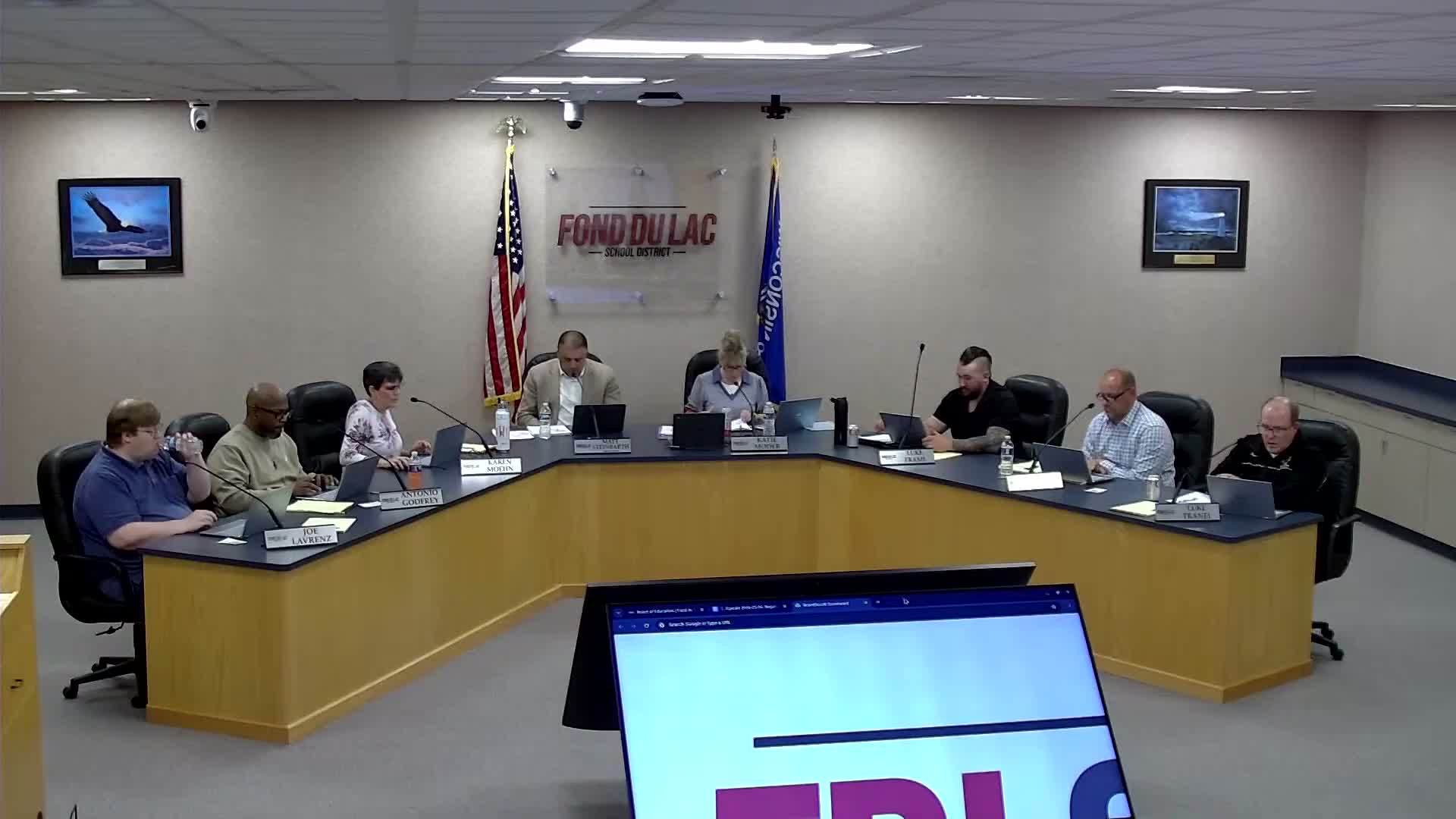
The Fond du Lac School District Board of Education moved on April 27 to advance revisions to its public-comment policy after a workshop debate about time limits and registration.
Board members spent more than an hour weighing options for balancing open public input with meeting efficiency. The chair opened the workshop by noting the district had reviewed other districts' practices and suggested options ranging from two-minute limits to maintaining the current five-minute rule for speakers on agenda items.
Antonio Godfrey, a board member, urged stricter limits on non-agenda remarks, saying many comments are not pertinent to district business and sometimes expose children to content parents find objectionable: "I think if it's an agenda item, I think we need to give it a five-minute [window] ... and if it's a non-agenda item, I think we need to just give them one minute," Godfrey said, while acknowledging the tension between limiting time and preserving free expression.
Other members cautioned against appearing to censor speakers. One member urged preserving a substantive opportunity for speakers who stay through the meeting, arguing a single later comment period might encourage accountability. The chair summarized the range of views and repeatedly solicited thumbs-up consensus on portions of the proposal.
After discussion about distinctions between agenda and non-agenda comments and whether registration should be required, members converged on a compromise: maintain five minutes for agenda-related comments within a 10-minute subject cap, allow two public-comment windows (before and after business), and set a 2.5-minute limit for non-agenda speakers. The chair characterized the compromise as "way better" and said it felt acceptable to the group.
A district staff member said she would draft the proposed language for the formal policy and present it for a first reading, noting that policy changes still require a first and second reading under district rules. The board did not adopt the change at the workshop; members directed staff to prepare the formal first-reading document.
What happens next: staff will prepare draft policy language for a first reading and the board must schedule the required second reading before any final adoption.
Board members spent more than an hour weighing options for balancing open public input with meeting efficiency. The chair opened the workshop by noting the district had reviewed other districts' practices and suggested options ranging from two-minute limits to maintaining the current five-minute rule for speakers on agenda items.
Antonio Godfrey, a board member, urged stricter limits on non-agenda remarks, saying many comments are not pertinent to district business and sometimes expose children to content parents find objectionable: "I think if it's an agenda item, I think we need to give it a five-minute [window] ... and if it's a non-agenda item, I think we need to just give them one minute," Godfrey said, while acknowledging the tension between limiting time and preserving free expression.
Other members cautioned against appearing to censor speakers. One member urged preserving a substantive opportunity for speakers who stay through the meeting, arguing a single later comment period might encourage accountability. The chair summarized the range of views and repeatedly solicited thumbs-up consensus on portions of the proposal.
After discussion about distinctions between agenda and non-agenda comments and whether registration should be required, members converged on a compromise: maintain five minutes for agenda-related comments within a 10-minute subject cap, allow two public-comment windows (before and after business), and set a 2.5-minute limit for non-agenda speakers. The chair characterized the compromise as "way better" and said it felt acceptable to the group.
A district staff member said she would draft the proposed language for the formal policy and present it for a first reading, noting that policy changes still require a first and second reading under district rules. The board did not adopt the change at the workshop; members directed staff to prepare the formal first-reading document.
What happens next: staff will prepare draft policy language for a first reading and the board must schedule the required second reading before any final adoption.
Don't Miss a Word: See the Full Meeting!
Go beyond summaries. Unlock every video, transcript, and key insight with a Founder Membership.
✓
Get instant access to full meeting videos
✓
Search and clip any phrase from complete transcripts
✓
Receive AI-powered summaries & custom alerts
✓
Enjoy lifetime, unrestricted access to government data
30-day money-back guarantee
