U.N. briefing flags urgent humanitarian shortfalls in Lebanon, Gaza, Sudan, Syria and Ukraine
May 04, 2026 | United Nations, International
This article was created by AI summarizing key points discussed. AI makes mistakes, so for full details and context, please refer to the video of the full meeting. Please report any errors so we can fix them. Report an error »
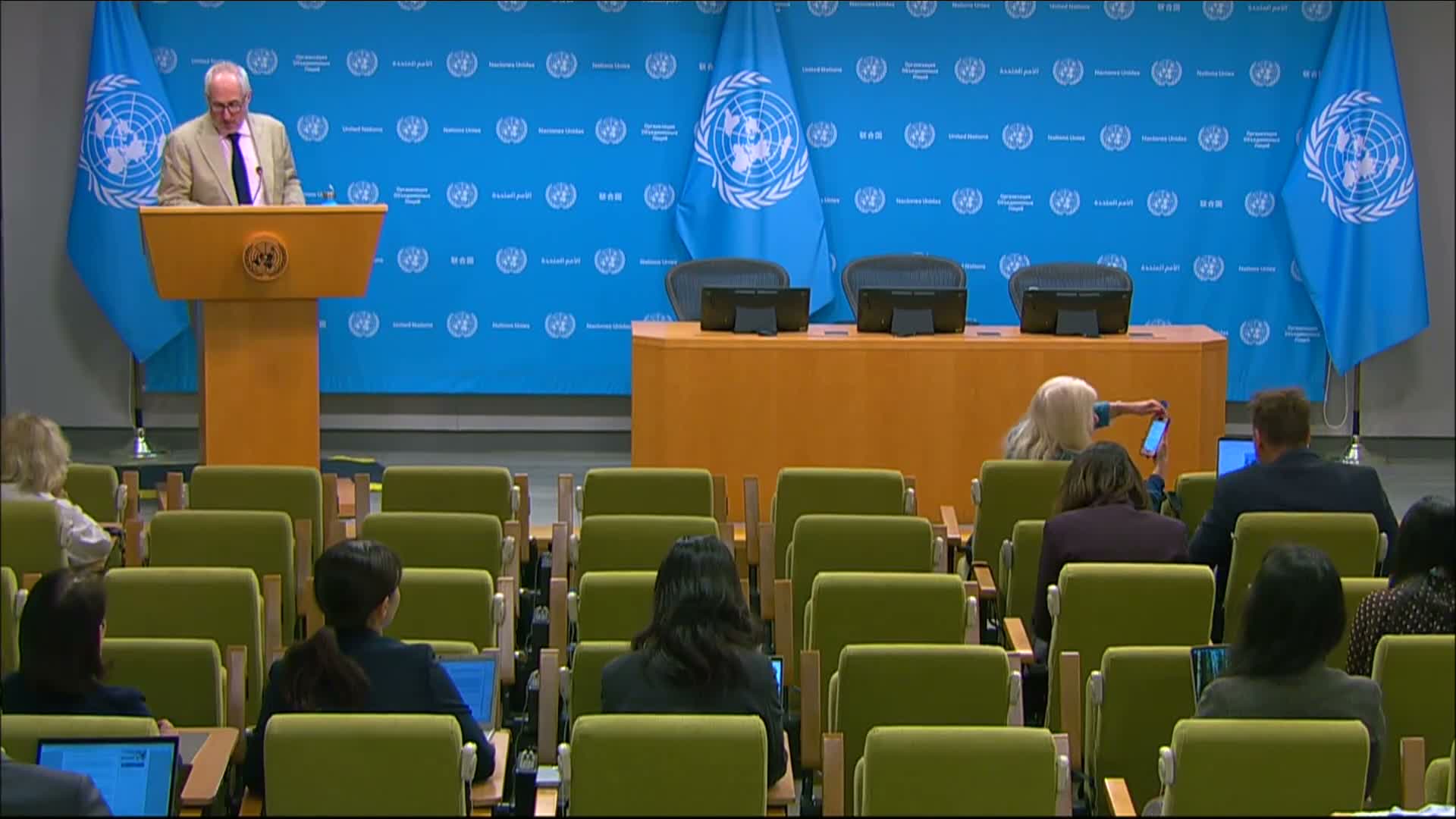
Steph, who led a U.N. press briefing on May 4, outlined a string of humanitarian crises across Lebanon, Gaza, Sudan, Syria and Ukraine and warned that funding shortfalls are limiting relief operations.
The briefing opened with a logistics update for Lebanon: U.N. peacekeepers facilitated an aid convoy of about 30 trucks to the village of Remek along the Blue Line, where roughly 7,000 residents remain in difficult conditions. Steph said Unifil observed intensified operations, including air strikes and naval activity, and reported restrictions on U.N. patrol freedom of movement. "We reiterate once again that our peacekeepers must never be targeted and their safety and security must be guaranteed at all times by all parties," she said. Local authorities estimate more than 124,000 people are sheltering in 625 schools and public buildings. The Lebanon flash appeal, she said, is only 38% funded—about $117,000,000 of the $308,000,000 requested—limiting the U.N.'s reach to the most vulnerable.
The briefing then turned to Gaza, where Steph said U.N. partners delivered tents, bedding and other supplies to nearly 4,500 households and installed about 150 improved emergency shelters in Khan Yunus. She cited the emergency relief coordinator's call for sustained access, neutrality and civilian protection as essential. Steph highlighted acute medical and rehabilitation gaps: more than 6,600 people require prosthetic or rehabilitation care, only eight prosthetic technicians are available, and one in five amputees is a child, a combination that could leave many waiting years for care unless materials and specialists can enter freely.
On Syria, Steph said the U.N. has concluded the cross-border humanitarian mechanism from Türkiye following reopened commercial crossings and improved access via regular supply routes. The mechanism had, while operating, moved more than 65,000 trucks and supported roughly 1,250,000 people annually. She cautioned that needs remain large: about 13,000,000 people require food assistance, 12,000,000 need clean water and nearly 13,000,000 require health care.
Steph warned of escalating drone attacks and strikes in Sudan, reporting incidents near Khartoum International Airport that disrupted flights crucial to relief operations. She cited recent displacement, including more than 2,600 people in North Kordofan over the past week, and said nearly 9,000,000 people are internally displaced in Sudan while about 4,500,000 have fled to neighboring countries since the conflict began.
On Ukraine, the briefing noted a rise in missile and drone strikes that have caused civilian casualties and damaged infrastructure. Steph said authorities reported nearly 250 civilian casualties over a recent three-day period, including more than 20 deaths. U.N. partners and local responders helped evacuate more than 900 civilians, including over 180 children, from frontline areas in Donetsk.
Steph also flagged a U.N. Development Programme report showing that rising public-debt repayments are hitting women's employment and incomes hardest, estimating a loss of about 55,000,000 jobs and income declines up to 17% for women, and urging investment in jobs, social protection and care systems rather than austerity.
During the question-and-answer session, reporters pressed on regional security and specific allegations. When asked about a U.S. statement that it had opened a passageway in the Gulf of Hormuz, Steph said the U.N. was still trying to understand the development but reiterated that the strait must be reopened and freedom of navigation restored. Asked about press reports that the UAE intercepted Iranian missiles and, separately, whether any images had been banned in a Hiroshima exhibition lobby, Steph said she had seen press reports of the first matter but had no independent confirmation, and said she was not aware that images had been banned in the Hiroshima lobby and would look into that allegation. On questions that Israel now controls 59% of Gaza and on an individual case of a 17-year-old whose body was reportedly retained, Steph said she could not confirm exact control figures and was not aware of the specific case but reaffirmed that remains should be returned to families.
The briefing concluded with a reminder of tomorrow's guests and the next update.
The briefing opened with a logistics update for Lebanon: U.N. peacekeepers facilitated an aid convoy of about 30 trucks to the village of Remek along the Blue Line, where roughly 7,000 residents remain in difficult conditions. Steph said Unifil observed intensified operations, including air strikes and naval activity, and reported restrictions on U.N. patrol freedom of movement. "We reiterate once again that our peacekeepers must never be targeted and their safety and security must be guaranteed at all times by all parties," she said. Local authorities estimate more than 124,000 people are sheltering in 625 schools and public buildings. The Lebanon flash appeal, she said, is only 38% funded—about $117,000,000 of the $308,000,000 requested—limiting the U.N.'s reach to the most vulnerable.
The briefing then turned to Gaza, where Steph said U.N. partners delivered tents, bedding and other supplies to nearly 4,500 households and installed about 150 improved emergency shelters in Khan Yunus. She cited the emergency relief coordinator's call for sustained access, neutrality and civilian protection as essential. Steph highlighted acute medical and rehabilitation gaps: more than 6,600 people require prosthetic or rehabilitation care, only eight prosthetic technicians are available, and one in five amputees is a child, a combination that could leave many waiting years for care unless materials and specialists can enter freely.
On Syria, Steph said the U.N. has concluded the cross-border humanitarian mechanism from Türkiye following reopened commercial crossings and improved access via regular supply routes. The mechanism had, while operating, moved more than 65,000 trucks and supported roughly 1,250,000 people annually. She cautioned that needs remain large: about 13,000,000 people require food assistance, 12,000,000 need clean water and nearly 13,000,000 require health care.
Steph warned of escalating drone attacks and strikes in Sudan, reporting incidents near Khartoum International Airport that disrupted flights crucial to relief operations. She cited recent displacement, including more than 2,600 people in North Kordofan over the past week, and said nearly 9,000,000 people are internally displaced in Sudan while about 4,500,000 have fled to neighboring countries since the conflict began.
On Ukraine, the briefing noted a rise in missile and drone strikes that have caused civilian casualties and damaged infrastructure. Steph said authorities reported nearly 250 civilian casualties over a recent three-day period, including more than 20 deaths. U.N. partners and local responders helped evacuate more than 900 civilians, including over 180 children, from frontline areas in Donetsk.
Steph also flagged a U.N. Development Programme report showing that rising public-debt repayments are hitting women's employment and incomes hardest, estimating a loss of about 55,000,000 jobs and income declines up to 17% for women, and urging investment in jobs, social protection and care systems rather than austerity.
During the question-and-answer session, reporters pressed on regional security and specific allegations. When asked about a U.S. statement that it had opened a passageway in the Gulf of Hormuz, Steph said the U.N. was still trying to understand the development but reiterated that the strait must be reopened and freedom of navigation restored. Asked about press reports that the UAE intercepted Iranian missiles and, separately, whether any images had been banned in a Hiroshima exhibition lobby, Steph said she had seen press reports of the first matter but had no independent confirmation, and said she was not aware that images had been banned in the Hiroshima lobby and would look into that allegation. On questions that Israel now controls 59% of Gaza and on an individual case of a 17-year-old whose body was reportedly retained, Steph said she could not confirm exact control figures and was not aware of the specific case but reaffirmed that remains should be returned to families.
The briefing concluded with a reminder of tomorrow's guests and the next update.
Don't Miss a Word: See the Full Meeting!
Go beyond summaries. Unlock every video, transcript, and key insight with a Founder Membership.
✓
Get instant access to full meeting videos
✓
Search and clip any phrase from complete transcripts
✓
Receive AI-powered summaries & custom alerts
✓
Enjoy lifetime, unrestricted access to government data
30-day money-back guarantee
