Millville mayor presses for ban on data centers, citing water, energy and quality-of-life concerns
May 02, 2026 | Millville City, Cumberland County, New Jersey
This article was created by AI summarizing key points discussed. AI makes mistakes, so for full details and context, please refer to the video of the full meeting. Please report any errors so we can fix them. Report an error »
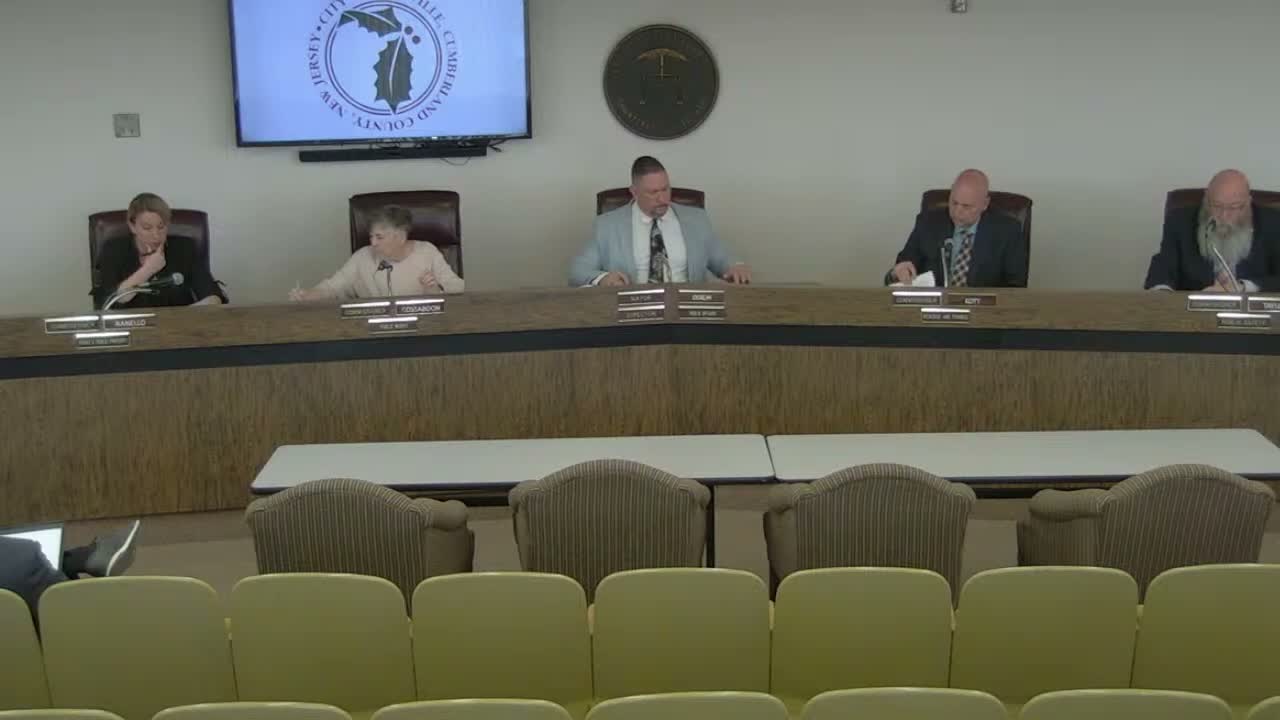
Mayor Dixon urged Millville City commissioners to adopt land-use restrictions that would effectively keep data centers out of the city, saying the projects’ fiscal and environmental risks outweigh claimed benefits.
At a commission meeting on May 1, Dixon summarized the city’s review process for a Chapter 30 amendment to the land-use regulations and described why he supports a ban. He said special administrative committees reviewed cannabis and other applications but that policy decisions on land use rest with the full governing body. "There is no recommendation before you," he said, then outlined concerns about data centers’ common incentive packages and long tax abatements, limited long-term employment, water and energy consumption, and noise and environmental impacts. "For that reason, I am for the data center ban," Dixon said.
Dixon cited analyses he said show projects rely on lengthy abatements that can erase the expected tax gains, and said typical staffing is small — often only a few dozen permanent workers per facility — while construction jobs are temporary. He also raised water-use concerns tied to cooling systems and said rapid data-center buildouts can push electric-grid upgrades and related costs onto ratepayers if not explicitly prevented by law.
Public commenters echoed those worries. Mary Messick of Millville asked during public comment whether the proposed Chapter 30 changes "include the data centers" and urged the commission to "go one step further" and ban them permanently, citing experiences and reporting from other states.
Commissioners generally supported caution. One commissioner clarified during the discussion that no developer had personally promised incentives or commitments to the commission. City Solicitor (the commission’s legal counsel) told the panel that while an ordinance can be written to make a land-use change difficult to reverse — for example by tying it to master-plan consistency and review steps — an absolute, never-changeable prohibition is legally problematic: "forever is a mighty long time," the solicitor said.
The ordinance was presented as a second-reading matter and planning-board review was cited: the planning board had found the change consistent with the master plan by an 8–1 vote. The commission did not take a final recorded vote on the amendment during the May 1 meeting; commissioners said they would consider the matter further and review comparable approaches used by other municipalities.
Why it matters: Data centers are large, capital-intensive facilities whose local fiscal, environmental and public-health effects have prompted debates in multiple jurisdictions. Millville’s discussion signals the commission’s interest in using land-use controls to limit potential local impacts while retaining a legal path for future policy adjustments.
What happens next: The ordinance remains under consideration after the second-reading presentation; commissioners discussed options for making a regulatory pathway that is hard to reverse but that preserves the ability to reassess if technology or impacts change.
At a commission meeting on May 1, Dixon summarized the city’s review process for a Chapter 30 amendment to the land-use regulations and described why he supports a ban. He said special administrative committees reviewed cannabis and other applications but that policy decisions on land use rest with the full governing body. "There is no recommendation before you," he said, then outlined concerns about data centers’ common incentive packages and long tax abatements, limited long-term employment, water and energy consumption, and noise and environmental impacts. "For that reason, I am for the data center ban," Dixon said.
Dixon cited analyses he said show projects rely on lengthy abatements that can erase the expected tax gains, and said typical staffing is small — often only a few dozen permanent workers per facility — while construction jobs are temporary. He also raised water-use concerns tied to cooling systems and said rapid data-center buildouts can push electric-grid upgrades and related costs onto ratepayers if not explicitly prevented by law.
Public commenters echoed those worries. Mary Messick of Millville asked during public comment whether the proposed Chapter 30 changes "include the data centers" and urged the commission to "go one step further" and ban them permanently, citing experiences and reporting from other states.
Commissioners generally supported caution. One commissioner clarified during the discussion that no developer had personally promised incentives or commitments to the commission. City Solicitor (the commission’s legal counsel) told the panel that while an ordinance can be written to make a land-use change difficult to reverse — for example by tying it to master-plan consistency and review steps — an absolute, never-changeable prohibition is legally problematic: "forever is a mighty long time," the solicitor said.
The ordinance was presented as a second-reading matter and planning-board review was cited: the planning board had found the change consistent with the master plan by an 8–1 vote. The commission did not take a final recorded vote on the amendment during the May 1 meeting; commissioners said they would consider the matter further and review comparable approaches used by other municipalities.
Why it matters: Data centers are large, capital-intensive facilities whose local fiscal, environmental and public-health effects have prompted debates in multiple jurisdictions. Millville’s discussion signals the commission’s interest in using land-use controls to limit potential local impacts while retaining a legal path for future policy adjustments.
What happens next: The ordinance remains under consideration after the second-reading presentation; commissioners discussed options for making a regulatory pathway that is hard to reverse but that preserves the ability to reassess if technology or impacts change.
View the Full Meeting & All Its Details
This article offers just a summary. Unlock complete video, transcripts, and insights as a Founder Member.
✓
Watch full, unedited meeting videos
✓
Search every word spoken in unlimited transcripts
✓
AI summaries & real-time alerts (all government levels)
✓
Permanent access to expanding government content
30-day money-back guarantee
