Community Mediation Services asks Polk County partners to boost referrals and volunteers
May 04, 2026 | Polk County, Oregon
This article was created by AI summarizing key points discussed. AI makes mistakes, so for full details and context, please refer to the video of the full meeting. Please report any errors so we can fix them. Report an error »
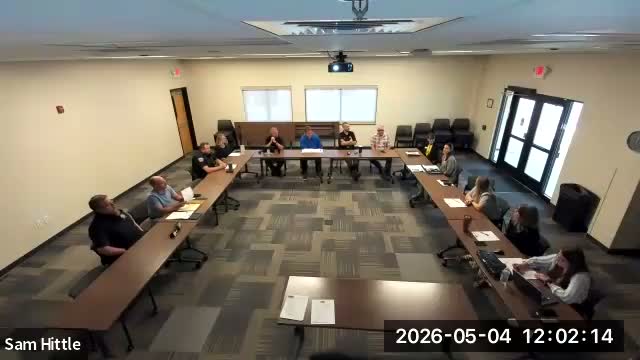
Mary Mall, who said she has led Community Mediation Services for about three months, told the Polk County Commission the program offers voluntary, confidential conversations to resolve noncriminal disputes and avoid law-enforcement involvement.
"So with community mediation services, our role is to step in, for those cases that aren't, in all cases, and help folks have a conversation if they are willing," Mall said, describing the intake process in which mediators call both parties to determine whether a case is suitable for mediation.
Mall listed case types the program handles: neighbor-to-neighbor disputes, landlord-tenant matters, family mediation and juvenile restorative dialogues, and said mediation can be useful for eviction-avoidance and accountability in youth cases. "We do that," she said of juvenile referrals.
Mall outlined the program's funding mix — state grants distributed through the University of Oregon School of Law network, county support, donations and per-case payments from juvenile services — and said the group is a 501(c)(3).
She asked partner agencies to refer potential cases and help populate a small volunteer pool. "Right now, we have 3 volunteers," Mall said, and described plans to run the 40-hour basic mediation training if enough recruits volunteer. She also gave the course fees: a $625 training fee plus a $25 nonrefundable registration, reduced to $325 for volunteers and $25 for Spanish-speaking registrants.
Commission members and law-enforcement attendees discussed operational coordination, suggesting dispatch and call-taker scripts include the mediation contact so callers hear about the option at intake. Mall said the program needs at minimum an address and both parties' contact information to accept a referral and will not make uninvited home visits.
Mall left referral guides, brochures and a sign-up sheet and asked agencies to circulate the contact information. Commissioners thanked her for the presentation; no formal action was taken.
The commission's next steps: staff were asked to consider ways to publicize the service to dispatch and other agency intake points and to share Mall's contact information with attendees and the online audience as requested.
"So with community mediation services, our role is to step in, for those cases that aren't, in all cases, and help folks have a conversation if they are willing," Mall said, describing the intake process in which mediators call both parties to determine whether a case is suitable for mediation.
Mall listed case types the program handles: neighbor-to-neighbor disputes, landlord-tenant matters, family mediation and juvenile restorative dialogues, and said mediation can be useful for eviction-avoidance and accountability in youth cases. "We do that," she said of juvenile referrals.
Mall outlined the program's funding mix — state grants distributed through the University of Oregon School of Law network, county support, donations and per-case payments from juvenile services — and said the group is a 501(c)(3).
She asked partner agencies to refer potential cases and help populate a small volunteer pool. "Right now, we have 3 volunteers," Mall said, and described plans to run the 40-hour basic mediation training if enough recruits volunteer. She also gave the course fees: a $625 training fee plus a $25 nonrefundable registration, reduced to $325 for volunteers and $25 for Spanish-speaking registrants.
Commission members and law-enforcement attendees discussed operational coordination, suggesting dispatch and call-taker scripts include the mediation contact so callers hear about the option at intake. Mall said the program needs at minimum an address and both parties' contact information to accept a referral and will not make uninvited home visits.
Mall left referral guides, brochures and a sign-up sheet and asked agencies to circulate the contact information. Commissioners thanked her for the presentation; no formal action was taken.
The commission's next steps: staff were asked to consider ways to publicize the service to dispatch and other agency intake points and to share Mall's contact information with attendees and the online audience as requested.
Don't Miss a Word: See the Full Meeting!
Go beyond summaries. Unlock every video, transcript, and key insight with a Founder Membership.
✓
Get instant access to full meeting videos
✓
Search and clip any phrase from complete transcripts
✓
Receive AI-powered summaries & custom alerts
✓
Enjoy lifetime, unrestricted access to government data
30-day money-back guarantee
