LFC staff: budget growth slowing, childcare subsidy overspent and solvency planning launched
April 27, 2026 | House of Representatives, Committees, Legislative, New Mexico
This article was created by AI summarizing key points discussed. AI makes mistakes, so for full details and context, please refer to the video of the full meeting. Please report any errors so we can fix them. Report an error »
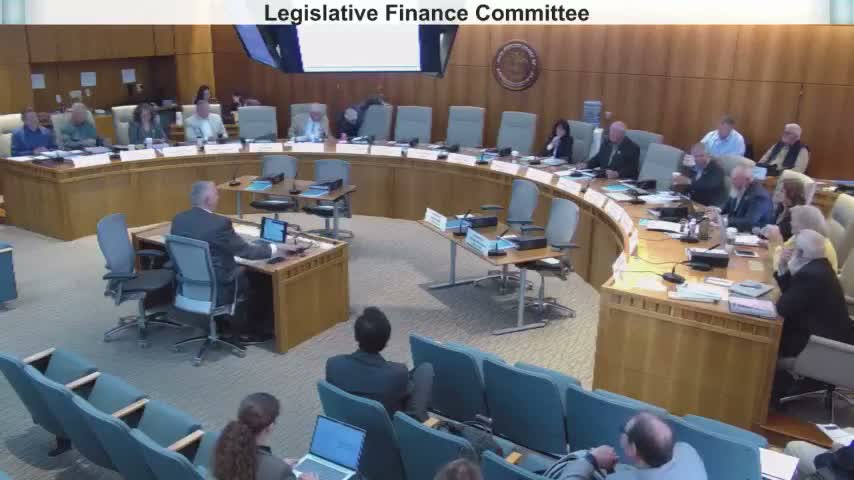
Charles, the Legislative Finance Committee director, told lawmakers on Feb. 20 that the post-session review shows New Mexico moving toward a more sustainable budget model even as several risks remain.
“The latest projections show this program is overspent by at least $40,000,000 and will finish the year basically overdrafting the general fund potentially,” Charles said, referring to the recently expanded childcare subsidy. He also told members that recurring base spending rose about 3.1% and that lawmakers have shifted many one-time appropriations and new pilot programs into the near-term pipeline.
Why it matters: LFC staff framed the discussion as one of timing and trade-offs. Much of the recent revenue strength is tied to energy and investment income that lawmakers are moving into permanent funds; that reduces the money available for recurring obligations and raises the risk that, if revenues decline, the state will need rapid corrective action.
The presentation laid out a recommended solvency playbook modeled on other states’ practice: start with technical and cash-flow adjustments, then sweep nonrecurring accounts and revert unobligated balances, use temporary adjustments to earmarks or tax expenditures if needed, and only then access rainy-day funds while simultaneously adopting recurring fixes. Ismaya Torres, the committee’s chief economist, added that corporate income tax has been extraordinarily volatile—rising and falling by hundreds of millions in short windows—and that recent high oil prices could add several hundred million to this fiscal year’s receipts, changing the near-term outlook.
Lawmakers pressed staff on specific liabilities and next steps. Representative Jack Chatfield described an unpaid hospice provider he said had not received payments for nine months; Charles said LFC staff would follow up with the Health Care Authority and the affected managed-care organizations to identify whether the problem stems from claims processing, the Medicaid information-system transition or legitimate claim denials.
Senator Linda Trujillo and others asked why the Environment Department was reducing inspections for food-service establishments; Charles said the agency operates on earmarked revenue streams that may not appear on top-line budget sheets and promised a targeted staff report after lunch.
On vetoes and legislative language, members raised House Bill 180 as an example of tension between legislative appropriations and executive emergency spending. Charles noted HB 180 was vetoed by the governor and said staff will provide analysis and options for tightening statutory language or oversight in future sessions.
What’s next: LFC staff said they will complete an inventory of state accounts and programs to identify ‘‘low-return’’ nonrecurring appropriations and to stress-test multi-year scenarios; a related report on solvency options and agency workplans is scheduled for release in June. The staff recommended that any decision to use the large tax-stabilization reserve be paired with immediate, durable recurring spending fixes.
By the committee’s planning: staff will return with more granular analyses—on childcare program overspending, Medicaid payment delays and the full accounting of earmarks and capital-outlay projects—so lawmakers can weigh short-term liquidity fixes against longer-term structural changes.
“The latest projections show this program is overspent by at least $40,000,000 and will finish the year basically overdrafting the general fund potentially,” Charles said, referring to the recently expanded childcare subsidy. He also told members that recurring base spending rose about 3.1% and that lawmakers have shifted many one-time appropriations and new pilot programs into the near-term pipeline.
Why it matters: LFC staff framed the discussion as one of timing and trade-offs. Much of the recent revenue strength is tied to energy and investment income that lawmakers are moving into permanent funds; that reduces the money available for recurring obligations and raises the risk that, if revenues decline, the state will need rapid corrective action.
The presentation laid out a recommended solvency playbook modeled on other states’ practice: start with technical and cash-flow adjustments, then sweep nonrecurring accounts and revert unobligated balances, use temporary adjustments to earmarks or tax expenditures if needed, and only then access rainy-day funds while simultaneously adopting recurring fixes. Ismaya Torres, the committee’s chief economist, added that corporate income tax has been extraordinarily volatile—rising and falling by hundreds of millions in short windows—and that recent high oil prices could add several hundred million to this fiscal year’s receipts, changing the near-term outlook.
Lawmakers pressed staff on specific liabilities and next steps. Representative Jack Chatfield described an unpaid hospice provider he said had not received payments for nine months; Charles said LFC staff would follow up with the Health Care Authority and the affected managed-care organizations to identify whether the problem stems from claims processing, the Medicaid information-system transition or legitimate claim denials.
Senator Linda Trujillo and others asked why the Environment Department was reducing inspections for food-service establishments; Charles said the agency operates on earmarked revenue streams that may not appear on top-line budget sheets and promised a targeted staff report after lunch.
On vetoes and legislative language, members raised House Bill 180 as an example of tension between legislative appropriations and executive emergency spending. Charles noted HB 180 was vetoed by the governor and said staff will provide analysis and options for tightening statutory language or oversight in future sessions.
What’s next: LFC staff said they will complete an inventory of state accounts and programs to identify ‘‘low-return’’ nonrecurring appropriations and to stress-test multi-year scenarios; a related report on solvency options and agency workplans is scheduled for release in June. The staff recommended that any decision to use the large tax-stabilization reserve be paired with immediate, durable recurring spending fixes.
By the committee’s planning: staff will return with more granular analyses—on childcare program overspending, Medicaid payment delays and the full accounting of earmarks and capital-outlay projects—so lawmakers can weigh short-term liquidity fixes against longer-term structural changes.
Don't Miss a Word: See the Full Meeting!
Go beyond summaries. Unlock every video, transcript, and key insight with a Founder Membership.
✓
Get instant access to full meeting videos
✓
Search and clip any phrase from complete transcripts
✓
Receive AI-powered summaries & custom alerts
✓
Enjoy lifetime, unrestricted access to government data
30-day money-back guarantee
