Council adopts updated water conservation plan and ordinance to formalize drought responses
May 04, 2026 | Marion County, Kansas
This article was created by AI summarizing key points discussed. AI makes mistakes, so for full details and context, please refer to the video of the full meeting. Please report any errors so we can fix them. Report an error »
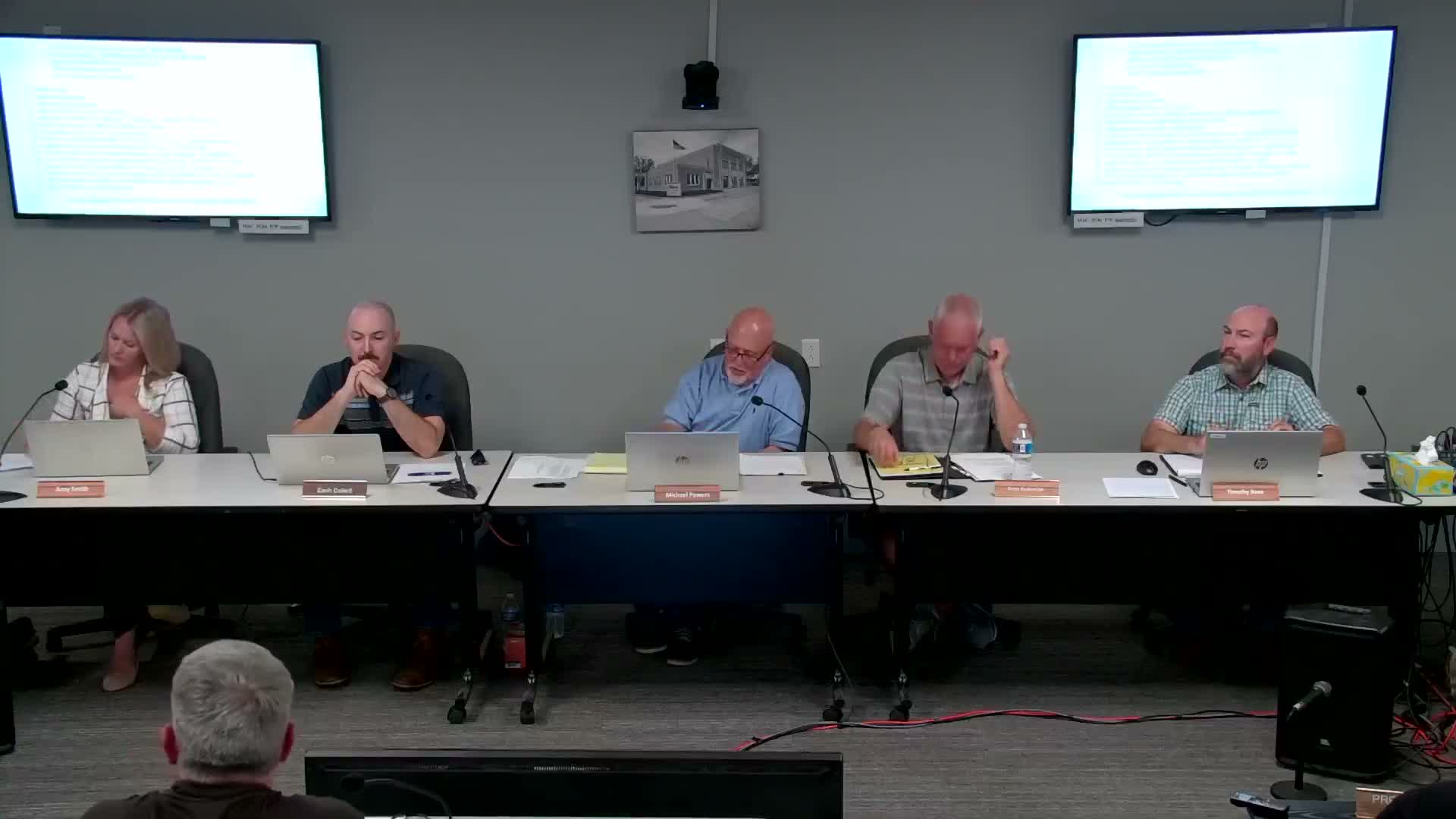
The Marion City Council voted unanimously to adopt an updated Municipal Water Conservation Plan and enact Ordinance No. 1524, which codifies drought and emergency water restrictions and the administrative steps to trigger them.
The update, presented by Darren Neufeld, replaces the city’s plan from 2013 and pairs the plan with an ordinance that gives it legal effect. Neufeld said the plan defines three tiers of conservation, each with trigger points based on reservoir levels, the city’s ability to pump and clear well levels; staff would escalate through tiers and the city administrator would notify the council when steps are taken. "Until you get to tier 3, it really doesn't impact a lot of day-to-day activities here in the city," Neufeld said.
Mayor (chair) moved to adopt the plan and enact the ordinance after staff said the Kansas Water Office and Division of Water Resources prefer updated plans; the motion passed on a voice vote. Councilors emphasized that the change is largely an update requested by state reviewers but noted the ordinance provides "teeth" to enforce conservation measures if needed.
The action gives administrative staff clearer authority to impose conservation measures in emergencies, such as when several high-service pumps fail simultaneously; Neufeld described a scenario in which staff would shift operations into conservation mode and report up the chain for additional steps. The council did not change penalty amounts or trigger thresholds from the prior ordinance, staff said.
Next steps: staff will file the updated plan with the state and implement administrative procedures tied to the ordinance so that alerts and public notices can be issued when triggers are met.
The update, presented by Darren Neufeld, replaces the city’s plan from 2013 and pairs the plan with an ordinance that gives it legal effect. Neufeld said the plan defines three tiers of conservation, each with trigger points based on reservoir levels, the city’s ability to pump and clear well levels; staff would escalate through tiers and the city administrator would notify the council when steps are taken. "Until you get to tier 3, it really doesn't impact a lot of day-to-day activities here in the city," Neufeld said.
Mayor (chair) moved to adopt the plan and enact the ordinance after staff said the Kansas Water Office and Division of Water Resources prefer updated plans; the motion passed on a voice vote. Councilors emphasized that the change is largely an update requested by state reviewers but noted the ordinance provides "teeth" to enforce conservation measures if needed.
The action gives administrative staff clearer authority to impose conservation measures in emergencies, such as when several high-service pumps fail simultaneously; Neufeld described a scenario in which staff would shift operations into conservation mode and report up the chain for additional steps. The council did not change penalty amounts or trigger thresholds from the prior ordinance, staff said.
Next steps: staff will file the updated plan with the state and implement administrative procedures tied to the ordinance so that alerts and public notices can be issued when triggers are met.
View the Full Meeting & All Its Details
This article offers just a summary. Unlock complete video, transcripts, and insights as a Founder Member.
✓
Watch full, unedited meeting videos
✓
Search every word spoken in unlimited transcripts
✓
AI summaries & real-time alerts (all government levels)
✓
Permanent access to expanding government content
30-day money-back guarantee
