Fox Wolf watershed scientist urges more native shoreline plantings to curb runoff
May 05, 2026 | Oshkosh City, Winnebago County, Wisconsin
This article was created by AI summarizing key points discussed. AI makes mistakes, so for full details and context, please refer to the video of the full meeting. Please report any errors so we can fix them. Report an error »
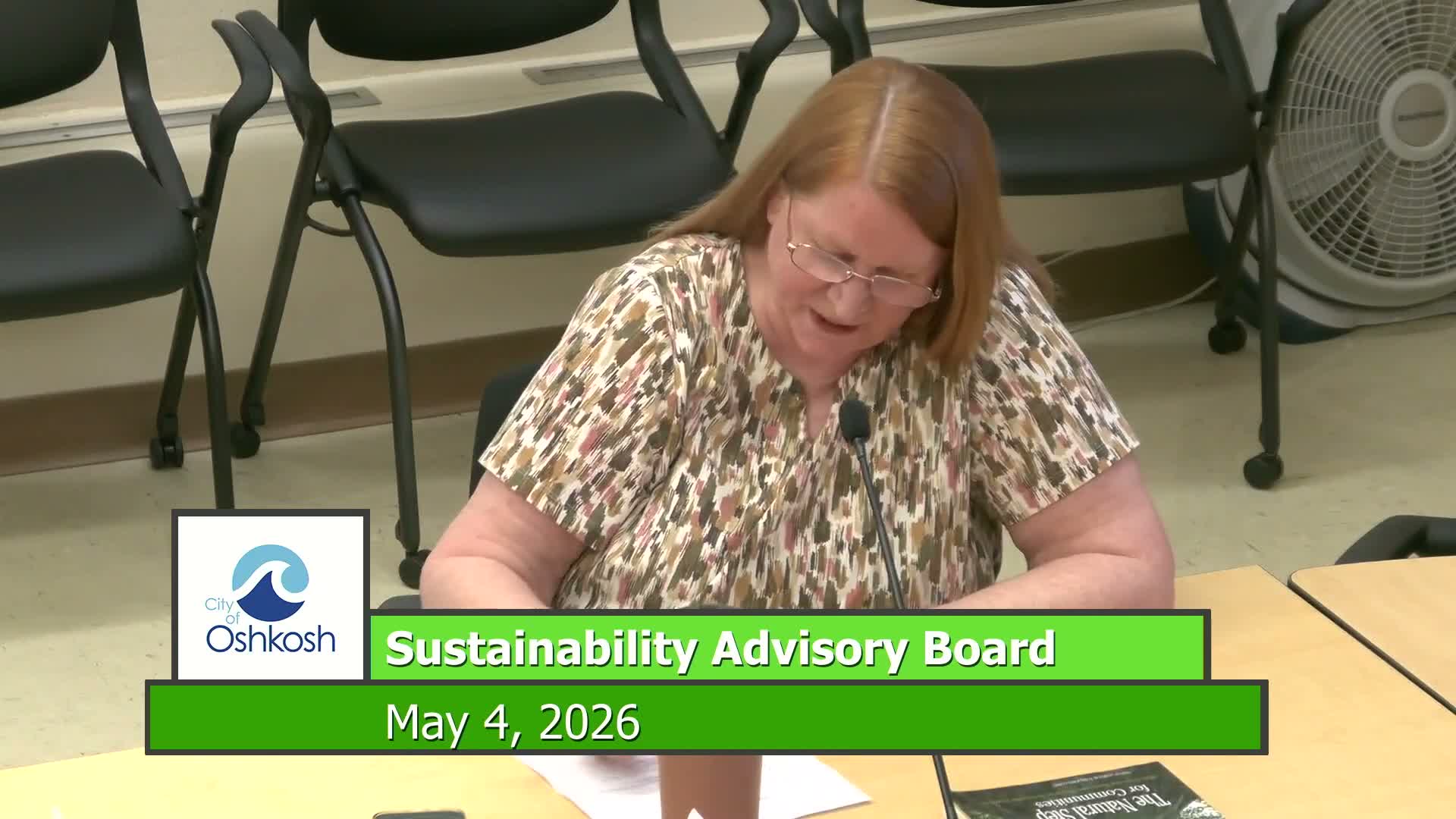
Katie Reed, watershed science coordinator at Fox Wolf Watershed Alliance, told the Sustainability Advisory Board on May 4 that native shoreline and yard plantings improve water quality by slowing runoff, trapping sediment and uptaking phosphorus.
"Native plants are really great for water quality," Reed said, explaining that native species' deeper and more extensive root systems let water soak into the ground and hold soil in place. She pointed to erosion and increased phosphorus as drivers of harmful algal blooms and described native plantings as one way to reduce both runoff volume and nutrient loading.
Reed gave local examples and practical guidance: blue flag iris, wild columbine and Virginia bluebells for spring interest; prairie dropseed and lower-growing species for formal landscaping; and bee balm as a simple starter plant for many yards. "The first year they sleep, the second year they creep, and the third year they leap," she said of native-plug establishment timelines.
She described cost and availability as common barriers but said demand is growing. Reed highlighted Fox Wolf and Winnebago County cost-share programs for shoreline and onshore properties, demonstration beds in local parks, and winter-sowing workshops where residents can grow native plugs from seed.
Board member Jacob Claymire asked about planting directly in the water; Reed replied that Fox Wolf usually plants on the shoreline and works to improve conditions so native aquatic plants already in the lake can recolonize, while partner projects (including a Brothertown Nation wild‑rice reintroduction) have planted directly in some shallow areas.
Reed urged residents to consider rain gardens for stormwater capture, noting placement guidelines (roughly 10–30 feet from foundations to avoid damaging structures) and that qualifying installations may earn stormwater credits. She left contact information and offered to share planting lists and photos with board members.
The board thanked Reed and discussed volunteer support for upcoming planting events and outreach.
"Native plants are really great for water quality," Reed said, explaining that native species' deeper and more extensive root systems let water soak into the ground and hold soil in place. She pointed to erosion and increased phosphorus as drivers of harmful algal blooms and described native plantings as one way to reduce both runoff volume and nutrient loading.
Reed gave local examples and practical guidance: blue flag iris, wild columbine and Virginia bluebells for spring interest; prairie dropseed and lower-growing species for formal landscaping; and bee balm as a simple starter plant for many yards. "The first year they sleep, the second year they creep, and the third year they leap," she said of native-plug establishment timelines.
She described cost and availability as common barriers but said demand is growing. Reed highlighted Fox Wolf and Winnebago County cost-share programs for shoreline and onshore properties, demonstration beds in local parks, and winter-sowing workshops where residents can grow native plugs from seed.
Board member Jacob Claymire asked about planting directly in the water; Reed replied that Fox Wolf usually plants on the shoreline and works to improve conditions so native aquatic plants already in the lake can recolonize, while partner projects (including a Brothertown Nation wild‑rice reintroduction) have planted directly in some shallow areas.
Reed urged residents to consider rain gardens for stormwater capture, noting placement guidelines (roughly 10–30 feet from foundations to avoid damaging structures) and that qualifying installations may earn stormwater credits. She left contact information and offered to share planting lists and photos with board members.
The board thanked Reed and discussed volunteer support for upcoming planting events and outreach.
View the Full Meeting & All Its Details
This article offers just a summary. Unlock complete video, transcripts, and insights as a Founder Member.
✓
Watch full, unedited meeting videos
✓
Search every word spoken in unlimited transcripts
✓
AI summaries & real-time alerts (all government levels)
✓
Permanent access to expanding government content
30-day money-back guarantee
