Committee moves repeal of 'water's edge' corporate tax election to appropriations after heated testimony
April 27, 2026 | California State Assembly, House, Legislative, California
This article was created by AI summarizing key points discussed. AI makes mistakes, so for full details and context, please refer to the video of the full meeting. Please report any errors so we can fix them. Report an error »
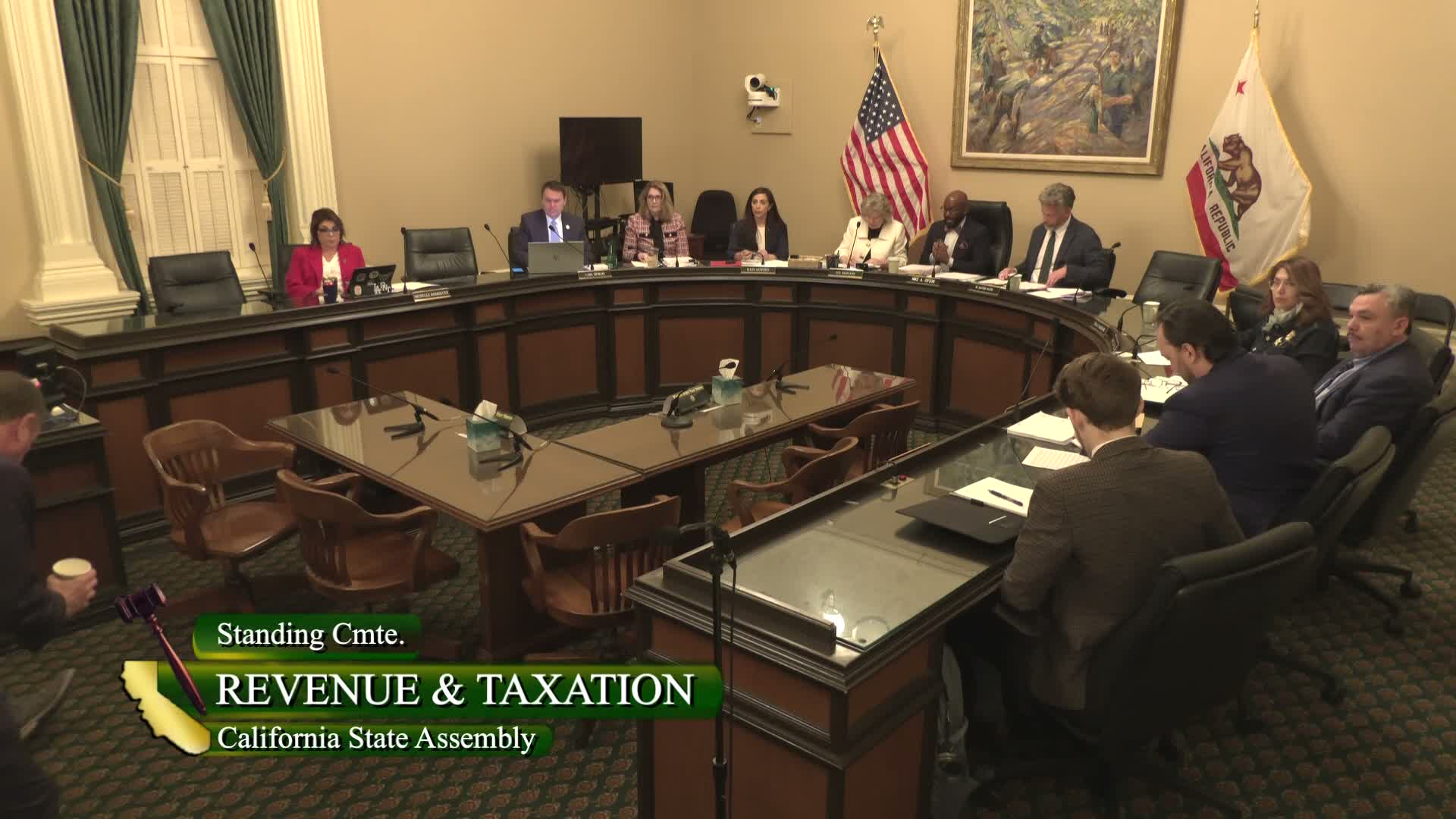
The committee debated AB 17 90 at length after the author described it as an effort to end the water's-edge tax election and return California to a worldwide combined reporting framework for multinational corporations.
Author (speaker 22) said the provision costs California taxpayers "roughly 3 to $4,000,000,000 annually" and framed the bill as a way to protect schools and health programs from budget cuts. Academic witnesses argued worldwide combined reporting is manageable and used internationally; "The double taxation concern is similarly specious," one academic witness said.
Opponents, including trade groups and representatives of foreign governments, warned that shifting to worldwide taxation could create compliance burdens and invite retaliation. Kelsey Johnson (speaker 9) of the Global Business Alliance said the measure "is an assault on long-standing international tax norms" and urged the committee not to pass the bill.
Industry witnesses, business associations and consulates described potential volatility in state revenue and audit challenges. Supporters rebutted that many jurisdictions now use forms of global reporting and that the state could piggyback on international information-sharing to limit compliance burdens.
After questions, debate and the acceptance of technical amendments, the committee voted to submit AB 17 90 to the Appropriations Committee; the recorded committee vote on the motion in the transcript was 4–2.
Author (speaker 22) said the provision costs California taxpayers "roughly 3 to $4,000,000,000 annually" and framed the bill as a way to protect schools and health programs from budget cuts. Academic witnesses argued worldwide combined reporting is manageable and used internationally; "The double taxation concern is similarly specious," one academic witness said.
Opponents, including trade groups and representatives of foreign governments, warned that shifting to worldwide taxation could create compliance burdens and invite retaliation. Kelsey Johnson (speaker 9) of the Global Business Alliance said the measure "is an assault on long-standing international tax norms" and urged the committee not to pass the bill.
Industry witnesses, business associations and consulates described potential volatility in state revenue and audit challenges. Supporters rebutted that many jurisdictions now use forms of global reporting and that the state could piggyback on international information-sharing to limit compliance burdens.
After questions, debate and the acceptance of technical amendments, the committee voted to submit AB 17 90 to the Appropriations Committee; the recorded committee vote on the motion in the transcript was 4–2.
Don't Miss a Word: See the Full Meeting!
Go beyond summaries. Unlock every video, transcript, and key insight with a Founder Membership.
✓
Get instant access to full meeting videos
✓
Search and clip any phrase from complete transcripts
✓
Receive AI-powered summaries & custom alerts
✓
Enjoy lifetime, unrestricted access to government data
30-day money-back guarantee
