State public‑health officer: California shows gains but federal threats and disparities risk progress
April 27, 2026 | California State Assembly, House, Legislative, California
This article was created by AI summarizing key points discussed. AI makes mistakes, so for full details and context, please refer to the video of the full meeting. Please report any errors so we can fix them. Report an error »
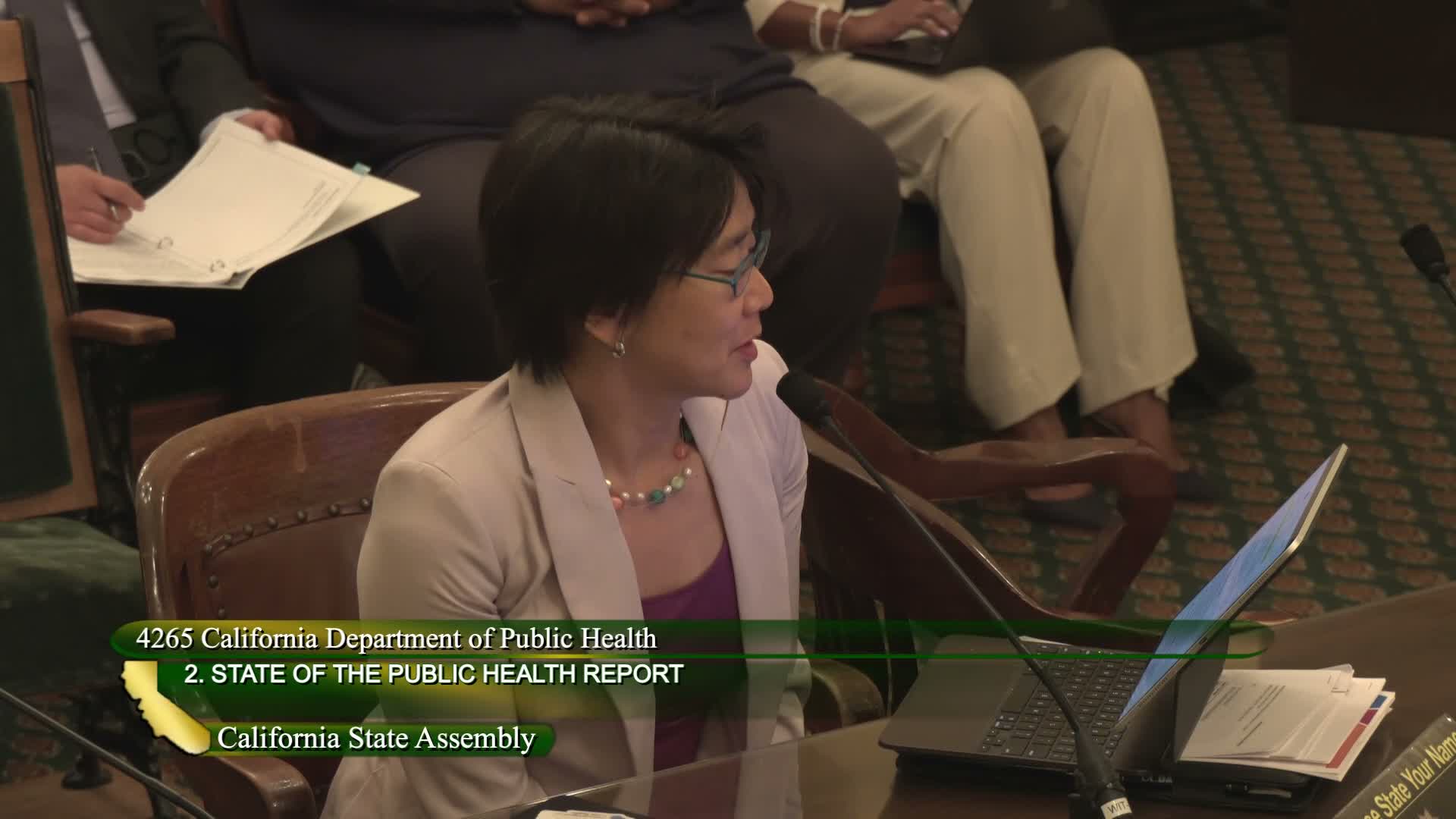
Dr. Erica Pan, California's State Public Health Officer and CDPH director, summarized the State of Public Health 2026 to the Assembly Subcommittee No. 1 on Health, highlighting long‑term gains and ongoing threats.
"California currently has 1 of the lowest all cause mortality rates, infant mortality rates, and highest life expectancy in the nation," Pan told the panel, citing declines in cancer and cardiovascular death rates and an all‑time high in life expectancy. She reported a 2024 decline in overdose deaths — the first drop in 14 years — and said expanded access to naloxone, harm‑reduction services and treatment had contributed to that trend.
Pan emphasized continuing and stark inequities: congenital syphilis has declined after state and federal investments but remains "three times higher than a decade ago," and pregnancy‑related racial disparities persist. She pointed to place‑based gaps in life expectancy within counties, saying in Los Angeles County "the life expectancy in the Redondo Beach area is 88 compared to the life expectancy in Compton area, which is 73." She framed prevention and upstream investments as central to narrowing these gaps and said the Behavioral Health Services Act will allow the state to dedicate prevention‑specific funding to population‑based strategies.
Pan warned that federal actions had introduced major uncertainty: "The federal administration has put us on an unpredictable and stormy course with multiple threats of funding cuts over the past year," she said, citing proposed CDC funding reductions and rescissions that, she said, were later found unlawful by courts but nonetheless caused disruption. She flagged declines in national vaccination coverage and rising measles cases: "In California, we already have over 40 cases to date in 2026," Pan said, and urged tailored, community‑based outreach to address pockets of low immunization coverage.
During questioning, members pressed where the state should prioritize limited dollars. Pan said nutrition and SNAP‑Ed funding experienced direct impacts and that the statewide prevention investments for behavioral health will be an important avenue to address overdose and suicide trends. She also described new CDPH partnerships and initiatives — including the West Coast Health Alliance and a FACT coalition — intended to strengthen coordination, communications and vaccine access.
Pan closed by emphasizing data and workforce needs: modernized data systems and a resilient public‑health workforce are necessary to sustain improvements and respond to increasing public‑health emergencies, she said.
"California currently has 1 of the lowest all cause mortality rates, infant mortality rates, and highest life expectancy in the nation," Pan told the panel, citing declines in cancer and cardiovascular death rates and an all‑time high in life expectancy. She reported a 2024 decline in overdose deaths — the first drop in 14 years — and said expanded access to naloxone, harm‑reduction services and treatment had contributed to that trend.
Pan emphasized continuing and stark inequities: congenital syphilis has declined after state and federal investments but remains "three times higher than a decade ago," and pregnancy‑related racial disparities persist. She pointed to place‑based gaps in life expectancy within counties, saying in Los Angeles County "the life expectancy in the Redondo Beach area is 88 compared to the life expectancy in Compton area, which is 73." She framed prevention and upstream investments as central to narrowing these gaps and said the Behavioral Health Services Act will allow the state to dedicate prevention‑specific funding to population‑based strategies.
Pan warned that federal actions had introduced major uncertainty: "The federal administration has put us on an unpredictable and stormy course with multiple threats of funding cuts over the past year," she said, citing proposed CDC funding reductions and rescissions that, she said, were later found unlawful by courts but nonetheless caused disruption. She flagged declines in national vaccination coverage and rising measles cases: "In California, we already have over 40 cases to date in 2026," Pan said, and urged tailored, community‑based outreach to address pockets of low immunization coverage.
During questioning, members pressed where the state should prioritize limited dollars. Pan said nutrition and SNAP‑Ed funding experienced direct impacts and that the statewide prevention investments for behavioral health will be an important avenue to address overdose and suicide trends. She also described new CDPH partnerships and initiatives — including the West Coast Health Alliance and a FACT coalition — intended to strengthen coordination, communications and vaccine access.
Pan closed by emphasizing data and workforce needs: modernized data systems and a resilient public‑health workforce are necessary to sustain improvements and respond to increasing public‑health emergencies, she said.
View the Full Meeting & All Its Details
This article offers just a summary. Unlock complete video, transcripts, and insights as a Founder Member.
✓
Watch full, unedited meeting videos
✓
Search every word spoken in unlimited transcripts
✓
AI summaries & real-time alerts (all government levels)
✓
Permanent access to expanding government content
30-day money-back guarantee
