State hearing finds gaps in care for older LGBTQ+ Californians as agencies outline responses
April 27, 2026 | California State Senate, Senate, Legislative, California
This article was created by AI summarizing key points discussed. AI makes mistakes, so for full details and context, please refer to the video of the full meeting. Please report any errors so we can fix them. Report an error »
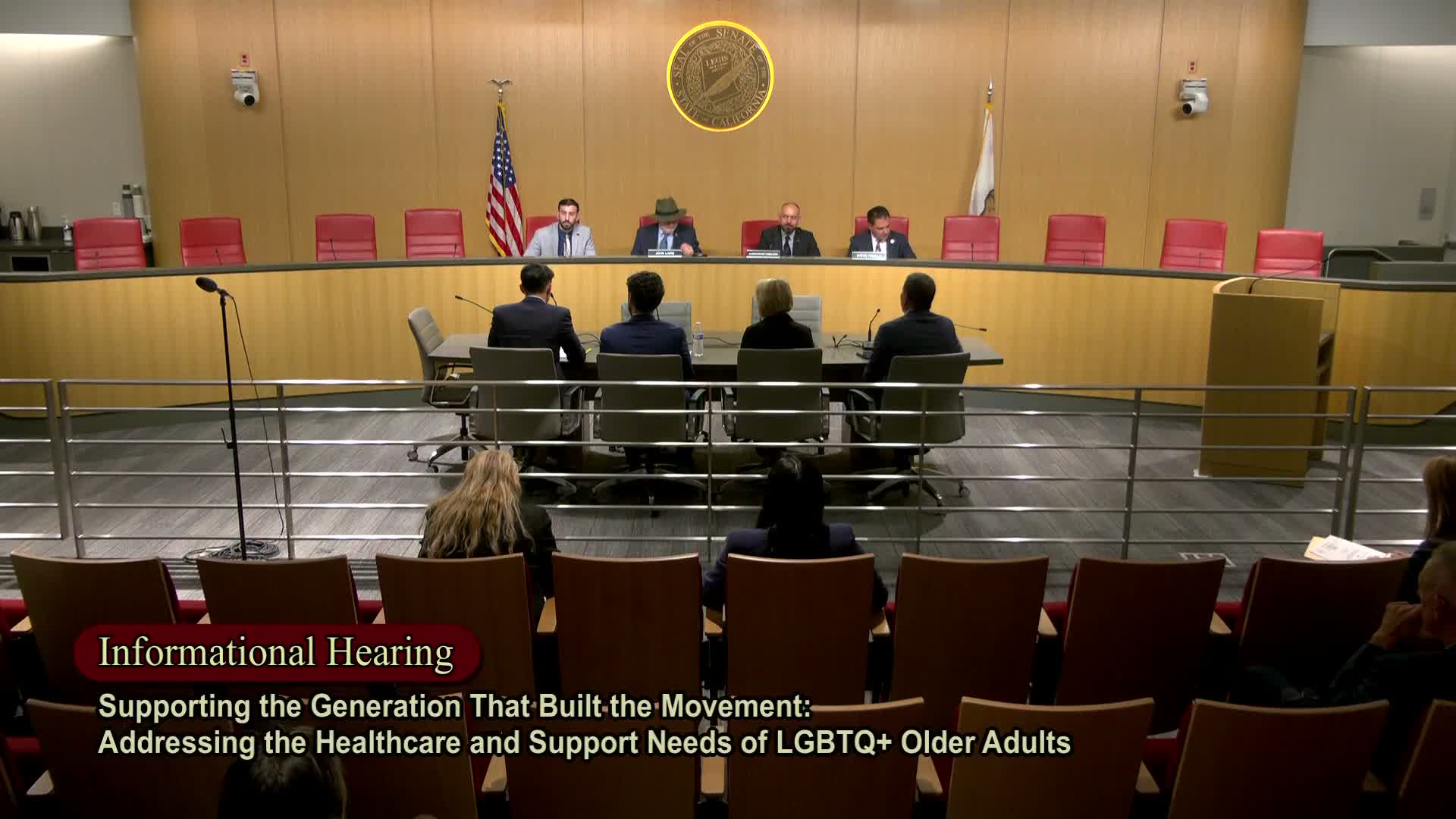
Chair Laird convened the Senate Select Committee on Older LGBT Californians to hear from state agencies, advocates and older people with lived experience about gaps in care and supports.
The hearing highlighted new statewide survey findings and program details. "Across the state, somewhere between 120,000 to 400,000 older Californians identify as LGBTQ plus," Denny Chan of Justice in Aging told the committee, and he warned that federal cuts under HR 1 threaten Medi‑Cal–funded home and community‑based services that many older LGBTQ+ adults rely on for care and independence.
Brian Kaplan, deputy secretary for policy and strategic planning at the California Health and Human Services Agency, framed the discussion around the Master Plan for Aging and described state programs such as PACE and enhanced care management that integrate Medicare and Medi‑Cal benefits. He told the committee California law protects access to gender‑affirming care and that DHCS issued implementation guidance in September 2024 tied to Senate Bill 923.
Sarah Steenhausen of the Department of Aging described the department's first statewide survey of midlife and older LGBTQIA adults: more than 4,000 respondents and 23 focus groups. Steenhausen summarized five key findings: strong resilience but unequal outcomes for subgroups, healthcare access and trust barriers, economic insecurity, social isolation and persistent discrimination. The department reported that 20 of 33 area agencies on aging identified people living with HIV as a target population, and 16 of those outlined specific strategies.
David Jax Kelly, founder of the Aging and HIV Institute, told the panel that service fragmentation and the invisibility of named populations in planning documents produce gaps in care: "Naming changes outcomes," he said, arguing that system design must intentionally coordinate aging, HIV and mainstream health services.
Committee members focused on how departments will translate survey findings into concrete actions. Steenhausen said the department convened a lived‑experience advisory board and is updating data dashboards with county‑level HIV data to inform area plans. Brian Kaplan said CalHHS is coordinating workgroups across departments and counties to reduce administrative friction, automate eligibility where possible, and mitigate federal policy impacts.
The hearing closed with a push from advocates and individuals with lived experience for targeted funding and services — including housing supports, legal and benefits navigation — and a commitment from agencies to follow up with more implementation details and links to area plans.
The committee did not take formal votes; members said they will review follow‑up materials and consider administrative or budget steps in future work.
The hearing highlighted new statewide survey findings and program details. "Across the state, somewhere between 120,000 to 400,000 older Californians identify as LGBTQ plus," Denny Chan of Justice in Aging told the committee, and he warned that federal cuts under HR 1 threaten Medi‑Cal–funded home and community‑based services that many older LGBTQ+ adults rely on for care and independence.
Brian Kaplan, deputy secretary for policy and strategic planning at the California Health and Human Services Agency, framed the discussion around the Master Plan for Aging and described state programs such as PACE and enhanced care management that integrate Medicare and Medi‑Cal benefits. He told the committee California law protects access to gender‑affirming care and that DHCS issued implementation guidance in September 2024 tied to Senate Bill 923.
Sarah Steenhausen of the Department of Aging described the department's first statewide survey of midlife and older LGBTQIA adults: more than 4,000 respondents and 23 focus groups. Steenhausen summarized five key findings: strong resilience but unequal outcomes for subgroups, healthcare access and trust barriers, economic insecurity, social isolation and persistent discrimination. The department reported that 20 of 33 area agencies on aging identified people living with HIV as a target population, and 16 of those outlined specific strategies.
David Jax Kelly, founder of the Aging and HIV Institute, told the panel that service fragmentation and the invisibility of named populations in planning documents produce gaps in care: "Naming changes outcomes," he said, arguing that system design must intentionally coordinate aging, HIV and mainstream health services.
Committee members focused on how departments will translate survey findings into concrete actions. Steenhausen said the department convened a lived‑experience advisory board and is updating data dashboards with county‑level HIV data to inform area plans. Brian Kaplan said CalHHS is coordinating workgroups across departments and counties to reduce administrative friction, automate eligibility where possible, and mitigate federal policy impacts.
The hearing closed with a push from advocates and individuals with lived experience for targeted funding and services — including housing supports, legal and benefits navigation — and a commitment from agencies to follow up with more implementation details and links to area plans.
The committee did not take formal votes; members said they will review follow‑up materials and consider administrative or budget steps in future work.
Don't Miss a Word: See the Full Meeting!
Go beyond summaries. Unlock every video, transcript, and key insight with a Founder Membership.
✓
Get instant access to full meeting videos
✓
Search and clip any phrase from complete transcripts
✓
Receive AI-powered summaries & custom alerts
✓
Enjoy lifetime, unrestricted access to government data
30-day money-back guarantee
