Senate approves sweeping cannabis, hemp and infused-beverage changes after hours of contentious debate
April 30, 2026 | 2026 Legislature CT, Connecticut
This article was created by AI summarizing key points discussed. AI makes mistakes, so for full details and context, please refer to the video of the full meeting. Please report any errors so we can fix them. Report an error »
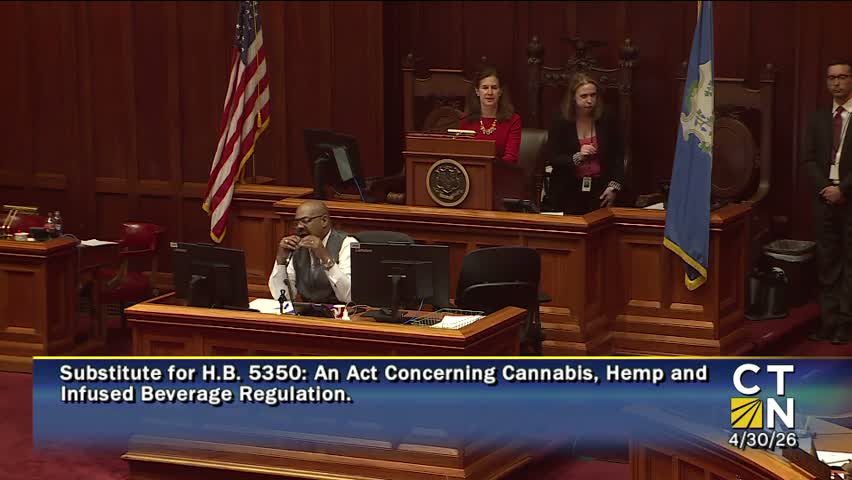
The Senate approved House Bill 5350, a wide-ranging revision to Connecticut's cannabis and hemp regulations, after extended floor debate and multiple failed amendments.
Sponsor Senator Maroney called the package a combination of technical fixes, regulatory modernizations and industry-specific updates. "A number of these are conforming changes," he said, summarizing an array of changes from automated point-of-sale uploads to the prescription drug monitoring program, to testing remediation and new transport rules.
The measure removes certain statutory THC caps for flower and concentrates (a change supporters said would be readdressed and a corrective bill may return later), modifies delivery rules to permit a single driver under specified safeguards, creates an enforcement-focused statewide task force, and clarifies that some hemp-derived intermediate products may be used in infused beverages produced in Connecticut. The bill also expands who may be served by retailers, allows new product forms, and directs the Department of Consumer Protection to adopt implementing regulations.
Opponents pressed repeatedly on public-health consequences. Senator Ciccarella argued there was insufficient protection for children and for drivers, and proposed a higher criminal penalty for knowingly selling fentanyl-laced drugs (an amendment that failed). Senator Perillo and others warned that removing THC caps risks higher potency products in the market and could increase emergency-room visits and psychosis risk among adolescents.
A bid to ban public smoking in high-traffic public spaces (an infraction-level restriction) was proposed and defeated. Senators debated FOI exemptions for a task force that will perform enforcement operations; supporters said limited exemptions for enforcement planning will avoid alerting targets of investigations.
The final roll-call showed a narrow margin: 18 yeas, 17 nays, 1 absent. The bill's backers said they will continue to refine implementing regulations and indicated additional legislation may return to reintroduce a THC cap or revisit other consumer-safety measures.
What's next: Because the package is sweeping, the Department of Consumer Protection and other agencies will start rulemaking and the legislature signaled continued oversight; several senators (including some who opposed the final package) said they will press for follow-up legislation on potency and youth protections.
Sponsor Senator Maroney called the package a combination of technical fixes, regulatory modernizations and industry-specific updates. "A number of these are conforming changes," he said, summarizing an array of changes from automated point-of-sale uploads to the prescription drug monitoring program, to testing remediation and new transport rules.
The measure removes certain statutory THC caps for flower and concentrates (a change supporters said would be readdressed and a corrective bill may return later), modifies delivery rules to permit a single driver under specified safeguards, creates an enforcement-focused statewide task force, and clarifies that some hemp-derived intermediate products may be used in infused beverages produced in Connecticut. The bill also expands who may be served by retailers, allows new product forms, and directs the Department of Consumer Protection to adopt implementing regulations.
Opponents pressed repeatedly on public-health consequences. Senator Ciccarella argued there was insufficient protection for children and for drivers, and proposed a higher criminal penalty for knowingly selling fentanyl-laced drugs (an amendment that failed). Senator Perillo and others warned that removing THC caps risks higher potency products in the market and could increase emergency-room visits and psychosis risk among adolescents.
A bid to ban public smoking in high-traffic public spaces (an infraction-level restriction) was proposed and defeated. Senators debated FOI exemptions for a task force that will perform enforcement operations; supporters said limited exemptions for enforcement planning will avoid alerting targets of investigations.
The final roll-call showed a narrow margin: 18 yeas, 17 nays, 1 absent. The bill's backers said they will continue to refine implementing regulations and indicated additional legislation may return to reintroduce a THC cap or revisit other consumer-safety measures.
What's next: Because the package is sweeping, the Department of Consumer Protection and other agencies will start rulemaking and the legislature signaled continued oversight; several senators (including some who opposed the final package) said they will press for follow-up legislation on potency and youth protections.
View the Full Meeting & All Its Details
This article offers just a summary. Unlock complete video, transcripts, and insights as a Founder Member.
✓
Watch full, unedited meeting videos
✓
Search every word spoken in unlimited transcripts
✓
AI summaries & real-time alerts (all government levels)
✓
Permanent access to expanding government content
30-day money-back guarantee
