Council hears staff overview of two annexation requests; staff to return with resolutions and legal guidance
April 27, 2026 | Enumclaw, King County, Washington
This article was created by AI summarizing key points discussed. AI makes mistakes, so for full details and context, please refer to the video of the full meeting. Please report any errors so we can fix them. Report an error »
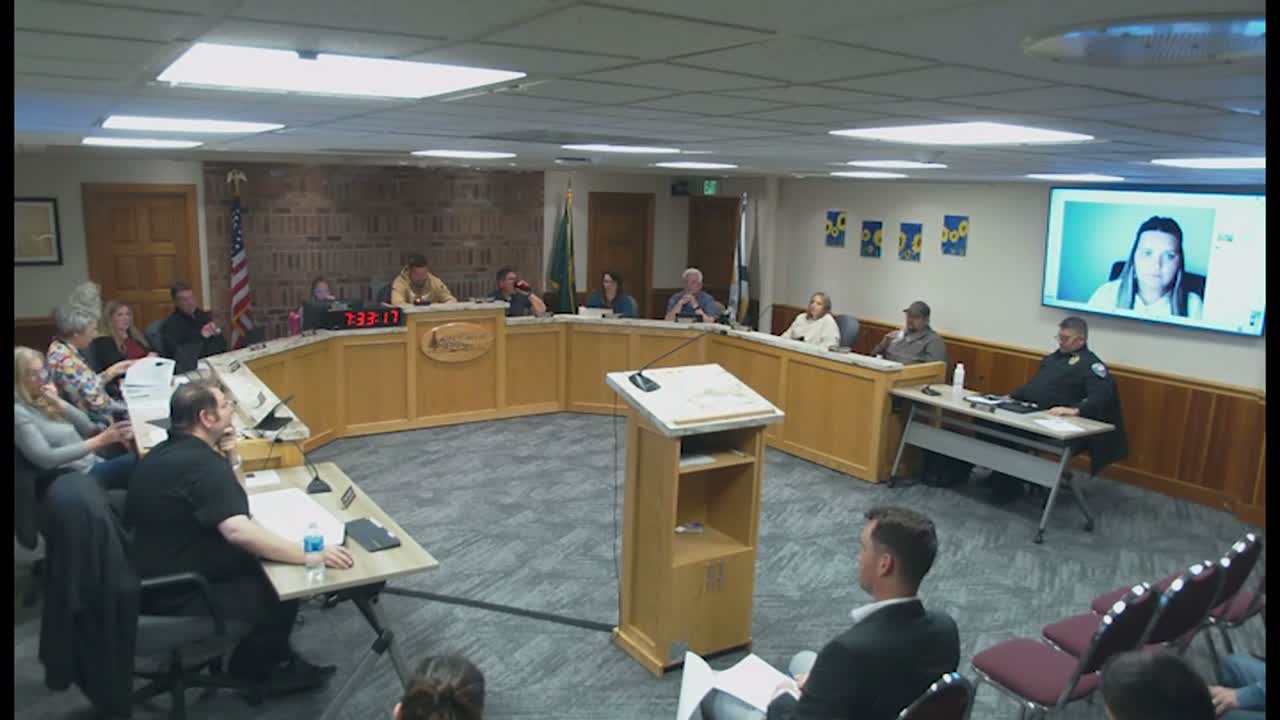
City staff briefed the Incla City Council on two recent annexation notice-of-intent filings during its April 27 meeting, outlining options staff recommends and asking the council for direction on next steps.
Chris Massenet, the city’s community development director, told the council the city received the two filings on March 19 and March 24 and that staff recommends potentially modifying the proposed boundaries to add parcels, “to make the city boundary more regular” and better align with the comprehensive plan. He said both areas are zoned R‑2 (low-density residential), that water and sewer are available adjacent to the parcels, and that, with the additional parcels, the combined area would be roughly 38 acres with an assessed value “about 8 and a half million.”
Massenet explained the petition annexation process (the 60% by assessed‑value petition method), saying applicants must gather signatures representing 60% of valuation before the county verifies them and the Boundary Review Board reviews a formal notice of intent. “If you’re going to annex, do it to make the boundaries more regular,” he said, and recommended that staff prepare either one resolution for both areas or two separate resolutions depending on council direction.
City staff and council members discussed whether the two filings should be processed together. Council asked whether Tarragon’s parcels by themselves would reach the 60% threshold; Massenet said they would not, which means applicants would need signatures from additional owners if the area were processed separately. Councilmember Reffler and others urged caution about staff capacity and suggested asking applicants to cover consultant costs if the annexations require extensive city staff time. One council member summarized the committee view: have staff consult with the city attorney and return with options, including requiring applicant payment for consultant work if necessary.
Council received additional context from Chris Searcy, who reminded members that annexation changes how growth is managed and that, once annexed, land is subject to city zoning and development regulations. Searcy emphasized the practical effects: “Once you let land come in, if utilities are there and it’s easy to develop, it follows the regulations,” and that council control is primarily over how much land they allow to be annexed.
Council did not take a formal vote on annexation tonight but indicated it was open to staff preparing resolutions to modify the two areas and to processing them as separate actions. Council asked staff to consult the city attorney about whether the council could require applicants to pay for consultant assistance or otherwise mitigate staff workload. The council expects staff to return with recommended resolutions and legal guidance at a future meeting.
Chris Massenet, the city’s community development director, told the council the city received the two filings on March 19 and March 24 and that staff recommends potentially modifying the proposed boundaries to add parcels, “to make the city boundary more regular” and better align with the comprehensive plan. He said both areas are zoned R‑2 (low-density residential), that water and sewer are available adjacent to the parcels, and that, with the additional parcels, the combined area would be roughly 38 acres with an assessed value “about 8 and a half million.”
Massenet explained the petition annexation process (the 60% by assessed‑value petition method), saying applicants must gather signatures representing 60% of valuation before the county verifies them and the Boundary Review Board reviews a formal notice of intent. “If you’re going to annex, do it to make the boundaries more regular,” he said, and recommended that staff prepare either one resolution for both areas or two separate resolutions depending on council direction.
City staff and council members discussed whether the two filings should be processed together. Council asked whether Tarragon’s parcels by themselves would reach the 60% threshold; Massenet said they would not, which means applicants would need signatures from additional owners if the area were processed separately. Councilmember Reffler and others urged caution about staff capacity and suggested asking applicants to cover consultant costs if the annexations require extensive city staff time. One council member summarized the committee view: have staff consult with the city attorney and return with options, including requiring applicant payment for consultant work if necessary.
Council received additional context from Chris Searcy, who reminded members that annexation changes how growth is managed and that, once annexed, land is subject to city zoning and development regulations. Searcy emphasized the practical effects: “Once you let land come in, if utilities are there and it’s easy to develop, it follows the regulations,” and that council control is primarily over how much land they allow to be annexed.
Council did not take a formal vote on annexation tonight but indicated it was open to staff preparing resolutions to modify the two areas and to processing them as separate actions. Council asked staff to consult the city attorney about whether the council could require applicants to pay for consultant assistance or otherwise mitigate staff workload. The council expects staff to return with recommended resolutions and legal guidance at a future meeting.
View the Full Meeting & All Its Details
This article offers just a summary. Unlock complete video, transcripts, and insights as a Founder Member.
✓
Watch full, unedited meeting videos
✓
Search every word spoken in unlimited transcripts
✓
AI summaries & real-time alerts (all government levels)
✓
Permanent access to expanding government content
30-day money-back guarantee
