Council committee hears how Deep Seabed Hard Mineral Resources Act can trigger consultations with regional councils
May 01, 2026 | Fishery Management Council, Pacific, Governor's Office - Boards & Commissions, Executive, Washington
This article was created by AI summarizing key points discussed. AI makes mistakes, so for full details and context, please refer to the video of the full meeting. Please report any errors so we can fix them. Report an error »
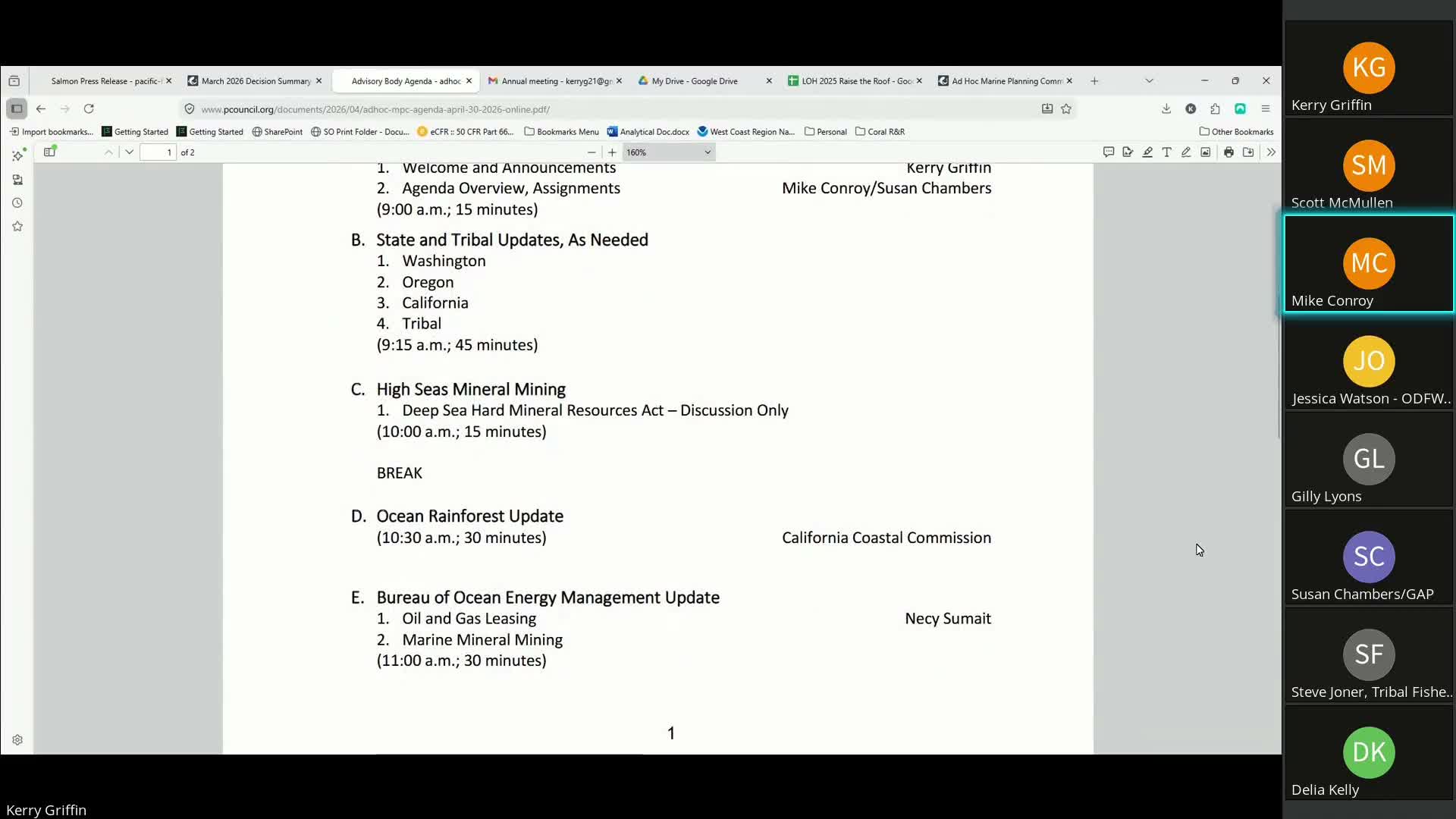
Mike (MPC member) gave a high‑level briefing on the Deep Seabed Hard Mineral Resources Act, focusing on where it applies and how the law is implemented. "By its term, the act only applies to the deep seabed... this applies on the high seas, does not apply within the EEZ," he said, and highlighted a statutory hook: the administrator of NOAA must consult regional councils "if the activities... could adversely affect any fishery within the EEZ."
Why it matters: committee members and public commenters noted that councils and some stakeholders may not yet be widely aware that an American permitting process for high‑seas seabed mining could trigger formal consultation with regional fishery management bodies. Andrea, a public commenter, said she had not been familiar with the act until recently and urged the committee to raise awareness and liaise with NGOs and regional fisheries organizations. "I'm really glad... that you all are taking this up," Andrea said, and offered to help connect councils and research communities.
What the briefing said: Mike described the act's regulatory structure (exploration licenses and commercial recovery permits), noted recent consolidations in NOAA's permitting process and flagged that consolidated applications were being submitted. He drew attention to the geographic focus of many applications — the Clarion‑Clipperton (transcript: "Claring Clipperton") Fracture Zone — and said the council could argue that high‑seas exploration or recovery might affect highly migratory species that later enter the U.S. EEZ.
Council and member questions focused on jurisdictional reach and implementation. Members pointed to the upcoming Council Coordination Committee agenda and expected a briefing by National Ocean Service/NOAA staff at the June council meeting to explain how consultation will be handled and how regional fishery management organizations might weigh in. One member raised international‑law questions about U.S. authority and whether all operators will follow U.S. process; council staff and members said they expect further clarification in June.
Next steps: committee leaders said they will circulate the NOAA/NOS presentation at the June meeting and noted Earthjustice had submitted a detailed comment letter that will inform council consideration. The committee encouraged members to raise the topic with their constituencies and to be prepared to follow the NOAA briefings in June.
Why it matters: committee members and public commenters noted that councils and some stakeholders may not yet be widely aware that an American permitting process for high‑seas seabed mining could trigger formal consultation with regional fishery management bodies. Andrea, a public commenter, said she had not been familiar with the act until recently and urged the committee to raise awareness and liaise with NGOs and regional fisheries organizations. "I'm really glad... that you all are taking this up," Andrea said, and offered to help connect councils and research communities.
What the briefing said: Mike described the act's regulatory structure (exploration licenses and commercial recovery permits), noted recent consolidations in NOAA's permitting process and flagged that consolidated applications were being submitted. He drew attention to the geographic focus of many applications — the Clarion‑Clipperton (transcript: "Claring Clipperton") Fracture Zone — and said the council could argue that high‑seas exploration or recovery might affect highly migratory species that later enter the U.S. EEZ.
Council and member questions focused on jurisdictional reach and implementation. Members pointed to the upcoming Council Coordination Committee agenda and expected a briefing by National Ocean Service/NOAA staff at the June council meeting to explain how consultation will be handled and how regional fishery management organizations might weigh in. One member raised international‑law questions about U.S. authority and whether all operators will follow U.S. process; council staff and members said they expect further clarification in June.
Next steps: committee leaders said they will circulate the NOAA/NOS presentation at the June meeting and noted Earthjustice had submitted a detailed comment letter that will inform council consideration. The committee encouraged members to raise the topic with their constituencies and to be prepared to follow the NOAA briefings in June.
View the Full Meeting & All Its Details
This article offers just a summary. Unlock complete video, transcripts, and insights as a Founder Member.
✓
Watch full, unedited meeting videos
✓
Search every word spoken in unlimited transcripts
✓
AI summaries & real-time alerts (all government levels)
✓
Permanent access to expanding government content
30-day money-back guarantee
