San Luis Obispo County introduces $741M general fund budget amid $15.6M gap
May 14, 2024 | San Luis Obispo County, California
This article was created by AI summarizing key points discussed. AI makes mistakes, so for full details and context, please refer to the video of the full meeting. Please report any errors so we can fix them. Report an error »
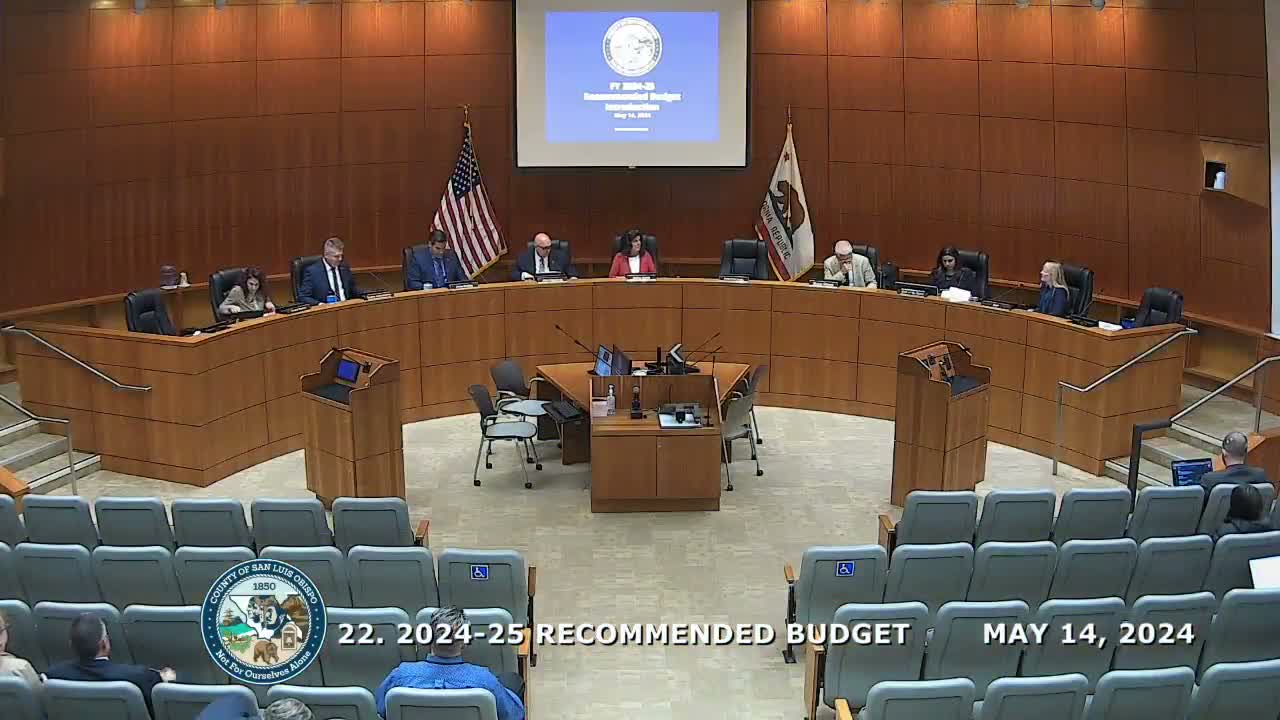
The San Luis Obispo County Board of Supervisors heard the County Administrative Office’s introduction of the fiscal year 2024–25 recommended budget on May 14.
Lisa Howe, County Administrative Officer, told the board the recommended governmental funds budget totals $852 million and the general fund budget is $741 million. Staff identified a structural shortfall of $15.6 million and proposed to close it with a mix of short‑term and long‑term steps, including departmental general fund reductions, lowered contingency and targeted reserve draws.
Howe said the recommended package reflects the board’s stated priorities, and that the county will focus first‑tier resources on homelessness, behavioral health, housing and economic development. She said departments were asked to reduce or “gray out” positions to help balance the budget, and that staff recommended graying out 20 full‑time equivalent positions as part of the plan.
The CAO highlighted revenue assumptions underlying the recommendation: a modest 4.46% growth in discretionary revenue and specific changes in state and program revenue. She also said the budget assumes the elimination of roughly $8 million in one‑time funding carried in FY 2023–24 (including ARPA funds) and includes $2.1 million of recommended budget augmentation requests for targeted programs.
Board members asked for additional detail on several bills and state budget actions that could affect county revenues. Paul Yoder, the county’s Sacramento lobbyist, had earlier outlined the May revise and warned of deep, across‑the‑board cuts — especially in behavioral health — that could change the county’s revenue outlook. Howe said the recommended budget does not yet reflect possible final state actions and that staff expect to return with any necessary adjustments when the governor’s budget is finalized.
The board scheduled budget hearings for June and noted final legal adoption of the county’s budgets will occur in September with any needed amendments after the state budget becomes final.
The board voted to introduce the recommended budget and to set public hearings; final adoption will follow the public process and any required adjustments tied to the state budget.
Lisa Howe, County Administrative Officer, told the board the recommended governmental funds budget totals $852 million and the general fund budget is $741 million. Staff identified a structural shortfall of $15.6 million and proposed to close it with a mix of short‑term and long‑term steps, including departmental general fund reductions, lowered contingency and targeted reserve draws.
Howe said the recommended package reflects the board’s stated priorities, and that the county will focus first‑tier resources on homelessness, behavioral health, housing and economic development. She said departments were asked to reduce or “gray out” positions to help balance the budget, and that staff recommended graying out 20 full‑time equivalent positions as part of the plan.
The CAO highlighted revenue assumptions underlying the recommendation: a modest 4.46% growth in discretionary revenue and specific changes in state and program revenue. She also said the budget assumes the elimination of roughly $8 million in one‑time funding carried in FY 2023–24 (including ARPA funds) and includes $2.1 million of recommended budget augmentation requests for targeted programs.
Board members asked for additional detail on several bills and state budget actions that could affect county revenues. Paul Yoder, the county’s Sacramento lobbyist, had earlier outlined the May revise and warned of deep, across‑the‑board cuts — especially in behavioral health — that could change the county’s revenue outlook. Howe said the recommended budget does not yet reflect possible final state actions and that staff expect to return with any necessary adjustments when the governor’s budget is finalized.
The board scheduled budget hearings for June and noted final legal adoption of the county’s budgets will occur in September with any needed amendments after the state budget becomes final.
The board voted to introduce the recommended budget and to set public hearings; final adoption will follow the public process and any required adjustments tied to the state budget.
Don't Miss a Word: See the Full Meeting!
Go beyond summaries. Unlock every video, transcript, and key insight with a Founder Membership.
✓
Get instant access to full meeting videos
✓
Search and clip any phrase from complete transcripts
✓
Receive AI-powered summaries & custom alerts
✓
Enjoy lifetime, unrestricted access to government data
30-day money-back guarantee
