Smyrna fire staff propose tighter open-burning rules, new permits and air-curtain requirement for large burns
May 01, 2026 | Smyrna, Rutherford County, Tennessee
This article was created by AI summarizing key points discussed. AI makes mistakes, so for full details and context, please refer to the video of the full meeting. Please report any errors so we can fix them. Report an error »
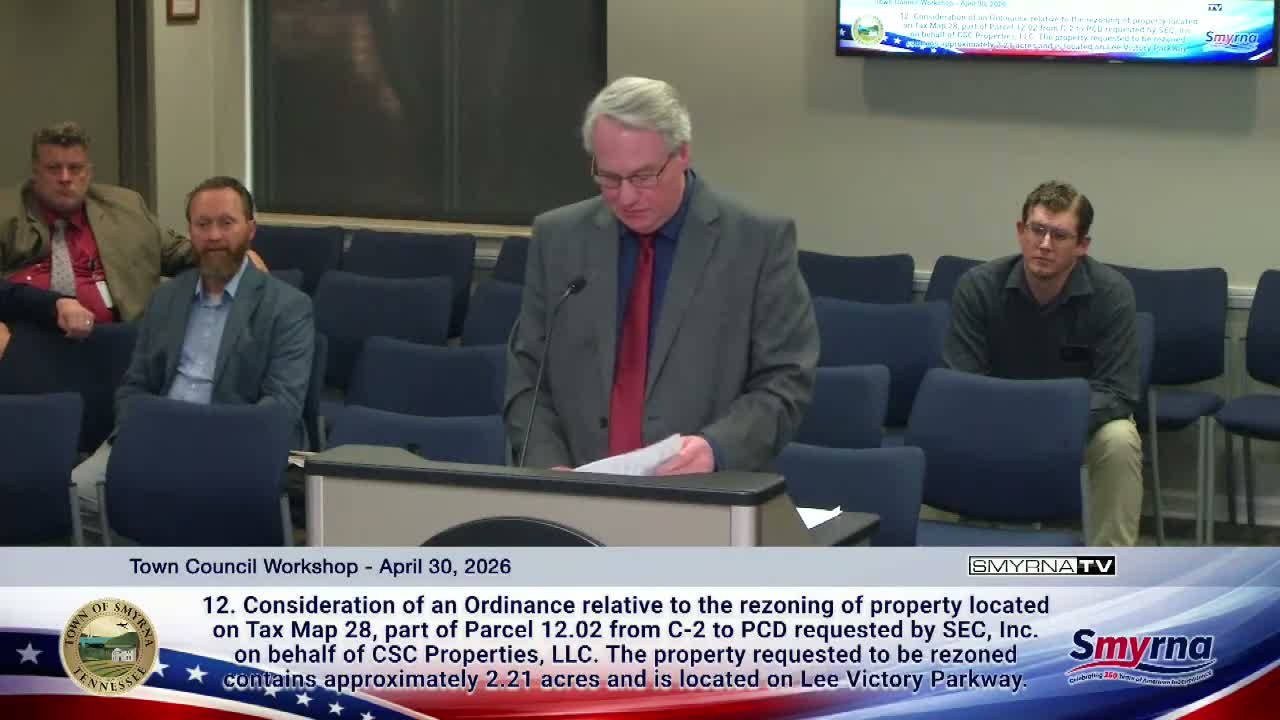
Fire Department staff outlined a comprehensive rewrite of the town’s open-burning ordinance at the April workshop, proposing new permit categories, specific setbacks and conditions for commercial and residential burns, and authority for the department to suspend burning during high-risk conditions.
The proposed structure would create three permit categories: commercial/land-clearing burns, residential yard-waste burns (for properties of at least 3 acres) and recreational fires (small backyard pits and grills, with no permit required). For large commercial burns, staff proposed a 20-acre minimum, a 500-foot setback from adjacent structures, continuous attendance and, where needed, an air-curtain destructor to reduce emissions.
Explaining the equipment, the fire chief (speaker 12) described the air-curtain destructor as a rented machine that "blows a constant gust of air over the fire pit, and it reduces emissions... It helps more complete burning and reduces those emissions by up to 90%." The draft text would restrict commercial burns to weekdays and allow the fire or codes department to impose weather, material and equipment conditions or to require chip-and-haul for smaller commercial sites.
Council members pressed for clarity on the 20-acre threshold (speaker 5 asked how the ordinance would address smaller commercial sites) and on how the town would enforce setbacks and air-quality protections. The chief said the new language mirrors guidance from the Department of Environmental Quality, the EPA, and the International Fire Code and is intended to increase clarity and enforceability.
Why it matters: the rewrite seeks to balance legitimate land-clearing and development needs with air-quality and public-health protections for neighbors, particularly those with respiratory vulnerabilities. The policy change could affect developers, large property owners, and residents who burn yard waste.
Next steps: staff will bring the draft ordinance forward for council packet review and subsequent readings.
The proposed structure would create three permit categories: commercial/land-clearing burns, residential yard-waste burns (for properties of at least 3 acres) and recreational fires (small backyard pits and grills, with no permit required). For large commercial burns, staff proposed a 20-acre minimum, a 500-foot setback from adjacent structures, continuous attendance and, where needed, an air-curtain destructor to reduce emissions.
Explaining the equipment, the fire chief (speaker 12) described the air-curtain destructor as a rented machine that "blows a constant gust of air over the fire pit, and it reduces emissions... It helps more complete burning and reduces those emissions by up to 90%." The draft text would restrict commercial burns to weekdays and allow the fire or codes department to impose weather, material and equipment conditions or to require chip-and-haul for smaller commercial sites.
Council members pressed for clarity on the 20-acre threshold (speaker 5 asked how the ordinance would address smaller commercial sites) and on how the town would enforce setbacks and air-quality protections. The chief said the new language mirrors guidance from the Department of Environmental Quality, the EPA, and the International Fire Code and is intended to increase clarity and enforceability.
Why it matters: the rewrite seeks to balance legitimate land-clearing and development needs with air-quality and public-health protections for neighbors, particularly those with respiratory vulnerabilities. The policy change could affect developers, large property owners, and residents who burn yard waste.
Next steps: staff will bring the draft ordinance forward for council packet review and subsequent readings.
View the Full Meeting & All Its Details
This article offers just a summary. Unlock complete video, transcripts, and insights as a Founder Member.
✓
Watch full, unedited meeting videos
✓
Search every word spoken in unlimited transcripts
✓
AI summaries & real-time alerts (all government levels)
✓
Permanent access to expanding government content
30-day money-back guarantee
