Department of Aging to consolidate programs under SOAR as audits prompt oversight changes
May 01, 2026 | Health and Social Services Subcommittee, Appropriations Committee, HOUSE OF REPRESENTATIVES, Committees, Legislative, Maryland
This article was created by AI summarizing key points discussed. AI makes mistakes, so for full details and context, please refer to the video of the full meeting. Please report any errors so we can fix them. Report an error »
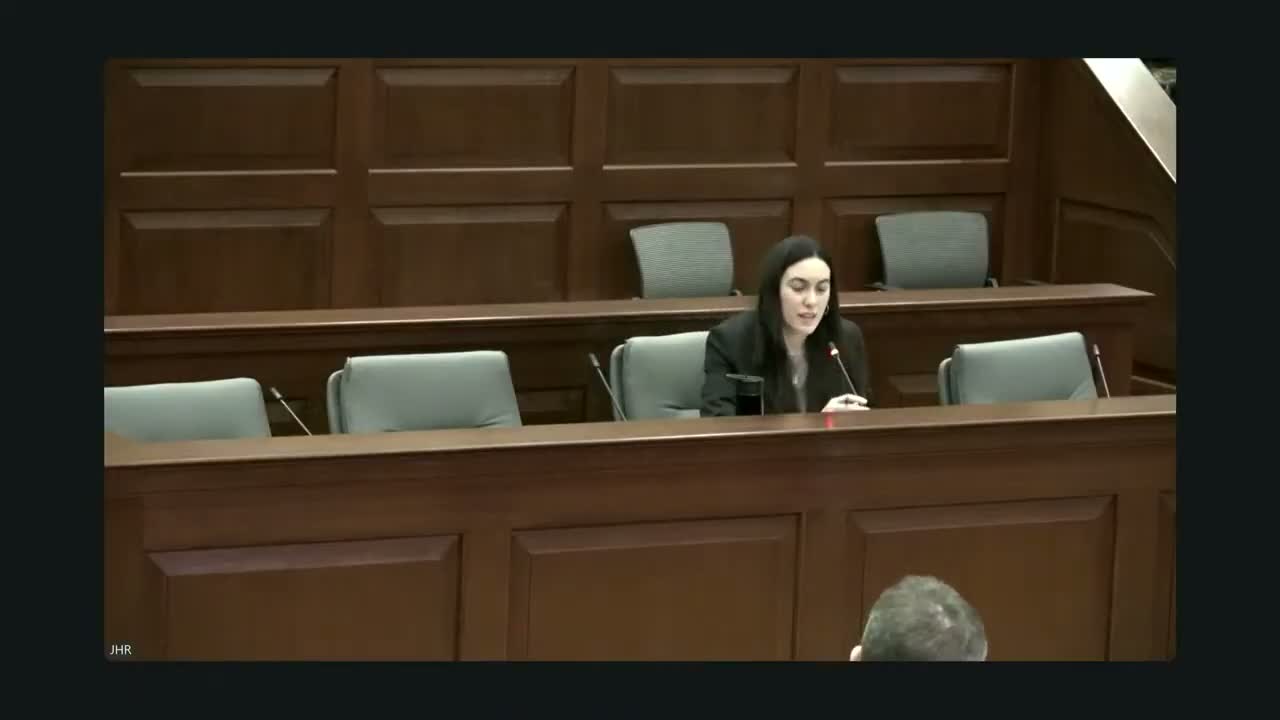
The Maryland Department of Aging presented its fiscal 2027 budget, implementation plans for the new SOAR program (Supporting Older Adults with Resources), and responses to recent audit findings before the House Health and Social Services Subcommittee.
Victoria Martinez of the Department of Legislative Services said the department's FY27 allowance decreases by $9.7 million (about 10.6%) to $82,000,000. DLS attributed roughly $6.1 million of the decline to the expiration of ARPA funds and another $2.9 million to the transfer of the Veteran-Directed Care program back to the U.S. Department of Veterans Affairs.
Secretary Roque (introduced to the committee as Secretary Roque) emphasized a multi-sector, all-government approach to the departments longevity-ready planning and said the agency has reorganized roles to focus on policy, planning and fund distribution. Michael Zomberg, the department's CFO, told the committee that the department opposes a DLS-proposed general fund turnover adjustment that would increase the assumed turnover rate and reduce salary allocations; the department said the reduction would disproportionately affect a small staff.
Committee members pressed the department on three audit findings: (1) incomplete program reviews of area agencies on aging (AAAs), (2) late or missing federal draw submissions that cost the state funds, and (3) limited transparency and documentation in awarding naturally occurring retirement community (NORC) grants. MDOA described steps taken: hiring an auditor, contracting an outside firm to catch up fiscal-year audits for AAAs, instituting monthly federal draws (and recovering roughly $1.5 million in previously undrawn federal funds), and moving to a competitive, documented grant process for NORC awards.
Members also asked about SOAR implementation. MDOA said FY27 is the transition year; the department convened external and internal workgroups, solicited HCBS expertise via procurement and received a consultant report the week of the hearing. MDOA plans an in-person March meeting with AAA directors and a written implementation report by June 1 that will detail funding allocation, eligibility, and plans to protect legacy participants.
The Long-Term Care Ombudsman reported an FY27 operating budget of roughly $1.1 million in state funds and $400,000 in federal funds and said the office resolved about 4,000 complaints in fiscal 2025 with a reported 80% satisfaction disposition rate. Committee members and witnesses emphasized the need to preserve AAA funding, maintain continuity for people on waiting lists and ensure clear guidance is provided quickly to local partners.
What happens next: DLS recommended committee narrative requesting further implementation details on SOAR and performance measures; members requested follow-up on audits, wait-list handling and written guidance for AAAs.
Victoria Martinez of the Department of Legislative Services said the department's FY27 allowance decreases by $9.7 million (about 10.6%) to $82,000,000. DLS attributed roughly $6.1 million of the decline to the expiration of ARPA funds and another $2.9 million to the transfer of the Veteran-Directed Care program back to the U.S. Department of Veterans Affairs.
Secretary Roque (introduced to the committee as Secretary Roque) emphasized a multi-sector, all-government approach to the departments longevity-ready planning and said the agency has reorganized roles to focus on policy, planning and fund distribution. Michael Zomberg, the department's CFO, told the committee that the department opposes a DLS-proposed general fund turnover adjustment that would increase the assumed turnover rate and reduce salary allocations; the department said the reduction would disproportionately affect a small staff.
Committee members pressed the department on three audit findings: (1) incomplete program reviews of area agencies on aging (AAAs), (2) late or missing federal draw submissions that cost the state funds, and (3) limited transparency and documentation in awarding naturally occurring retirement community (NORC) grants. MDOA described steps taken: hiring an auditor, contracting an outside firm to catch up fiscal-year audits for AAAs, instituting monthly federal draws (and recovering roughly $1.5 million in previously undrawn federal funds), and moving to a competitive, documented grant process for NORC awards.
Members also asked about SOAR implementation. MDOA said FY27 is the transition year; the department convened external and internal workgroups, solicited HCBS expertise via procurement and received a consultant report the week of the hearing. MDOA plans an in-person March meeting with AAA directors and a written implementation report by June 1 that will detail funding allocation, eligibility, and plans to protect legacy participants.
The Long-Term Care Ombudsman reported an FY27 operating budget of roughly $1.1 million in state funds and $400,000 in federal funds and said the office resolved about 4,000 complaints in fiscal 2025 with a reported 80% satisfaction disposition rate. Committee members and witnesses emphasized the need to preserve AAA funding, maintain continuity for people on waiting lists and ensure clear guidance is provided quickly to local partners.
What happens next: DLS recommended committee narrative requesting further implementation details on SOAR and performance measures; members requested follow-up on audits, wait-list handling and written guidance for AAAs.
Don't Miss a Word: See the Full Meeting!
Go beyond summaries. Unlock every video, transcript, and key insight with a Founder Membership.
✓
Get instant access to full meeting videos
✓
Search and clip any phrase from complete transcripts
✓
Receive AI-powered summaries & custom alerts
✓
Enjoy lifetime, unrestricted access to government data
30-day money-back guarantee
