State auditors warn Camas School District of shrinking reserves and negative operating margins
April 27, 2026 | Camas School District, School Districts, Washington
This article was created by AI summarizing key points discussed. AI makes mistakes, so for full details and context, please refer to the video of the full meeting. Please report any errors so we can fix them. Report an error »
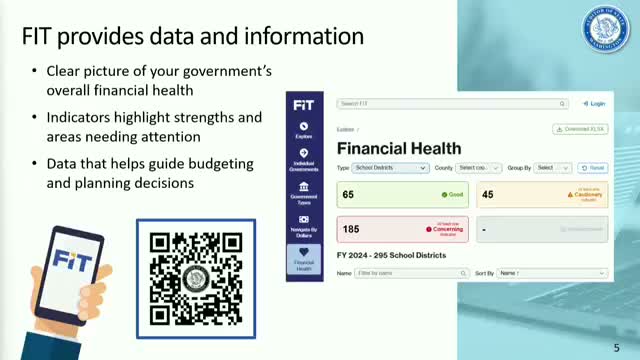
Washington State Auditor staff told the Camas School District board on returning from their audit that the district shows multiple financial-warning indicators and should continue close monitoring.
Lindsay, an auditor from the office’s Vancouver team, explained the office’s role and that audit reports and any management letters are published publicly. Tyra, who presented the office’s FIT (Financial Indicator Tool) analysis, said the FIT summary for Camas shows three concern flags and that the district’s fund-balance sufficiency had fallen to roughly 21 days of operating expenditures, well below the commonly used 60-day benchmark. “Your revenues are not going to be able to cover your operating expenditures” unless conditions change, Tyra said, describing a negative operating margin trend in recent years.
Board members pressed auditors on whether district cuts already implemented would appear in the FIT numbers. Auditors noted that the audit covers historical financial statements and that the FIT snapshot referenced fiscal year data through 08/31/2025; as Lindsay said, “we’re always auditing a year behind,” so cost reductions enacted this year will appear in future audits.
Kim Lautic, the district finance lead, presented the monthly budget and enrollment update that followed the auditor briefing, noting the district reduced expenditures by roughly $3 million year to date and that March cash was about $4.148 million. Kim said those reductions improved the near-term position but cautioned that projections show reserves drifting below policy targets in later years unless revenue or policy changes arrive. Kim called out a roughly 5.75-FTE apportionment variance that produced about $59,000 in additional revenue in one category, while other enrollment shifts produced revenue declines elsewhere.
The board did not take an immediate, formal action in response to the audit beyond asking for continued monitoring and follow-up; auditors recommended documenting the district’s response in the next audit follow-up. The superintendent and staff told board members they will continue cost-containment work and bring budget details to upcoming meetings so the board and community can track the district’s multi-year position.
What happens next: auditors said the FIT tool is public-facing and can be reviewed online; staff told the board cuts will affect future audited results, and the district will present its three-year budget and additional financial materials at upcoming board sessions.
Lindsay, an auditor from the office’s Vancouver team, explained the office’s role and that audit reports and any management letters are published publicly. Tyra, who presented the office’s FIT (Financial Indicator Tool) analysis, said the FIT summary for Camas shows three concern flags and that the district’s fund-balance sufficiency had fallen to roughly 21 days of operating expenditures, well below the commonly used 60-day benchmark. “Your revenues are not going to be able to cover your operating expenditures” unless conditions change, Tyra said, describing a negative operating margin trend in recent years.
Board members pressed auditors on whether district cuts already implemented would appear in the FIT numbers. Auditors noted that the audit covers historical financial statements and that the FIT snapshot referenced fiscal year data through 08/31/2025; as Lindsay said, “we’re always auditing a year behind,” so cost reductions enacted this year will appear in future audits.
Kim Lautic, the district finance lead, presented the monthly budget and enrollment update that followed the auditor briefing, noting the district reduced expenditures by roughly $3 million year to date and that March cash was about $4.148 million. Kim said those reductions improved the near-term position but cautioned that projections show reserves drifting below policy targets in later years unless revenue or policy changes arrive. Kim called out a roughly 5.75-FTE apportionment variance that produced about $59,000 in additional revenue in one category, while other enrollment shifts produced revenue declines elsewhere.
The board did not take an immediate, formal action in response to the audit beyond asking for continued monitoring and follow-up; auditors recommended documenting the district’s response in the next audit follow-up. The superintendent and staff told board members they will continue cost-containment work and bring budget details to upcoming meetings so the board and community can track the district’s multi-year position.
What happens next: auditors said the FIT tool is public-facing and can be reviewed online; staff told the board cuts will affect future audited results, and the district will present its three-year budget and additional financial materials at upcoming board sessions.
View the Full Meeting & All Its Details
This article offers just a summary. Unlock complete video, transcripts, and insights as a Founder Member.
✓
Watch full, unedited meeting videos
✓
Search every word spoken in unlimited transcripts
✓
AI summaries & real-time alerts (all government levels)
✓
Permanent access to expanding government content
30-day money-back guarantee
