Austin Planning proposes DDB 400/850 heights and mandatory urban design standards; commissioners warn of lost design review
April 27, 2026 | Austin, Travis County, Texas
This article was created by AI summarizing key points discussed. AI makes mistakes, so for full details and context, please refer to the video of the full meeting. Please report any errors so we can fix them. Report an error »
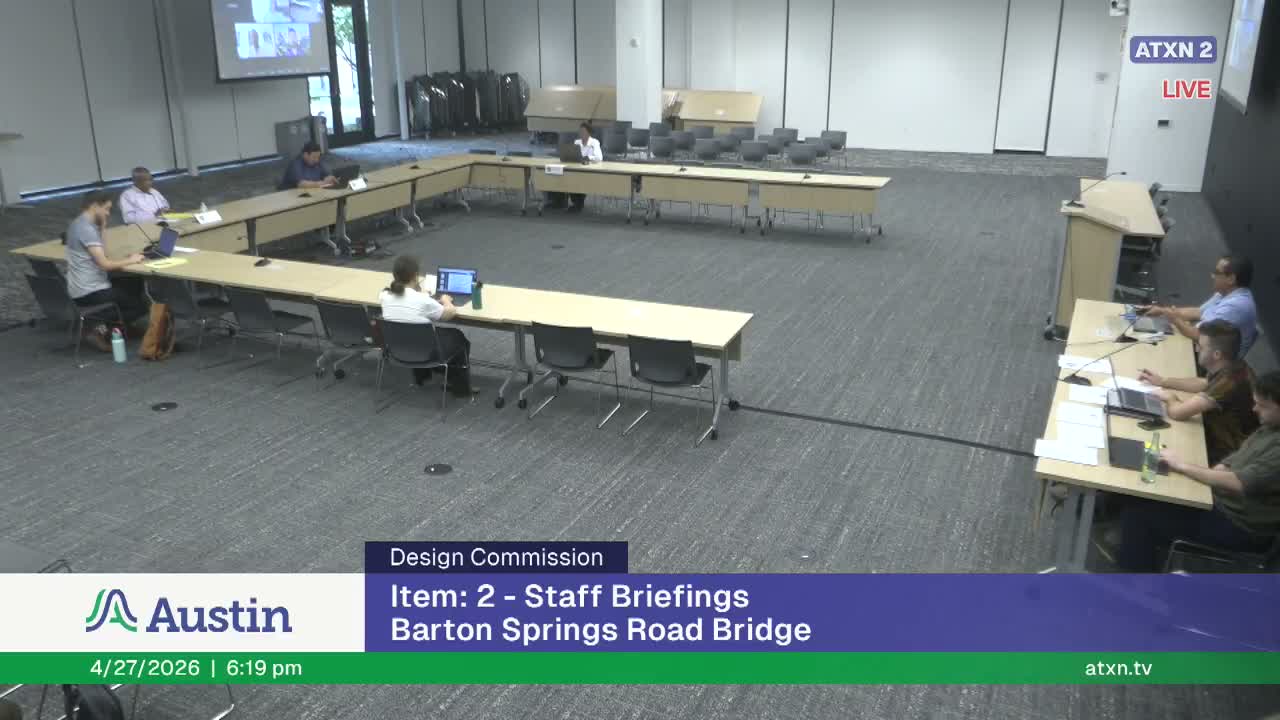
Austin Planning offered the Design Commission a sweeping update to the downtown density bonus program that would create new combining districts, allow much greater building heights, and replace discretionary urban design review with a standards-driven, staff-enforced compliance process.
Alan Pani of Austin Planning told the commission the Phase 1 proposal would rezone the Phase 1 sites into a proposed DDB 400 combining district and make them eligible to seek DDB 850 through the rezoning process. “We will be creating the DDB 400, which would grant 400 feet of additional height to sites participating in the program, and DDB 850, which would grant 850 feet of additional height,” Pani said. He described the change as additive to base zoning and said the combining district maximum would be the final height permissible without separate rezoning.
Why it matters: the change alters how downtown projects are reviewed and how design quality and community benefits are secured. Under the proposal, projects participating in the bonus must meet a set of mandatory urban design standards and select additional optional standards from a menu; design commission review would no longer be required, and staff would verify compliance at site-plan review. Pani said the gatekeeper requirements would still enforce Great Street standards and a 2‑star Austin Energy Green Building rating, with a new bird‑friendly design element.
The proposal also changes the community-benefit structure. Pani said the program would require 5% of units to be affordable if provided on-site, at either 50% of median family income for rental units or 80% for ownership units. He outlined fee-in-lieu amounts: "$10 per bonus area square foot under DDB 400, and $12 per bonus square foot under DDB 850." He also described proposed Chapter 4-18 code provisions intended to add tenant protections for existing affordable multifamily properties, including notice, rental assistance, relocation assistance and a right to return, as well as replacement ratios for lost affordable units.
Commissioners pressed staff on process and design priorities. Commissioner Gallus warned of a “loss of the human scale” in the draft and urged more mandatory protections for pedestrian safety and human-centered design; she asked what opportunities remain for additional commission input before Planning Commission and City Council consideration. Commissioner Howard and others echoed that concern, saying converting multi-year design-guideline work into a short, standards-driven review risks sidelining the pedestrian priorities the commission advocated for over several years. “Human scale metrics…help and cut down risk,” Gallus said, and she asked for more mandatory items focused on pedestrian safety.
Staff answered that the change was driven in part by legal and program constraints: the updated density-bonus standards must be concrete and not discretionary, which is why the discretionary design-commission recommendation would no longer be part of the required approval process. Pani said some items in the prior guideline draft addressed right-of-way matters that belong to Great Streets or other right-of-way updates and that the city is coordinating those revisions.
Next steps and procedural context: Pani said the project is scheduled for a design commission briefing and then moving through Planning Commission and City Council (staff noted Planning Commission consideration is scheduled, followed by council consideration). Commissioners voted to pursue a special-call meeting to draft a recommendation in time for Planning Commission review and asked staff and the working group to prepare a redlined alternative the commission can consider.
The Design Commission plans to hold a special meeting to draft recommendations and may forward a formal recommendation to Planning Commission. The commission’s next regular meeting will include follow-up discussion on implementation and potentially additional mandatory standards and clarifications requested by commissioners.
Alan Pani of Austin Planning told the commission the Phase 1 proposal would rezone the Phase 1 sites into a proposed DDB 400 combining district and make them eligible to seek DDB 850 through the rezoning process. “We will be creating the DDB 400, which would grant 400 feet of additional height to sites participating in the program, and DDB 850, which would grant 850 feet of additional height,” Pani said. He described the change as additive to base zoning and said the combining district maximum would be the final height permissible without separate rezoning.
Why it matters: the change alters how downtown projects are reviewed and how design quality and community benefits are secured. Under the proposal, projects participating in the bonus must meet a set of mandatory urban design standards and select additional optional standards from a menu; design commission review would no longer be required, and staff would verify compliance at site-plan review. Pani said the gatekeeper requirements would still enforce Great Street standards and a 2‑star Austin Energy Green Building rating, with a new bird‑friendly design element.
The proposal also changes the community-benefit structure. Pani said the program would require 5% of units to be affordable if provided on-site, at either 50% of median family income for rental units or 80% for ownership units. He outlined fee-in-lieu amounts: "$10 per bonus area square foot under DDB 400, and $12 per bonus square foot under DDB 850." He also described proposed Chapter 4-18 code provisions intended to add tenant protections for existing affordable multifamily properties, including notice, rental assistance, relocation assistance and a right to return, as well as replacement ratios for lost affordable units.
Commissioners pressed staff on process and design priorities. Commissioner Gallus warned of a “loss of the human scale” in the draft and urged more mandatory protections for pedestrian safety and human-centered design; she asked what opportunities remain for additional commission input before Planning Commission and City Council consideration. Commissioner Howard and others echoed that concern, saying converting multi-year design-guideline work into a short, standards-driven review risks sidelining the pedestrian priorities the commission advocated for over several years. “Human scale metrics…help and cut down risk,” Gallus said, and she asked for more mandatory items focused on pedestrian safety.
Staff answered that the change was driven in part by legal and program constraints: the updated density-bonus standards must be concrete and not discretionary, which is why the discretionary design-commission recommendation would no longer be part of the required approval process. Pani said some items in the prior guideline draft addressed right-of-way matters that belong to Great Streets or other right-of-way updates and that the city is coordinating those revisions.
Next steps and procedural context: Pani said the project is scheduled for a design commission briefing and then moving through Planning Commission and City Council (staff noted Planning Commission consideration is scheduled, followed by council consideration). Commissioners voted to pursue a special-call meeting to draft a recommendation in time for Planning Commission review and asked staff and the working group to prepare a redlined alternative the commission can consider.
The Design Commission plans to hold a special meeting to draft recommendations and may forward a formal recommendation to Planning Commission. The commission’s next regular meeting will include follow-up discussion on implementation and potentially additional mandatory standards and clarifications requested by commissioners.
View the Full Meeting & All Its Details
This article offers just a summary. Unlock complete video, transcripts, and insights as a Founder Member.
✓
Watch full, unedited meeting videos
✓
Search every word spoken in unlimited transcripts
✓
AI summaries & real-time alerts (all government levels)
✓
Permanent access to expanding government content
30-day money-back guarantee
